
Blog
Fervo’s Cape Station reaches commercial operation
Estimated reading time: 4 minutes · Last updated:
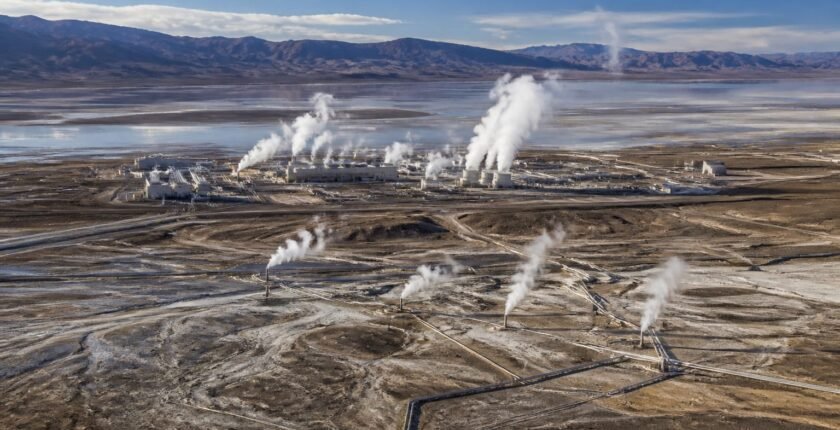
Fervo Energy said its Cape Station plant in Beaver County, Utah, achieved commercial operation on 30 September 2026, after synchronising to the grid on 24 September 2026. Fervo describes Cape Station as its first GeoBlock installation to enter contractual commercial operation and asserts it is the world’s first greenfield enhanced geothermal system (EGS) to do so. Phase I will deliver about 100 MW from three GeoBlocks, each sized at roughly 33 MW; the initial unit delivered 33 MW of net power. While the remaining units are still being commissioned, Fervo has begun earning revenue under the site’s power purchase agreement.
Reaching commercial operations at Cape Station is both a huge milestone for Fervo, and a turning point for the entire energy industry
Tim Latimer, CEO and Co-Founder, Fervo Energy
Key takeaways
- Fervo declared Cape Station commercial on 30 September 2026 after grid synchronisation on 24 September 2026, and began generating revenue under its PPA.
- Phase I at Cape Station comprises approximately 100 MW delivered by three 33-megawatt GeoBlocks, with the first GeoBlock producing 33 MW net.
- Fervo built and commissioned its first GeoBlock at Cape Station in 23 months and aims to cut that to an 18-month timeline for future GeoBlocks.
- An additional 400 MW in Phase II is under construction with an expected contractual COD in 2028, and Fervo says it holds over 1 gigawatt of binding PPAs across its portfolio.
Table of contents
How Cape Station reached commercial operation in 23 months
Fervo synchronised Cape Station to the grid on 24 September 2026 and declared commercial operation six days later, on 30 September 2026, a day earlier than the contractual commercial operation date. The company says it completed construction and commissioning of the initial GeoBlock in 23 months, a pace Fervo calls rapid for a first-of-a-kind infrastructure project. Tim Latimer, CEO and co-founder of Fervo Energy, described the milestone as significant for both the company and the broader geothermal industry, saying it demonstrates enhanced geothermal systems can provide round‑the‑clock carbon‑free electricity on an industry-leading timeline. David Ulrey, Fervo’s CFO, said the COD activates predictable revenue under the company’s signed offtake agreements.
What the plant produces now and the GeoBlock concept
Phase I at Cape Station is expected to produce roughly 100 MW from three 33 MW GeoBlocks; the lead unit reached 33 MW of net output during early operation. Fervo defines a GeoBlock at this site as a repeatable, roughly 33 MW modular generating unit whose commissioning for one unit helps accelerate the next. Work is ongoing on the two remaining Phase I GeoBlocks, which Fervo expects to achieve contractual commercial operation by 1 January 2027. Dawn Owens, SVP, Head of Development & Commercial Markets, said: "Every GeoBlock we bring online makes the next one faster and more predictable, and that repeatability is the foundation of how we scale and bring down costs," highlighting the company’s emphasis on modular repeatability to reduce schedule and cost risk.
Pipeline, PPAs and the next milestones for scaling
Fervo reports that an additional 400 MW of capacity is already under construction at Cape Station and is expected to reach contractual COD in 2028. The company says it has signed over 1 gigawatt of binding power purchase agreements across its portfolio, which Fervo expects will underpin multi-year revenue as Phase I completes and Phase II advances. The first GeoBlock’s early net output of 33 MW and the rapid 23-month build give Fervo the data points it says it will use to compress future schedules toward an 18-month target. Management frames those metrics as the commercial basis to scale GeoBlocks and to turn contracted capacity into predictable, long-term cash flow.
How Cape Station could affect Fervo’s rollout
The case for
- Demonstrated 23-month execution and a 33 MW net first GeoBlock reduce execution risk for near-term phases and support Fervo’s 18-month target for future GeoBlocks.
- Over 1 gigawatt of binding PPAs provides contracted demand that should convert buildouts into predictable revenue if projects meet CODs.
The case against
- Commissioning risk remains for the two remaining Phase I GeoBlocks scheduled for contractual COD by 1 January 2027; delays there would push revenue timing and learning benefits downstream.
- Scaling enhanced geothermal systems introduces subsurface and operational risks that may complicate repeatability when moving from a few GeoBlocks to hundreds of megawatts.
What to be careful about
- Schedule risk for the remaining two Phase I GeoBlocks, which Fervo expects to reach contractual COD on 1 January 2027.
- Technical and subsurface risk inherent to enhanced geothermal systems that could affect resource permeability or sustained net output as capacity scales.
- Capital-execution risk while advancing Phase II’s additional 400 MW toward its expected 2028 COD, including procurement and interconnection challenges.
The bottom line
Cape Station’s commercial operation marks a key reference point for enhanced geothermal systems at commercial scale: a first GeoBlock produced 33 MW net and the project reached COD after a 23-month build. Fervo’s stated aim to compress future GeoBlock timelines to 18 months and its claim of over 1 gigawatt of binding PPAs set a clear commercial pathway, but the company must complete commissioning of the remaining Phase I units by 1 January 2027 and advance Phase II toward its 2028 COD to prove repeatability at scale. Independent verification of PPA counterparties and detailed GeoBlock performance will be important to validate the company’s claims.
What to watch
- Watch for the remaining two Phase I GeoBlocks to reach their contractual COD on 1 January 2027.
- Watch for Phase II to reach contractual COD in 2028; no specific date has been supplied.
Frequently asked questions
What is a GeoBlock and how much power does it produce at Cape Station?
Fervo uses the term GeoBlock to describe a modular generating unit; at Cape Station each GeoBlock is sized at roughly 33 megawatts, and Phase I comprises three GeoBlocks for about 100 MW of capacity in total.
When did Cape Station begin commercial operations and when did it synchronise to the grid?
Cape Station synchronised to the grid on 24 September 2026 and Fervo declared commercial operation on 30 September 2026, with revenue generation under the plant’s PPA beginning thereafter.
What are the next milestones for Cape Station?
Fervo expects the two remaining Phase I GeoBlocks to reach contractual COD by 1 January 2027, and an additional 400 MW in Phase II is under construction with an expected COD in 2028.
Related reading