
Blog
Ceer Motors aims to challenge Lucid and BYD
Estimated reading time: 5 minutes · Last updated:
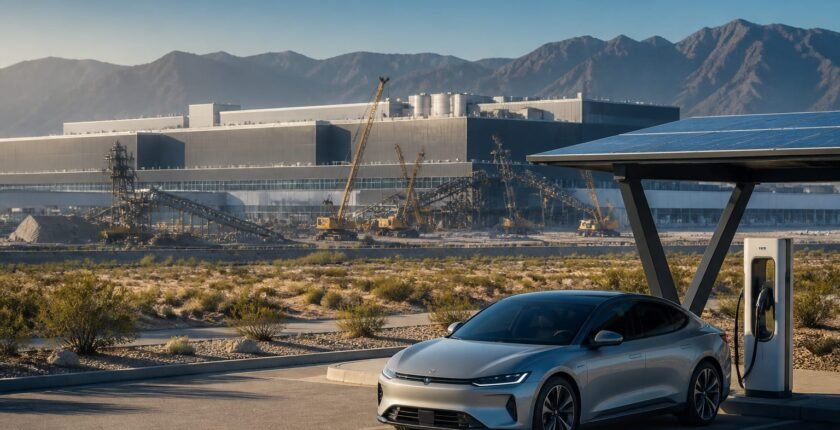
Ceer Motors, a venture backed by Saudi Arabia’s Public Investment Fund and Foxconn, unveiled two premium electric models on 21 September and has promised customer deliveries in March 2027. The cars will be assembled at a new plant in King Abdullah Economic City designed for up to 240,000 vehicles a year, and Ceer says it aims to source almost half its parts locally by 2034. The project sits alongside PIF’s existing stakes in the U.S. EV maker Lucid and is intended for export as well as local sales; Ceer unveiled its cars on 21 September, as first reported by Rest of World.
“BYD and Lucid serve very different segments, so comparing their volumes directly can be misleading.”
Hashim AlFatayerji, CEO, Cararak
Key takeaways
- Launch and timing: Ceer unveiled two models on 21 September and promises deliveries in March 2027.
- Factory capacity: Ceer’s new plant in King Abdullah Economic City is designed for up to 240,000 vehicles a year.
- Saudi portfolio: The Public Investment Fund is the majority backer of Ceer and holds about 58% of Lucid.
- Regional competition: BYD accounted for about 60% of electric car sales in the Middle East, while Tesla held about 15%, per the IEA.
Table of contents
What Ceer will make and how it was built
Ceer launched in November 2022 as a joint venture between the sovereign Public Investment Fund and Foxconn, and its first two models are a high‑performance sedan and an SUV. The company says its top Exobot variants deliver more than 1,100 horsepower; Lucid’s fastest production model, the Air Sapphire, lists 1,234 horsepower for comparison. Ceer has not published prices and will rely on suppliers for key subsystems, including motors from Rimac and components from Hyundai Transys, while licensing technology from BMW and using Foxconn’s platform.
Engineers and designers based in Saudi Arabia led the vehicles’ engineering, and Ceer intends to scale local content to almost half of parts by 2034. That target is central to the plan to cut costs and speed exports, since local sourcing is cited as a route to compete on price with low‑cost Chinese rivals.
Why the launch creates an awkward rivalry with Lucid
The Public Investment Fund already holds a majority stake in Lucid—about 58%—and has poured capital into the company, including roughly $8 billion invested into Lucid over time, while also retaining a position in Tesla briefly in 2018. Ceer therefore sits beside an existing PIF-backed U.S. brand rather than replacing it. Lucid’s U.S. business has struggled this year: the company cut about a fifth of its U.S. workforce, ended a second production shift in Arizona, recalled 27,000 sedans over a fire risk, and now has a market value near $1.6 billion.
Saudi sales illustrate the divergence: in the first seven months of 2026 Lucid’s Saudi sales fell 57% while BYD’s rose 369%, according to Focus2Move estimates cited by local advisers. That weakness helps explain why PIF is pursuing a separate, homegrown OEM that can be built at scale for export.
How big the Saudi market is and why exports matter
Estimates of EV uptake in Saudi Arabia vary. Hashim AlFatayerji of Cararak estimates 10,000 to 20,000 electric cars are sold annually in the kingdom, while Joseph Salem of Arthur D. Little puts the stock of EVs at 35,000 to 40,000 in 2025. By contrast Saudis buy almost 1 million new vehicles a year overall. Ceer’s plant and Lucid’s local capacity therefore far exceed near‑term domestic demand.
Arthur D. Little and other advisers argue that combined production targets imply most output—Salem says more than 80%—must be exported. That makes market access, trade relationships across the Gulf and North Africa, and the ability to match Chinese pricing overseas crucial to Ceer’s viability.
The competitive test: price, supply chain and brand
China’s carmakers are the immediate competitive benchmark because they produce at huge scale and have established supplier networks that lower costs. The International Energy Agency reports BYD took around 60% of Middle East EV sales while Tesla held about 15%, illustrating the gulf in regional share.
Ceer’s advantages are also material: long‑term funding from PIF, a Foxconn platform, and access to licensed technology.
| Company | PIF stake | Factory capacity / scale | Regional sales or market note |
|---|---|---|---|
| Ceer Motors | majority-backed by PIF | Plant for up to 240,000 vehicles a year | New entrant; two premium models launched 21 September |
| Lucid | about 58% owned by PIF | Smaller Arizona plant; also runs a plant in Saudi Arabia | Saudi sales fell 57% in first seven months of 2026; market value about $1.6 billion |
| BYD | no PIF stake noted | Mass production scale across China and abroad | About 60% of electric car sales in the Middle East per IEA |
How Ceer could win — and what could stop it
The case for
- Long-term funding and state backing give Ceer runway to scale production and subsidise initial exports.
- Foxconn’s platform and licensed BMW technology reduce engineering risk and accelerate time to market.
- A local content target of almost 50% by 2034 can lower costs and support regional supply chains if executed.
The case against
- Chinese OEMs such as BYD already dominate regional volumes and compete on price, making market share gains costly.
- Saudi domestic demand for EVs is small relative to planned capacity, so Ceer is dependent on successful exports.
- Licensing components and third‑party suppliers may not deliver the integrated cost advantages of established rivals.
What to be careful about
- Overcapacity: combined Saudi plants are sized many times larger than near‑term domestic EV demand, implying heavy reliance on exports.
- Competitive price pressure from Chinese manufacturers that already control a majority of Middle East EV sales.
- Execution risk in building a dealer, service and parts network at the scale needed across multiple export markets.
The bottom line
Ceer’s launch removes any doubt that Saudi Arabia intends to be a carmaker, not merely an investor. The firm has capital, a high‑capacity plant and supplier relationships that cut lead time to market; its premium hardware even overlaps Lucid’s segment. Still, the immediate challenge is structural: China’s OEMs control regional volumes and price aggressively, and Saudi domestic demand cannot absorb nearby plant capacity. That makes exports essential and execution—network, quality, local sourcing—decisive. Over the next year, Ceer’s ability to translate funding and partners into affordable, reliable cars will determine whether it complements PIF’s stake in Lucid or competes with it.
What to watch
- Watch for Ceer’s first customer deliveries, scheduled for March 2027.
- Track Ceer’s progress toward sourcing almost half of components locally by 2034; the company has set that as a target.
Frequently asked questions
When will Ceer deliver its first cars?
Ceer has promised customer deliveries in March 2027 and will build those vehicles at a plant designed for up to 240,000 units a year in King Abdullah Economic City.
How does Ceer relate to PIF’s stake in Lucid?
The Public Investment Fund is the majority backer of Ceer while holding about 58% of Lucid; PIF has also invested roughly $8 billion into Lucid over time.
How large is Saudi Arabia’s EV market today?
Estimates differ: Hashim AlFatayerji puts annual EV sales at about 10,000–20,000, while Joseph Salem of Arthur D. Little estimates 35,000–40,000 EVs in 2025; by contrast nearly 1 million new vehicles are sold in Saudi Arabia each year overall.
Related reading