
Blog
Fort Sill Adds Geothermal Heat Pumps to 1,700 Homes
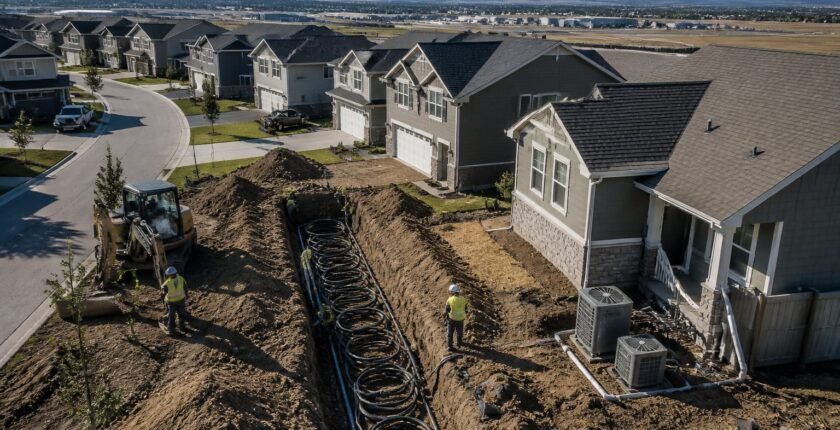
Estimated reading time: 4 minutes · Last updated:
Fort Sill is installing geothermal heat pumps in over 1,700 family homes as part of a $63 million modernization funded through an Energy Savings Performance Contract. ClimateMaster said the work—delivered with partners Corvias and Ameresco—could lower community energy use by about 57% and produce more than $5 million in annual savings. The systems exchange heat with stable ground temperatures to heat and cool houses more efficiently than air-source equipment, which ClimateMaster estimates can use 40% to 70% less energy. ClimateMaster also said this is the third military installation where the three companies have collaborated on a major residential geothermal effort.
We're proud to partner with organizations like Ameresco and Corvias to help deliver innovative geothermal solutions that improve comfort, increase energy efficiency and strengthen the long-term resilience of military housing.
Titian Burris, national sales manager for ClimateMaster
Key takeaways
- Project scale: The Fort Sill modernization costs $63 million and covers installations in over 1,700 homes.
- Delivery model: The work is being carried out under an Energy Savings Performance Contract with Corvias, Ameresco and ClimateMaster involved.
- Efficiency claims: ClimateMaster states geothermal heat pumps can use roughly 40% to 70% less energy than conventional HVAC systems.
Table of contents
Why geothermal heat pumps suit military housing
Geothermal heat pumps move heat between a building and the ground, where temperatures remain relatively steady through the year. That steadiness reduces the energy needed to reach comfortable indoor temperatures compared with systems that rely on outside air, which swings widely with weather.
In community housing, heating and cooling often account for a large share of operating costs and maintenance cycles. The Fort Sill project aims to cut energy use by about 57%, a reduction ClimateMaster links to lower bills and fewer equipment failures, and the company cites a typical efficiency range of 40% to 70% compared with conventional HVAC.
How the Fort Sill upgrade is structured
The $63 million overhaul at Fort Sill is being implemented through an Energy Savings Performance Contract, or ESPC, which pays for upgrades out of future energy savings rather than requiring full upfront capital. ACHR News reported that Corvias leads the project, Ameresco is a partner, and ClimateMaster is supplying the geothermal equipment and controls.
Army leaders were shown the work during a visit to ClimateMaster’s Oklahoma City manufacturing facility and through on-base drilling demonstrations. Public disclosures say the programme, installed in over 1,700 homes, includes geothermal heat pumps, smart thermostats, upgraded hot-water systems and control platforms intended to stabilise indoor temperatures and reduce operating expense.
Expected benefits, and what remains to be verified
ClimateMaster projects more than $5 million in annual savings from lower energy use and reduced maintenance; the company also framed Fort Sill as the third military installation where it, Ameresco and Corvias have collaborated on a major residential geothermal effort. Residents should see steadier temperatures and simpler controls as systems replace aging HVAC.
Open questions that would sharpen the public case include the project’s completion timetable, the ESPC’s guarantees or measurement-and-verification schedule, the breakdown of capital versus contractor risk, and the realised per-home savings once systems operate fully. Those details were not provided in the public statements ClimateMaster and partners issued alongside the showcase.
Case for and against the project's projected savings
The case for
- A well-measured ESPC ties payments to realised energy reductions, so performance monitoring can convert ClimateMaster’s estimates into contractually enforced savings.
- Geothermal systems’ efficiency advantage in climates with large air-temperature swings supports the 40%–70% energy reduction range ClimateMaster cited.
The case against
- Savings estimates depend on installation quality, occupant behaviour and effective measurement; without published measurement-and-verification results the $5 million figure remains a projection.
- Drilling, retrofit complications and unforeseen maintenance during commissioning can compress near-term savings and extend payback periods compared with initial estimates.
What to be careful about
- No public completion date or commissioning schedule was provided, which could delay the timing of claimed savings.
- Measurement-and-verification terms of the ESPC were not disclosed, so it is unclear how shortfalls would be handled contractually.
- Installation complexity and site-specific drilling issues can increase costs and extend service interruptions during retrofit.
- Occupant behaviour and controls settings can materially affect realised energy savings compared with vendor estimates.
The bottom line
Fort Sill’s $63 million ESPC and the deployment of geothermal heat pumps across more than 1,700 homes is a large-scale example of military housing modernisation aimed at cutting operating costs and improving comfort. The partners named—Corvias, Ameresco and ClimateMaster—present efficiency estimates (about 57% community energy reduction and more than $5 million in annual savings) that, if verified, would make the upgrade financially self-supporting over time. The near-term priorities are publication of the project’s completion timeline and the ESPC’s measurement-and-verification results so the community and taxpayers can confirm the claimed savings.
What to watch
- Watch for the project completion and community commissioning; no completion date has been set.
- Watch for the ESPC’s first measurement-and-verification report on realised savings; no release date has been set.
Frequently asked questions
How many homes at Fort Sill are getting geothermal heat pumps?
The project covers installations in over 1,700 homes at Fort Sill, according to ClimateMaster.
What savings are being claimed for the upgrade?
ClimateMaster said the work could reduce energy use by about 57% across the housing community and result in more than $5 million in annual savings.
Who is supplying and delivering the systems?
Corvias is leading delivery with Ameresco as a partner and ClimateMaster supplying the geothermal heat pumps and controls; ACHR News reported the ESPC structure.
Related reading