
Blog
Hydrogen ferry Switch-150 wins Coast Guard DBA
Estimated reading time: 4 minutes · Last updated:
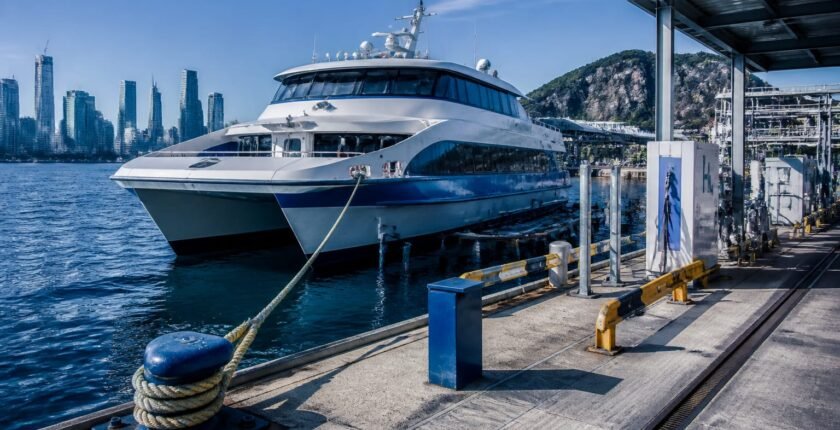
Switch Maritime said it has secured a U.S. Coast Guard design basis agreement (DBA) that covers the Switch-150, a hydrogen-powered ferry with capacity for 150 passengers. The DBA defines the regulatory parameters for the vessel's construction, commissioning and operation under Coast Guard oversight. Switch said the aluminum catamaran, measuring 93'6" by 29'6", will combine fuel-cell power with onboard hydrogen storage and electric propulsion and will be configured to maintain the typical service speeds of conventional diesel ferries; the company plans to bunker hydrogen daily using mobile refuelling units. Key partners named include naval architect Incat Crowther, and the project has received a $2 million grant from the New York State Energy Research and Development Authority (NYSERDA).
Signing the DBA with the Coast Guard is a critical milestone in advancing the development of the Switch-150. With the DBA in hand, Switch, our project team, and the USCG have a clear and defined framework that will inform vessel construction, commissioning, and ultimately operation.
Francisco Planells, newbuild program director at Switch
Key takeaways
- DBA secured: The U.S. Coast Guard has issued a design basis agreement for Switch Maritime's Switch-150, a ferry intended to transport 150 passengers and powered by hydrogen fuel-cell electric systems.
- Vessel design: The aluminum catamaran measures 93'6"x29'6" and was designed by Incat Crowther.
- Funding: The New York State Energy Research and Development Authority awarded a $2 million grant to support development and demonstration of the vessel.
- Regulatory context: The International Maritime Organization approved Interim Guidelines for ships using hydrogen as fuel in May 2026, which Switch said informed the DBA process.
Table of contents
What a Coast Guard DBA changes for the Switch-150
A design basis agreement sets the regulatory parameters the Coast Guard will use as the design moves from concept to build. For the Switch-150, the DBA fixes the safety and inspection standards that will apply to construction, commissioning and operation under Subchapter T rules for vessels carrying 150 or fewer passengers.
Because Coast Guard Subchapter T does not yet include hydrogen-specific provisions, the DBA records the equivalent measures that Switch and its project team will implement to mitigate risks. That contractual framework shortens the questions the shipyard and regulators must resolve later, but it does not replace later approvals such as a Certificate of Inspection.
Design, partners and how the hydrogen system is intended to work
Incat Crowther led the naval architecture for the 93'6"x29'6" aluminum catamaran and this is the firm’s second design for Switch after the Sea Change. The Switch-150 pairs a hydrogen fuel cell-electric propulsion system with hydrogen storage components supplied by project partners named in the announcement.
Partners listed include Hexagon Purus for hydrogen storage, PowerCell Group for fuel cells, Seam as propulsion integrator, LH2 Shipping for propulsion system safety, and Hornblower Marine as operational advisor. Switch said the vessel will operate on a daily bunkering rhythm using mobile hydrogen refuelling equipment, avoiding the need for shoreside charging infrastructure or power‑grid upgrades that battery-electric alternatives might require.
Regulatory precedent and the Sea Change milestone
Switch pointed to the Sea Change — the company’s first hydrogen fuel cell-electric ferry — as the precedent that informed the DBA process. The Sea Change entered passenger service in July 2024 after receiving a DBA in 2020 and a Certificate of Inspection in 2024.
The company also cited the International Maritime Organization’s Interim Guidelines for the Safety of Ships Using Hydrogen as Fuel, approved in May 2026, as a foundation that added structure and reduced time to agreement with the Coast Guard. Those two prior approvals are the technical and regulatory context Switch used when building the case for equivalent safety under Subchapter T.
Case for and against commercial rollout
The case for
- The DBA provides an early regulatory roadmap that can reduce delays once a shipyard and construction schedule are chosen, and Switch cites the IMO interim guidelines (May 2026) as a harmonising reference.
- Using mobile hydrogen refuelling equipment avoids immediate investment in shoreside infrastructure and could simplify deployment on routes where daily bunkering is operationally feasible.
The case against
- Subchapter T currently lacks hydrogen-specific rules, so the vessel will still face detailed technical scrutiny and subsequent inspections before it can receive a Certificate of Inspection for commercial service.
- The announcement did not name a shipyard or delivery date, leaving schedule, capital costs and supply-chain steps unresolved and dependent on later project decisions.
What to be careful about
- No construction schedule, shipyard or delivery date were provided, leaving programme timing and cost exposure uncertain.
- Regulatory gaps in Subchapter T for hydrogen propulsion mean additional technical approvals and inspections remain to be completed.
- Operational reliance on mobile hydrogen refuelling could constrain route choice if local hydrogen supply or bunkering logistics are limited.
- The project is supported by a $2 million NYSERDA grant, but the announcement does not detail remaining financing for construction or demonstration.
The bottom line
The Coast Guard DBA for the Switch-150 is an early but important regulatory milestone: it captures the safety and inspection framework the team will use as the design moves toward construction. The announcement names designers and system partners and confirms a $2 million NYSERDA grant, but leaves open key programme details such as the shipyard, commissioning timetable and component model specifications. Those items will determine how rapidly the Switch-150 moves from approved design to revenue service and how replicable the approach will be for other high-frequency commuter routes.
What to watch
- Watch for Switch Maritime to announce a construction schedule and chosen shipyard; no date has been set.
- Watch for the project's Certificate of Inspection application or filing once commissioning begins; no date has been set.
Frequently asked questions
What is the Switch-150's passenger capacity?
The Switch-150 is designed to carry 150 passengers, matching the passenger threshold for Coast Guard Subchapter T rules referenced in the announcement.
Who designed the Switch-150 and what are its dimensions?
Incat Crowther led the naval architecture for the vessel, which measures 93'6"x29'6" and uses an aluminum catamaran hull form.
What regulatory approvals has the Switch programme already achieved?
Switch received the new DBA for the Switch-150 and cites the Sea Change precedent, which received a DBA in 2020 and a Certificate of Inspection in 2024; the IMO Interim Guidelines for hydrogen as fuel were approved in May 2026.
Related reading