
Blog
VVTA Begins Phased Rollout of Hydrogen Buses
Estimated reading time: 5 minutes · Last updated:
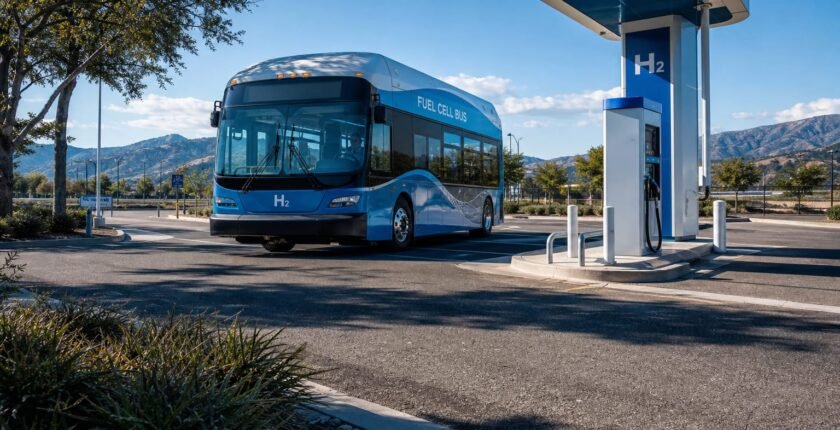
The Victor Valley Transit Authority (VVTA) has put 13 hydrogen fuel cell buses into phased revenue service and is collecting operational data as the vehicles enter regular routes. The buses are already serving corridors including Route 15, which links the Victor Valley Transportation Center with points in San Bernardino, Fontana and California State University, San Bernardino, and the agency says it will evaluate performance on urban, rural and long-distance runs. VVTA Chief Executive Officer Rod Goldman commented on the start of passenger service, and these local details were reported as first reported by Metro Magazine.
This is an exciting moment for VVTA because our investment in hydrogen technology is no longer something we're simply planning for; it's here, and our passengers are starting to benefit from this today.
VVTA CEO Rod Goldman
Key takeaways
- Fleet expansion: VVTA has introduced 13 zero-emission hydrogen fuel cell buses into revenue service.
- Service coverage: The new buses are operating on routes including Route 15 between the Victor Valley Transportation Center and San Bernardino, Fontana and California State University, San Bernardino.
- Phased deployment: VVTA is putting the 13 buses into service gradually while collecting operational data across urban, rural and long-distance routes.
- Partners: VVTA’s rollout involved vehicle and fuel-system partners that include New Flyer, Ballard Power Systems and Linde.
- Zero-emission background: The hydrogen program builds on VVTA’s earlier introduction of battery-electric buses beginning in 2019.
Table of contents
Why hydrogen suits VVTA’s wide, mixed network
VVTA serves an expansive and varied region across the High Desert that combines short urban runs, rural connector services and longer commuter links. That mix creates range and refuelling requirements that battery-only buses can struggle to meet on a single charge, which is why the authority pursued hydrogen fuel cell vehicles as an alternative zero-emission option.
Hydrogen fuel cell electric buses generate electricity onboard by combining hydrogen with oxygen and then using that power to drive the vehicle and recharge onboard batteries; the only tailpipe byproduct is water vapor and heat. VVTA describes this powertrain as a match for routes that demand sustained driving range without frequent depot charging, and VVTA frames the technology as a complement to the battery-electric buses it began adding in 2019.
Key to the agency’s decision was the operational profile: longer runs such as intercity and commuter services benefit from hydrogen’s quicker refuel times and extended mileage compared with many battery systems. This section therefore focuses on the service case for hydrogen within VVTA’s network rather than on hypothetical cost comparisons or lifecycle modelling.
How VVTA staged procurement, infrastructure and partners
VVTA’s hydrogen rollout was preceded by years of planning that covered vehicle procurement, fueling infrastructure, staff training and partner coordination. The agency marked the arrival of the buses and supporting systems with a ribbon-cutting on January 14 and then began a phased move from introduction to full daily operations.
Industry partners named in the deployment include New Flyer as a vehicle supplier and Ballard Power Systems and Linde on powertrain and fueling-system elements. VVTA said the January event brought regional, state and federal transportation representatives together with those industry partners to mark the program’s operational start.
Phased deployment means VVTA did not place all 13 buses into service at once. Instead the authority introduced subsets of vehicles into scheduled routes while staff monitor real-world reliability, refuelling logistics and range performance under load. The staged approach reduces operational disruption and gives the agency time to refine fueling schedules, technician workflows and driver familiarisation.
What VVTA will measure during the trial phase
During the rollout VVTA is collecting operational data and conducting additional testing to evaluate the vehicles on urban streets, in rural service and on longer-distance runs. VVTA said this phase is intended to confirm range, availability, refuelling turnaround, maintenance needs and passenger experience under day-to-day conditions.
VVTA will track operational metrics including vehicle uptime, mean distance between failures, hydrogen consumption per mile and refuelling cycle times; VVTA said those measurements will inform how many hydrogen buses it introduces beyond the initial 13. VVTA said passengers will see an increasing number of hydrogen buses in service as the phased deployment continues.
This testing window also lets VVTA calibrate depot procedures and refine technician training so the agency can scale operations without service degradation. The program builds on lessons from the agency’s battery-electric rollout and aims to establish hydrogen as a viable option where longer range and faster refuelling bring clear operational advantages.
| Item | Detail |
|---|---|
| Number of buses | 13 hydrogen fuel cell buses |
| Routes cited | Route 15 and other urban, rural and long-distance services |
| Partners | New Flyer; Ballard Power Systems; Linde |
| Previous zero-emission step | Battery-electric buses introduced beginning in 2019 |
Case for and against hydrogen at VVTA
The case for
- Hydrogen buses can deliver the range and quicker refuelling needed for VVTA’s long-distance and commuter routes, supporting reliable service without frequent depot charging.
- The phased approach and partner support from New Flyer, Ballard Power Systems and Linde reduce execution risk and let VVTA iteratively solve fueling and maintenance challenges.
The case against
- Hydrogen infrastructure and fuel currently cost more than grid charging in many cases, which could limit how rapidly VVTA expands beyond the initial 13 buses unless funding or cheaper green hydrogen becomes available.
- Real-world maintenance and technician training demands may reveal higher lifecycle costs or downtime than VVTA expects during the testing period.
What to be careful about
- Fuel supply and station uptime: any interruptions to hydrogen delivery or station failures would directly reduce vehicle availability on long runs.
- Uncertain operating costs: without published fuel-price or lifecycle-cost figures, the program faces budget risk if hydrogen remains pricier than anticipated.
- Scale limitations: deploying only 13 buses initially means lessons from a small sample may not translate linearly to a larger hydrogen fleet.
The bottom line
VVTA’s phased introduction of 13 hydrogen fuel cell buses marks a deliberate move to match zero-emission technology to an operating area that includes short urban trips and longer commuter runs. By staging deployment, coordinating suppliers and collecting operational data, the authority aims to confirm whether hydrogen delivers the expected advantages in range, refuelling speed and reliability. The initial rollout leaves open questions about fuel cost, station capacity and lifecycle economics; VVTA’s published performance metrics and any follow-on procurements will determine whether hydrogen becomes a larger part of the agency’s zero-emission fleet strategy.
What to watch
- Look for VVTA’s public release of operational performance data from the phased rollout; no date has been set.
- Watch for announcements on additional hydrogen bus procurements or a plan to scale beyond the initial 13 vehicles; no date has been set.
- Look for updates on fueling-station capacity or expansions that support the hydrogen fleet; no date has been set.
Frequently asked questions
How many hydrogen buses did VVTA add to service?
VVTA introduced 13 hydrogen fuel cell buses into revenue service as part of a phased rollout.
What routes are the hydrogen buses operating on?
The new buses are operating on routes across VVTA’s network, including Route 15, which serves the Victor Valley Transportation Center and runs toward San Bernardino, Fontana and California State University, San Bernardino.
Who supplied vehicles and fueling technology for the program?
VVTA’s rollout involved partners named in the deployment: New Flyer for vehicles and Ballard Power Systems and Linde on powertrain and fueling-system elements.
Related reading