
Blog
Hydrogen-powered Konecranes straddle carrier tested
Estimated reading time: 4 minutes · Last updated:
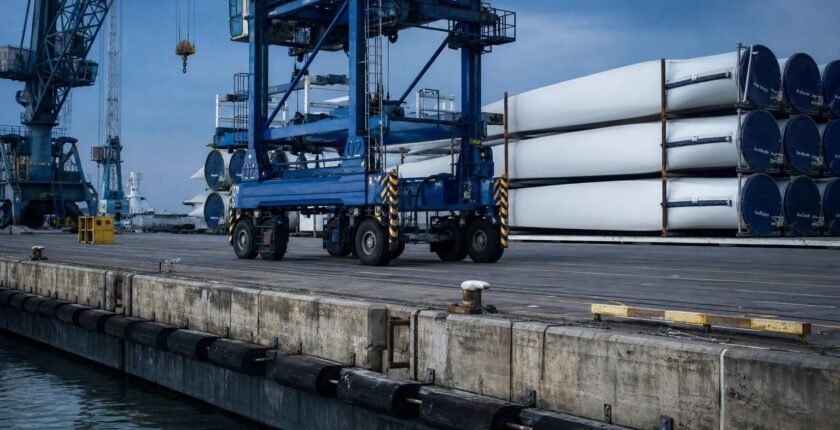
Konecranes is running live terminal testing in Hamburg of a Noell straddle carrier fitted with a hydrogen fuel cell system supplied by zepp.solutions, and reports positive early results. The carrier uses a fuel cell and hydrogen storage integrated into Konecranes’ redesigned D200 platform to meet space and weight constraints while keeping duty cycles high. zepp.solutions supplies fuel cell systems for heavy-duty applications and lists mobile units at 50 to 150 kW and stationary generator sets at 150 to 600 kW; those ranges frame how the company positions hydrogen as a complement to batteries where grid limits or operational demands matter.
Key takeaways
- Live trial: Konecranes reports that live trials at a Hamburg terminal of a hydrogen-powered Noell straddle carrier have produced encouraging early outcomes.
- Supplier and integration: The fuel cell system and integration work were provided by zepp.solutions, with integration into Konecranes’ redesigned D200 platform led by the OEM.
- Power ranges: zepp.solutions offers mobile fuel cell systems from 50 to 150 kW and stationary generator sets from 150 to 600 kW.
- Design constraint: zepp.solutions’ Chief Commercial Officer Jonas Brendelberger highlights fitting fuel cells, hydrogen storage and power electronics into tight space and weight envelopes as a core engineering challenge.
Table of contents
What Hamburg’s live tests are showing
Konecranes says the Hamburg terminal trials are producing encouraging early operational data as the OEM runs a Noell straddle carrier with a zepp.solutions fuel cell in regular service. The trials are intended to demonstrate how hydrogen can keep heavy port equipment working through long shifts where batteries alone would face downtime or require large charging infrastructure.
Operators at busy terminals face tight duty cycles and limited space for overnight charging; Konecranes frames the hydrogen trial as an experiment in meeting those constraints by replacing or supplementing onboard batteries with a fuel cell plus hydrogen storage. The manufacturer’s testing in Hamburg uses its redesigned D200 platform to accommodate the new system layout and to validate vehicle handling, thermal management and safety systems under terminal conditions.
How zepp.solutions configures heavy-duty fuel cells
zepp.solutions supplies heavy-duty fuel cell systems designed for compact installation, integrating thermal, electrical and safety subsystems to fit machines with strict space and weight limits. The company presents mobile units in a 50 to 150 kW band intended for trucks, excavators and similar equipment and offers stationary generator sets from 150 to 600 kW for grid-independent power or charging hubs.
That product split is deliberate: mobile systems target continuous propulsion loads on vehicles while the larger stationary gensets are pitched as replacements for diesel generators on sites or as charging hubs for battery-electric fleets. For a port operator, the practical choices are driven by duty cycle, refuelling logistics and how much onboard energy density is feasible within the chassis envelope.
What ports and fleet owners should take from the trial
The Hamburg deployment illustrates a practical role for hydrogen where batteries hit limits: long, continuous shifts or terminals with constrained grid capacity. Where a battery-electric straddle carrier would require large battery packs or frequent charging, a fuel cell can extend run time while keeping weight and package size manageable if hydrogen storage and refuelling are solved.
That trade-off is not universal. Ports must weigh the engineering work—fitting fuel cells, hydrogen tanks and power electronics into an existing platform—against establishing refuelling logistics and the source of hydrogen for emissions goals. Konecranes and zepp.solutions are testing whether the D200 package can be retrofitted or offered as a production option and whether the operational benefits offset the infrastructure cost.
| Type | Power range | Typical applications |
|---|---|---|
| Mobile fuel cell systems | 50–150 kW | Trucks, excavators, straddle carriers |
| Stationary generator sets | 150–600 kW | Construction power, charging hubs, diesel replacement |
How the case for — and against — hydrogen in port equipment shapes up
The case for
- Hydrogen fuel cells can extend duty cycles where batteries would need large packs or frequent charging, improving uptime for continuous-shift equipment.
- Compact, integrated fuel cell packages reduce the packaging penalty on heavy-duty platforms, enabling retrofit or new-build options that preserve payload and handling.
The case against
- Refuelling infrastructure and hydrogen supply remain the primary operational hurdle; without local refuelling, mobile fuel cells add logistical complexity.
- The need to fit storage and safety systems into tight chassis envelopes can increase engineering costs and slow time to market for OEMs and fleet owners.
What to be careful about
- Integration risk from fitting fuel cells, hydrogen tanks and power electronics into an existing platform, which can reduce available payload or affect handling.
- Operational risk if local hydrogen refuelling is absent or limited, forcing long repositioning runs or fuel deliveries that raise costs.
- Commercial risk that infrastructure or total-cost-of-ownership calculations favour batteries in many terminals, limiting demand for hydrogen retrofits.
The bottom line
The Hamburg trial of a zepp.solutions hydrogen system on a Konecranes Noell straddle carrier is an early, practical test of where fuel cells can complement battery-electric fleets. The technical focus is clear: fit a 50–150 kW mobile fuel cell and hydrogen storage into a D200 chassis without compromising handling or safety, and then prove uptime and refuelling logistics in live terminal service. For ports, the answer will hinge less on technology capability than on whether local hydrogen supply and refuelling infrastructure make the total cost and operational model preferable to battery alternatives.
What to watch
- Watch for Konecranes to publish extended performance or availability data from the Hamburg terminal test; no date has been set.
- Watch for announcements of local refuelling arrangements or hydrogen supply for the trial fleet; no date has been set.
Frequently asked questions
What power does zepp.solutions supply for mobile fuel cell systems?
zepp.solutions supplies mobile fuel cell systems in a 50 to 150 kW range, which it positions for trucks, excavators and other heavy-duty mobile equipment.
What larger systems does zepp offer for stationary use?
zepp.solutions offers stationary generator sets from 150 to 600 kW intended as grid-independent power for construction sites, charging hubs or diesel replacement.
Why would a port choose hydrogen over batteries for a straddle carrier?
Ports consider hydrogen when long continuous shifts or limited grid capacity make large battery packs or frequent charging impractical; the Hamburg test uses a fuel cell integrated into Konecranes’ D200 platform to explore that trade-off.
Related reading