
Blog
EnBW Opens 5MW Hydropower Hydrogen Plant in Wyhlen
Estimated reading time: 5 minutes · Last updated:
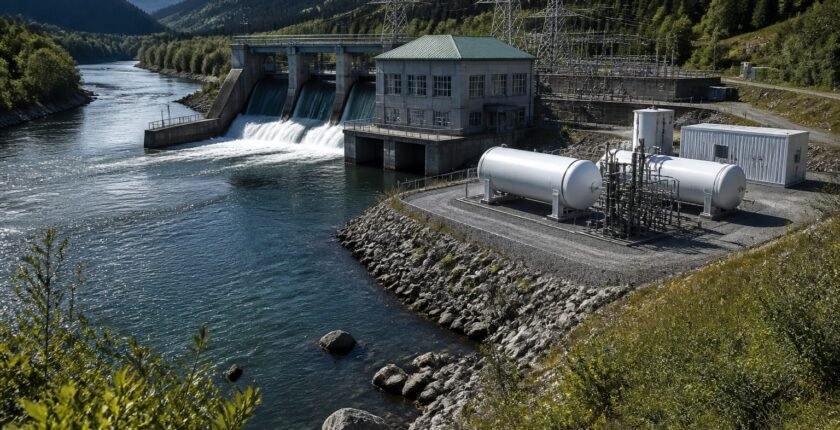
EnBW Energie Baden-Württemberg AG and naturenergie hochrhein AG have inaugurated a hydropower hydrogen plant in Grenzach-Wyhlen that adds a 5 MW PEM electrolyser to an existing 1 MW alkaline unit and uses electricity from the adjacent 38.5 MW run-of-river hydroelectric plant. The site now combines fast-response electrolysis, new stationary storage that brings total capacity to about 5.1 tonnes of hydrogen, and seven filling stations to serve industrial and mobility customers in the German–Swiss–French border region. The expansion is part of the Reallabor H2-Wyhlen research programme, which has been funded by the Federal Ministry for Economic Affairs and Energy with around 15 million euros.
Key takeaways
- New electrolyser capacity: EnBW and naturenergie added a 5 MW PEM electrolyser at Wyhlen alongside an existing 1 MW alkaline electrolyser.
- Power source: Both electrolyser units are fed with electricity from the neighbouring run-of-river hydroelectric plant, which has a capacity of 38.5 MW.
- Storage and refuelling: The expansion adds new stationary storage alongside three existing tanks, bringing combined storage to around 5.1 tonnes; it also provides seven filling stations that operate at different pressure levels.
- Costs and support: Total project costs are around 40 million euros, with BMWE funding of about 15 million euros for the Reallabor H2-Wyhlen project.
Table of contents
What was built at Wyhlen and who runs it
EnBW Energie Baden-Württemberg AG and naturenergie hochrhein AG have expanded the hydrogen production facilities at the Grenzach-Wyhlen hydroelectric site with a new 5 MW PEM electrolyser installed next to an existing 1 MW alkaline electrolyser. The hydropower plant that supplies the electrolysers is a run-of-river facility with 38.5 MW capacity, and naturenergie will operate the new hydrogen plant in commercial mode after trial runs conclude. The site is part of a broader campus development that includes a heating centre, photovoltaic systems and a new main building for office, operating and event use.
EnBW has overseen project management and coordinated research for the Reallabor H2-Wyhlen programme, while naturenergie operates the hydroelectric plant and the hydrogen facilities. The project’s research partners include ZSW (the Center for Solar Energy and Hydrogen Research Baden-Württemberg), Dialogik gGmbH and the Holzapfel Group; together they are examining operational efficiency and system integration for producing hydrogen from hydropower.
How the plant produces and adapts hydrogen to supply needs
Both electrolyser buildings use electrolysis to split water into hydrogen and oxygen, but they are designed for different operating profiles. The existing 1 MW system is an alkaline electrolyser built for uniform continuous running, while the new 5 MW unit is a PEM design that can ramp up and down quickly to follow variations in electricity availability. This flexibility is useful where renewables fluctuate, because the PEM electrolyser can increase production when surplus electricity from hydropower, wind or solar is available and pause when generation falls.
During commissioning the project team is testing downstream systems — gas treatment, compressors and storage — under real operational conditions so the plant can deliver gas at the pressure levels required by customers. The new arrangement is intended to let the site both supply industrial hydrogen and fill pressure vessels at seven local filling stations for mobility customers across the German–Swiss–French border region.
Timeline, costs and public funding
Construction on the expansion began in the second quarter of 2024 and the inauguration took place on 1 October 2026. Technical commissioning is scheduled to be completed by the end of 2026, with trial operation to follow and commercial operation slated for early 2027. After trial operation concludes, naturenergie will take over commercial operation of the new plant.
The project’s headline budget is around 40 million euros in total, of which the Federal Ministry for Economic Affairs and Energy has supported the Reallabor H2-Wyhlen programme with about 15 million euros. That public support is described in project materials as a grant within the ministry’s “Real Laboratories of the Energy Transition” programme. The partners say the real laboratory format is intended to shorten the path from demonstration to commercial operation by testing full process chains on site.
Regional role, customers and next operational steps
The site’s stated customers are industrial and mobility operators in the border triangle of Germany, Switzerland and France. To reach them the expansion includes new stationary storage for up to 3.8 tonnes of hydrogen in new tanks, bringing total onsite capacity to around 5.1 tonnes, and four new truck filling positions in addition to three existing ones. Those storage and refuelling capabilities are meant to support both local industry and transport fleets that require delivered and dispensed compressed hydrogen.
In practice the next months will focus on completing technical commissioning, running system tests and moving into trial operation before commercial handover. The Reallabor framework places the Wyhlen site as a testbed for scaling up ‘‘large-format hydrogen operation’’ and capturing operational experience that the partners say will inform commercial roll-outs elsewhere.
| Unit | Electrolyser type | Power | Primary operating profile |
|---|---|---|---|
| Existing unit | 1 MW alkaline electrolyser | 1 MW | Uniform continuous operation |
| New unit | 5 MW PEM electrolyser | 5 MW | Fast ramping to follow generation |
Case for and against near-term scale-up
The case for
- Operational data from the real laboratory could demonstrate how hydropower-backed electrolysis performs under seasonal and daily variability, lowering perceived technology risk for industrial buyers.
- The combination of fast-response PEM electrolysis with onsite storage and multiple refuelling points provides a replicable model for regionally distributed hydrogen supply in cross-border markets.
The case against
- Commercial viability depends on sustained access to low-cost hydropower and clear offtake terms; without firm long-term contracts the plant may face revenue uncertainty in early commercial operation.
- Grid, permitting or regulatory hurdles for larger volumes of hydrogen distribution across borders could slow replication of the Wyhlen model despite successful technical outcomes.
What to be careful about
- Trial operation may reveal integration issues with gas treatment, compressors or storage that delay commercial handover planned for early 2027.
- Revenue risk from the absence of publicly disclosed long-term offtake contracts or fixed-price sales agreements.
- Regulatory or cross-border transport constraints in the German–Swiss–French region could limit near-term market access for delivered hydrogen volumes.
The bottom line
Wyhlen’s expansion stitches fast-response PEM electrolysis, existing alkaline capacity, onsite storage and multiple refuelling points onto a single hydropower-fed campus. The project is explicitly designed as a real laboratory: partners expect to use operational data from the 5 MW addition and the integrated storage and compression systems to validate commercial operation models. The next phase is practical: finish technical commissioning by the end of 2026, run trial operations and move to commercial operation in early 2027 under naturenergie’s management, while the partners and BMWE track whether the setup attracts firm offtakes for industry and mobility.
What to watch
- Watch for completion of technical commissioning by the end of 2026, when gas treatment and compressor systems are scheduled to be finalised.
- Watch for the start of commercial operation in early 2027, when naturenergie is expected to take over commercial running after trial operation.
- Watch for announcements of offtake agreements or commercial supply contracts; no exact date for those contracts has been published.
Frequently asked questions
How much new electrolyser capacity was installed at Wyhlen?
The project added a 5 MW PEM electrolyser to an existing 1 MW alkaline electrolyser, bringing the site’s electrolyser capacity to 6 MW in total.
What is the site’s hydrogen storage capacity?
The expansion includes new stationary storage for up to 3.8 tonnes of hydrogen, bringing total onsite storage to around 5.1 tonnes.
When will the plant move from commissioning to commercial operation?
Technical commissioning is scheduled to be completed by the end of 2026, with commercial operation planned for early 2027 after trial runs.
Who funded the Reallabor H2-Wyhlen project?
The Federal Ministry for Economic Affairs and Energy supported the project with about 15 million euros within its Real Laboratories of the Energy Transition programme, against total project costs of around 40 million euros.
Related reading