
Blog
India Renewable Curtailment Hits Grid Limits
Estimated reading time: 5 minutes · Last updated:
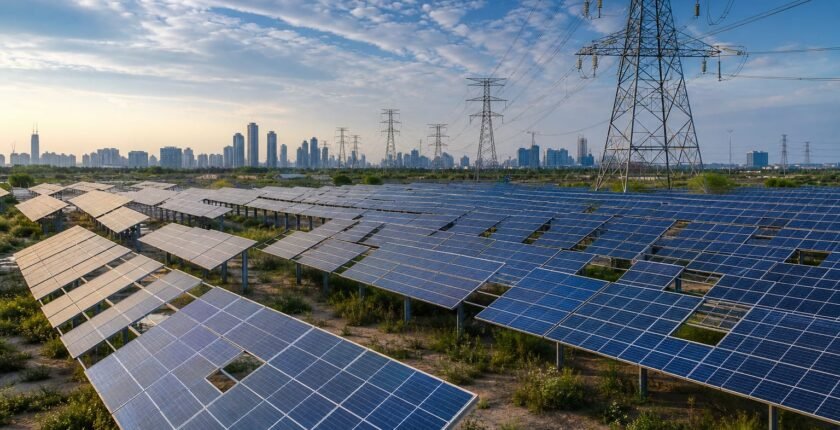
India’s growing solar and wind fleet is generating more clean electricity than the grid can absorb at times, leaving about 11 terawatt-hours of solar output unused over the past 15 months — roughly enough to power 10 million homes. That shortfall stems from transmission limits, limited storage and constrained system flexibility, even as installed clean capacity tops 300 gigawatts. As first reported by AP News, batteries and quicker network builds could address much of that near-term mismatch, but large transmission projects and broader storage deployment will determine whether India can turn its installed capacity into reliable, dispatchable power.
We’re in a stage where some of the biggest hurdles in renewables are starting to hit us,
Neshwin Rodrigues, energy analyst at Ember
Key takeaways
- Scale of curtailment: India curtailed nearly 11 terawatt-hours of solar generation in the last 15 months, equivalent to about 10 million homes of electricity.
- Installed clean capacity: India has more than 300 gigawatts of clean electricity capacity, making renewables over half of installed capacity by type.
- Current storage: As of July, government statistics showed around 3 gigawatts of battery storage and 7.4 gigawatts of operational pumped-storage in India.
- Mid-term targets: India is targeting 500 gigawatts of clean capacity by 2030 and expects storage needs to reach about 74 gigawatts by 2032.
Table of contents
Why usable clean power is falling short
India is adding solar and wind capacity quickly, but the electricity system struggles to turn that capacity into reliable supply at all hours. Developers can generate power when the sun shines or the wind blows, but grid operators sometimes instruct them to reduce output because local lines or balancing services cannot accept the energy.
That mismatch shows up as curtailment: usable renewable generation that is produced but not delivered to customers. Officials and analysts trace recent curtailment to a trio of constraints — limited transmission corridors, insufficient storage, and the operational limits of legacy thermal plants that cannot ramp down and back up rapidly when variable generation rises and falls.
Transmission congestion and geographic concentration
A large share of India’s solar capacity is clustered in the west, creating heavy flows along a few corridors that quickly reach capacity. Those regional bottlenecks mean afternoon solar output can’t always be moved to demand centres elsewhere, so operators order reductions at the point of generation instead.
Long lead times for new high-capacity transmission lines worsen the imbalance: solar and wind projects can often be completed in roughly two years, while major transmission schemes typically require at least three. Over the past five years India has met about 80% of its annual transmission construction goals. Spreading projects more evenly across states and adding smaller local capacity can relieve pressure on congested corridors, but that strategy requires coordinated planning and simultaneous progress on land acquisition, permitting and financing.
Storage and flexibility: faster relief than lines
Batteries and pumped hydro allow operators to store low-cost renewable electricity for use when demand rises after sunset. Government figures from July place battery capacity near 3 gigawatts and pumped-storage at about 7.4 gigawatts, and planners project roughly 74 gigawatts of storage will be needed by 2032 to pair with expanding renewable generation.
Because battery projects generally take less time to develop than large transmission upgrades, expanding storage can reduce curtailment and allow coal and other thermal plants to operate more flexibly. A study by the India Energy and Climate Center at the University of California, Berkeley found that renewables paired with battery storage can approach the reliability of conventional plants at competitive cost; industry commentary points to that finding as a factor that could change dispatch decisions if storage rollout accelerates.
Targets, timing and the scale-up dilemma
India aims for 500 gigawatts of clean electricity capacity by 2030 and expects nearly 70% of installed power capacity to be nonfossil by 2036. Those targets raise pressure on network planning: adding generation capacity without matching transmission and storage invites more curtailment and can leave coal plants running unnecessarily just to meet evening and overnight demand.
Meeting the targets requires synchronising project pipelines across developers, grid operators and finance. Industry leaders warn the country is moving elements of its power transition — generation build-out, grid expansion, storage deployment and demand‑side changes — on compressed timelines that once would have been spread over decades. Success will hinge on execution speed for both storage rollouts and the transmission projects that cannot be shortcut.
Outlook
The case for
- Rapid battery deployment could soak up much afternoon solar and cut curtailment within months rather than years.
- If transmission delivery keeps improving, the country’s 300+ gigawatts of clean capacity can supply more of national demand and reduce fossil‑fuel burns.
The case against
- Slower-than-planned transmission construction and permit delays would leave constrained corridors and sustained curtailment even as capacity rises.
- If storage investments lag and thermal plants remain inflexible, cheap renewable energy will still be sidelined and coal use could persist to meet evening loads.
What to be careful about
- Persistent curtailment raises revenue losses for renewable developers because they are paid only for exported generation.
- Concentrated renewable build‑out in states like Gujarat and Rajasthan risks regional oversupply that cannot be evacuated without new lines.
- Delays in storage procurement or commissioning could force continued reliance on coal during evening peaks despite abundant daytime renewables.
The bottom line
India’s clean‑energy expansion has reached a practical test: building capacity is no longer the sole challenge. The country curtailed almost 11 TWh of solar in the past 15 months because transmission corridors, storage and plant flexibility have not scaled at the same rate as generators. Batteries and pumped storage offer a faster route to reduce waste and allow renewables to displace coal during evening demand, while transmission upgrades remain essential for long‑term balance. How quickly India scales both storage and network capacity will determine whether its installed clean capacity delivers the emissions and reliability benefits policymakers expect.
What to watch
- Watch India’s progress toward its target of 500 gigawatts of clean electricity capacity by 2030.
- Watch announcements and contract awards for storage projects as India moves to reach about 74 gigawatts of storage capacity by 2032.
- Watch whether nonfossil sources reach nearly 70% of installed power capacity by 2036 and how that alters coal plant operations.
Frequently asked questions
How much solar did India curtail and what does that mean?
Over the past 15 months India curtailed nearly 11 terawatt-hours of solar generation, which the reporting equates to roughly the electricity needs of about 10 million homes; curtailment means generated renewable power was ordered reduced or unused because the grid could not accept it.
How much clean capacity does India already have and what are the targets?
India has more than 300 gigawatts of clean electricity capacity today and is targeting 500 gigawatts of clean capacity by 2030, with policymakers expecting nearly 70% of installed power capacity to be nonfossil by 2036.
What storage exists now and how much is planned?
In July, the government said India’s battery storage capacity was roughly 3 gigawatts and operational pumped-storage capacity about 7.4 gigawatts; planners estimate storage requirements could climb to around 74 gigawatts by 2032 to support rising renewables.
Related reading