
Blog
More Jersey homes generating and selling solar power
Estimated reading time: 4 minutes · Last updated:
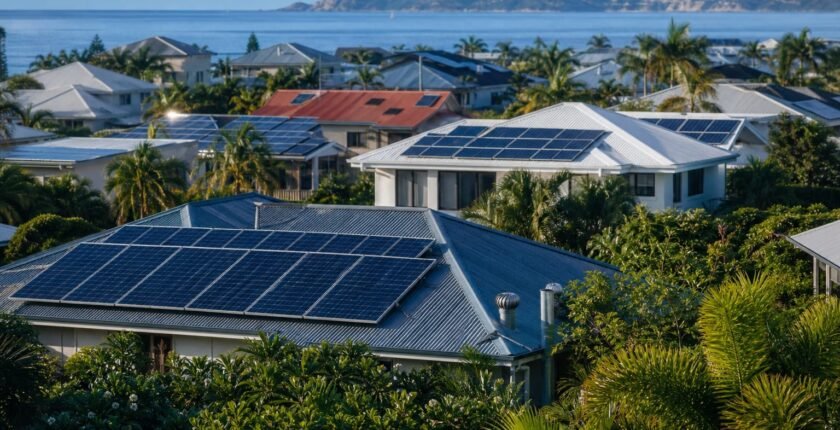
Jersey's solar activity rose in 2025 as households and some businesses installed small generators and began exporting power to the public grid. The Jersey Energy Trends Report recorded 99 more homes and businesses generating electricity by the end of 2025, with 641 private microgeneration sites at year-end compared with 540 when the year began. Energy from private sites accounted for 3% of the island's overall supply, while 2.4 GWh was sold to Jersey Electricity for wider distribution. The States of Jersey said this was the first year the government tracked private homes specifically.
Key takeaways
- The Jersey Energy Trends Report recorded 99 more homes and businesses generating electricity by the end of 2025.
- By the end of 2025 there were 641 private microgeneration sites, up from 540 at the beginning of the year.
- Energy from private sites made up 3% of Jersey's overall supply and 2.4 GWh was sold to Jersey Electricity for distribution.
- Final consumption split was 37% residential, 34% road transport and 29% commercial, government and agriculture.
Table of contents
Scale and composition of private generation
The government began monitoring private domestic generation in 2025 and recorded 641 private microgeneration sites at year-end, a clear baseline for future comparisons. That count rose from 540 at the start of 2025, marking a net increase recorded within the calendar year. The Jersey Energy Trends Report treats private sites separately from the island’s larger commercial and utility-scale production, which remains dominated by imports. The statistics published make this the first publicly available snapshot of household and small-business input to Jersey’s grid, enabling planners to track how local, distributed generation changes peak demand and import dependence.
How much is sold back and what share it represents
Households and businesses did not just consume the electricity they generated; some exported power to the public network. The report records that 2.4 GWh was sold to Jersey Electricity for wider distribution last year, and that figure represented 5% of the electricity produced on the island. That 2.4 GWh equated to less than 0.5% of total primary supply, underlining that exports from private sites remain a small fraction of overall energy flows. These numbers show that while local generation is growing, it remains supplementary to imported supply and island-scale generation.
Usage patterns and near-term implications
The island’s energy use profile frames where private generation matters most: 37% of consumption is residential, 34% is predominantly road transportation, and 29% covers commercial, government and agriculture. Over five years the road sector’s consumption fell by 9%, while the air and marine sector rose by 59%, suggesting shifting demand pockets. Private generation supplying 3% of overall power points to potential local benefits for residential demand but also to limits: imports still supply the bulk of energy needs. Policymakers can use the new baseline to assess grid access, metering and incentives that affect whether more small generators export or simply reduce household bills.
| Measure | Value at start of 2025 | Value at end of 2025 |
|---|---|---|
| Private microgeneration sites | 540 | 641 |
| Net new homes/businesses generating | — | 99 more |
| Electricity sold to Jersey Electricity | — | 2.4 GWh |
How this could evolve
The case for
- If installations continue beyond 2025’s rise, the recorded 3% share from private sites could grow and reduce import dependence for some hours of the day.
- Increased tracking of private households gives planners better data to design export tariffs and grid connections that make exports easier and more economic.
The case against
- Private generation remains a small fraction of total supply; the 2.4 GWh sold represented only 5% of locally produced electricity and under 0.5% of total primary supply, limiting system impact for now.
- Shifts in demand — a 59% rise in the air and marine sector and only a 9% fall in road consumption over five years — could offset gains from rooftop generation without further grid or storage investment.
What to be careful about
- Private generation accounted for just 3% of overall supply, so reliance on imports remains the key system risk.
- Exports from small sites are modest: 2.4 GWh sold covers 5% of local production, so expectations of rapid grid defection may be premature.
- Data gaps remain because 2025 was the first year private homes were tracked, limiting trend confidence.
The bottom line
The 2025 figures give Jersey its first systematic view of household and small-business generation. With 641 microgeneration sites recorded and 2.4 GWh sold to Jersey Electricity, private generation is measurable but still modest: it supplied 3% of overall power and its exports were a small slice of total primary supply. The new baseline matters because it enables targeted policy on tariffs, connections and grid upgrades, but the numbers also show that imports and sectoral demand patterns will shape the island’s energy mix for the near term.
What to watch
- Watch for the government's next annual Jersey Energy Trends Report; no date has been set.
- Watch for any Jersey Electricity changes to small-generator tariffs or export rules; no date has been set.
Frequently asked questions
How many private generation sites does Jersey now have?
The Jersey Energy Trends Report found 641 private microgeneration sites at the close of 2025, an increase on the 540 recorded at the start of the year.
How much power did small generators sell back to the grid in 2025?
Private sites sold 2.4 GWh to Jersey Electricity for wider distribution in the year covered by the report.
What portion of Jersey’s supply comes from private sites?
Energy from private sites accounted for 3% of the island's overall supply, while exports to the public supply were 5% of locally produced electricity and under 0.5% of total primary supply.
Related reading