
Blog
New York Approves Meter Socket Adapter Pilot
Estimated reading time: 5 minutes · Last updated:
The New York Public Service Commission has approved a statewide two-year pilot to test meter socket adapters (MSAs) for residential solar, EV charging and battery storage. MSAs plug into a home’s existing meter socket so inverters, batteries or chargers can connect without a main-panel upgrade; the PSC says utilities will accept MSA interconnection applications from 1 June 2027 and must report operational or safety findings after the pilot ends two years later. The proceeding began in Aug. 2024 with filings from ConnectDER and Tesla and later included Enphase Energy; the decision was, as first reported by pv magazine USA, met with support from the New York Solar Energy Industries Association.
applauds Governor Kathy Hochul and the New York State Public Service Commission for adopting a statewide program for meter socket adapters, an important step toward reducing the cost of residential solar and battery storage for New Yorkers.
New York Solar Energy Industries Association (NYSEIA)
Key takeaways
- Pilot approval: The New York PSC approved a statewide two-year pilot for meter socket adapters that begins accepting applications on 1 June 2027.
- Origins of the filing: ConnectDER and Tesla initiated the proceeding in Aug. 2024 and Enphase Energy later joined the group of MSA manufacturers.
- Stakeholders: Solar industry parties included Sunrun, NYSEIA, ACE NY and New York State Solar Farm Inc.; state utilities filed an implementation proposal in 2025.
- National context: Similar moves include a Delaware PSC measure proposed in Oct. 2025 that became permanent in April and Colorado law 26-1007 signed in May 2026 with a 31 December 2026 PUC rule deadline.
Table of contents
How meter socket adapters change residential interconnection
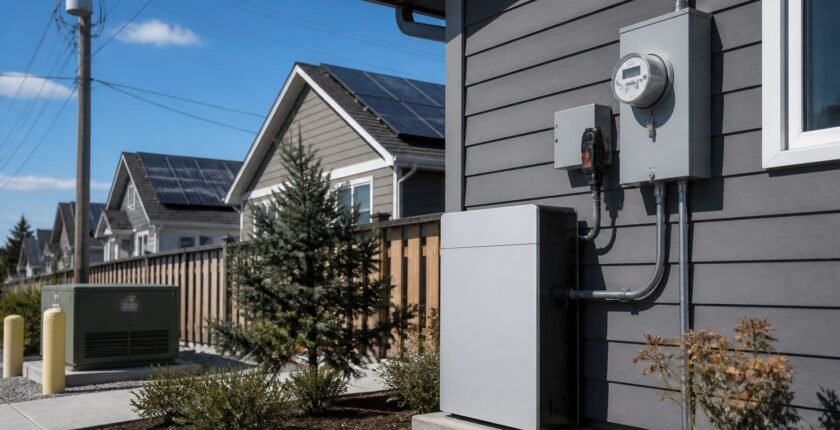
Meter socket adapters are physical devices that plug into a home’s existing electric meter socket and provide terminals for downstream connections. By putting the inverter, battery or EV charger at the meter, an MSA lets installers bypass the main electrical panel; that elimination of a panel upgrade is the principal mechanism by which manufacturers say MSAs reduce upfront customer cost.
The PSC order frames the pilot specifically around installation complexity and cost savings and requires utilities to accept applications from a utility-approved list starting on 1 June 2027. ConnectDER, Tesla and Enphase Energy argued during the proceeding that MSAs could be tested, listed and deployed safely if the particular components held certification from a nationally recognized testing laboratory and installations complied with the National Electric Code.
Key technical and safety questions the pilot must resolve include protection coordination at the meter, labeling and visible isolation for first responders, and whether field practice or additional equipment will be required when MSAs are used instead of panel upgrades. These are the operational impacts the PSC has asked utilities to document during the two-year trial.
Where New York sits in a growing patchwork of approvals
The PSC order follows a string of state and utility actions on meter collar adapters and MSAs over the past year. In October 2025 the Delaware PSC proposed rules requiring Delmarva Power to approve meter collar adapters when the devices carry certification from a nationally recognized testing laboratory and are installed in accordance with the National Electric Code; those rules became permanent in April. Colorado moved via legislation when Governor Jared Polis signed 26-1007 in May 2026 and directed the Colorado Public Utilities Commission to update interconnection rules by 31 December 2026.
Enphase Energy reported in September 2026 that its IQ Meter Collar had gained approval for behind-the-meter installation from 80 different utilities across the United States and Canada. New York’s order required utilities in 2025 to file a statewide deployment proposal; the PSC pilot now creates a common start date and a reporting requirement that will let regulators compare outcomes across jurisdictions over a defined two-year window.
Implications for residential battery storage and installers
For battery storage specifically, MSAs could lower the cost and time required to add behind-the-meter batteries by removing main-panel upgrades from many installation scopes. Industry groups pushed this point: the New York Solar Energy Industries Association said it “applauds Governor Kathy Hochul and the New York State Public Service Commission for adopting a statewide program for meter socket adapters, an important step toward reducing the cost of residential solar and battery storage for New Yorkers.”
But adoption depends on the pilot’s operational findings. Utilities must track safety events, interoperability issues and any impacts on outage restoration and system telemetry; the PSC will require a post-pilot report covering such operational impacts and safety concerns two years after applications open. Installers will also need clarity on which devices appear on utility-approved lists and on testing or listing requirements imposed by labs and code-enforcement bodies.
| Jurisdiction | Action | Date | Notes |
|---|---|---|---|
| New York (PSC) | Statewide two-year pilot approved | Applications from 1 June 2027 | Utilities must report operational or safety findings after pilot |
| Delaware (PSC) | Proposed rules for meter collar adapters; later made permanent | Proposed Oct. 2025; became permanent in April | Requires national testing-lab approval and NEC compliance |
| Colorado | Law 26-1007 directs PUC rule update | Signed May 2026; PUC deadline 31 December 2026 | Standardised process for meter collar adapters to be set by PUC |
| Enphase (product approvals) | IQ Meter Collar approvals | September 2026 | Approved for behind-the-meter installation by 80 different utilities |
Case for and against rapid uptake
The case for
- Lowered need for main-panel upgrades could reduce average installation cost and accelerate residential battery storage adoption.
- A standardized, statewide two-year pilot and required utility reports will create comparable operational data for regulators and manufacturers.
- Listing and testing requirements tied to nationally recognized testing laboratories should streamline device acceptance when met.
The case against
- Unresolved safety or interoperability issues identified in field deployments could slow approvals or lead to additional equipment mandates.
- Uneven participation by utilities or restrictive approved-device lists would fragment the market and limit consumer choice.
- If utilities document telemetry or outage-handling problems, regulators could restrict MSA use or require retrofit costs that negate the expected savings.
What to be careful about
- Pilot could reveal protection coordination failures at the meter that require design changes or extra equipment.
- Differences in utility-approved device lists may leave some customers unable to use MSAs despite statewide pilot approval.
- Insufficiently documented safety or labeling practices could increase emergency-response risk and prompt stricter rules.
The bottom line
The New York PSC pilot makes the state a major testbed for meter socket adapters and ties local practice to a growing set of state and utility actions around the United States. The key deliverable will be utilities’ post-pilot reports: they will show whether MSAs deliver the promised savings without operational or safety trade-offs. Installers, manufacturers and battery-storage advocates will watch the pilot start on 1 June 2027 and the Colorado PUC’s rule update due 31 December 2026 for signals about market scale and regulatory expectations.
What to watch
- Watch for the Colorado Public Utilities Commission to publish interconnection rule updates by 31 December 2026.
- Watch for New York utilities to accept MSA interconnection applications beginning 1 June 2027.
Frequently asked questions
What is a meter socket adapter (MSA)?
A meter socket adapter is a device that plugs into a home’s electric meter socket and provides terminals for inverters, batteries or EV chargers so installers can avoid main-panel upgrades; ConnectDER and Tesla initiated the New York proceeding in Aug. 2024, with Enphase Energy later joining the manufacturers’ group.
When does the New York pilot run and who must report?
The PSC approved a statewide two-year pilot that will accept utility-approved MSA interconnection applications from 1 June 2027; utilities are required to submit a report after the pilot that documents any operational impacts or safety concerns.
Will MSAs reduce the cost of home battery installations?
Proponents and industry groups such as NYSEIA argue MSAs reduce costs by eliminating many main-panel upgrades, but the PSC’s pilot is designed to measure actual installation savings and any offsetting costs from additional equipment or safety requirements.
Related reading