
Blog
Floods halt over 500 MW of Nepal hydropower
Estimated reading time: 5 minutes · Last updated:
The Nepal Electricity Authority (NEA) says heavy rain, flooding and landslides have put more than 500 megawatts of hydropower generation out of operation and forced shutdowns at at least 23 projects. The outages follow damage to transmission corridors, local plant infrastructure and riverside works that have allowed sand and debris to accumulate at dams and tailraces. Key losses include about 358 MW tied to the 220 kV Kaligandaki Corridor and recent damage to the newly connected 40 MW Rahughat Hydropower Project. NEA has mobilised technical teams and temporary arrangements to restore supply where roads and access permit.
Key takeaways
- Total capacity affected: The Nepal Electricity Authority says floods and landslides have taken over 500 MW of generation capacity offline.
- Number of projects: At least 23 hydropower projects have stopped generation because of direct damage, flood risk or transmission disruptions.
- Corridor damage: Damage to the 220 kV Kaligandaki Corridor has affected about 358 MW of generation and damaged towers 21 and 22 on the Dana–Kushma section.
- New project hit: Damage was reported at the 40 MW Rahughat Hydropower Project only four days after the facility began supplying electricity to the national grid; it comprises two 20 MW units and had an estimated construction cost of NRs 9.17 billion.
Table of contents
How the outages add up: scope and immediate impact
The NEA’s field reports attribute the outages to a combination of persistent rainfall, high river flows, landslides and lightning that together damaged generation works and the transmission lines that carry power to the grid. More than 500 MW of capacity is reported offline and the authority lists 23 separate hydropower sites affected by direct damage, precautionary shutdowns or interruption of their transmission links.
Transmission damage is a central driver of the system-wide impact. The NEA estimates about 358 MW of generation is tied to the 220 kV Kaligandaki Corridor, where failures on the Dana–Kushma section and a fault on Kushma–New Butwal have removed multiple plants from service. Across the affected regions, outages have caused local supply interruptions in Myagdi, Baglung, Manang and Mustang while repair crews assess the extent of physical damage to towers, lines and substations.
What failed: corridors, dams and sediment
The most significant transmission problem reported is the damage to the 220 kV Kaligandaki Corridor. Towers 21 and 22 on the Dana–Kushma stretch were reported damaged; that single section’s faults have cut off a cluster of connected plants and account for the roughly 358 MW figure tied to the corridor. The report names a range of affected schemes that rely on that line for evacuation of generation.
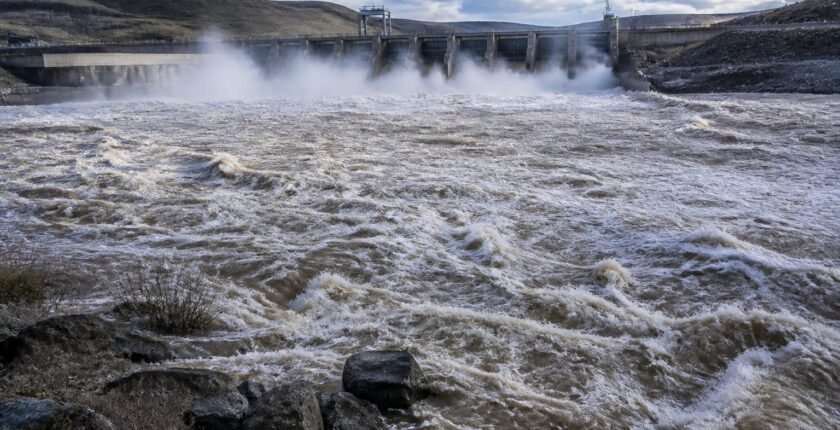
On the generation side, the combination of high flows and heavy sediment has been disruptive. Middle Marsyangdi (70 MW) and Upper Marsyangdi ‘A’ (50 MW) suspended generation after mud, sand and debris gathered at Middle Marsyangdi’s dam and the Marsyangdi River rose to around 1,500 cubic metres per second at Upper Marsyangdi ‘A’. Operators opened dam gates at both projects to pass debris and reduce pressure on structures; that action stops generation while reducing the risk of damage to turbines and outlets.
The Rahughat setback and what it reveals about new plants
Rahughat Hydropower’s 40 MW project, developed by Raghuganga Hydropower Ltd., suffered damage to its tailrace only four days after it began trial generation. The plant has two 20 MW units and had entered a 15-day trial phase before commercial operation; flood damage during that trial has halted its output and will delay its commercial start.
The project is designed to produce about 247.9 million units of electricity each year, with roughly 34% of that output expected in the dry season, and its construction cost excluding interest during construction is given as NRs 9.17 billion. The early loss highlights how extreme river conditions and debris flows can hit commissioning plants as much as long-running ones, and how restoration needs both civil repairs and clearance of sediment from waterways and tailraces.
Access, response and the constraints on repair work
NEA has mobilised technical and maintenance teams to map damage, restore supplies using alternate feeders where possible, and repair infrastructure immediately when access permits. The authority reports using available transmission and distribution networks and deploying additional crews and equipment once roads and access routes are cleared, but it cautions that heavy rain, landslides and blocked roads are slowing assessments and repairs in some districts.
Local conditions compound the operational challenge. Landslides have severed a 33 kV line in Manang and damaged distribution assets at multiple voltage levels—220 kV down to 11 kV—which complicates temporary re-routing of power. Until access is restored and debris cleared from river works, some projects and communities in upper valleys are likely to face extended interruptions despite field crews working on priority restoration.
| Project | Capacity (MW) | Status / notes |
|---|---|---|
| Rahughat Hydropower Project | 40 | Tailrace damaged; trial generation halted; two 20 MW units |
| Middle Marsyangdi | 70 | Generation suspended after sediment and debris at dam |
| Upper Marsyangdi ‘A’ | 50 | Operations halted after river flow rose to ~1,500 m3/s |
| Nilgiri-1 / Nilgiri-2 | — | Shut down due to Dana–Kushma section damage |
| Kaligandaki and other corridor-tied plants | ~358 tied to corridor | Affected by Kaligandaki Corridor faults and tower damage |
How restoration could go
The case for
- NEA has mobilised teams and is supplying electricity through alternate feeders and available networks where possible, which will restore service faster in less-affected areas.
- Opening dam gates and planned debris clearance at Middle and Upper Marsyangdi may prevent structural damage and allow turbines to restart once sediment is removed.
The case against
- Blocked roads, ongoing heavy rainfall and landslides will delay access to damaged towers and substations, extending outages in remote districts.
- If sediment continues to accumulate at dam sites or tailraces, turbine and civil repairs could be more extensive and lengthen the time to full commercial operation for affected plants.
What to be careful about
- Extended loss of generation capacity if the Kaligandaki Corridor reconstruction requires tower rebuilds rather than repairs.
- Damage to dams and tailraces from sediment loads that could require turbine removal or civil works beyond on-site maintenance.
- Prolonged local outages in Myagdi, Baglung, Manang and Mustang if access routes remain blocked and alternative feeders are insufficient.
The bottom line
The NEA’s figures show this episode is driven less by a single plant failure and more by simultaneous hits to transmission corridors, river works and access roads. That interplay—tower damage on the Kaligandaki Corridor, sediment-choked dams at Marsyangdi projects and a tailrace failure at Rahughat—has taken more than 500 MW offline and pulled 23 projects from production. Restoration will depend on clearing debris from waterways, repairing or rebuilding damaged transmission towers and reopening blocked roads; until those tasks progress, affected districts and the national grid will face constrained supply.
What to watch
- Watch for the NEA’s public damage-assessment and restoration timeline; no date has been set.
- Watch for a reopening date for the Dana–Kushma section of the Kaligandaki Corridor; no date has been set.
Frequently asked questions
How much hydropower capacity is offline?
The Nepal Electricity Authority reports that floods and landslides have placed over 500 MW of generation capacity out of operation and that 23 projects have been affected by direct damage, precautionary shutdowns or transmission interruptions.
Which transmission link caused the largest single impact?
Damage to the 220 kV Kaligandaki Corridor is responsible for much of the system effect: the NEA ties roughly 358 MW of generation to that corridor and reported damage to towers 21 and 22 on Dana–Kushma, plus a fault on Kushma–New Butwal.
What happened to the newly connected Rahughat plant?
The 40 MW Rahughat Hydropower Project, developed by Raghuganga Hydropower Ltd., was damaged four days after grid connection during trial runs; it has two 20 MW units, a design annual output of about 247.9 million units and an estimated construction cost of NRs 9.17 billion.
Related reading