
Blog
Rescued worker vows to rebuild Nepal’s hydropower
Estimated reading time: 5 minutes · Last updated:
Kabir Maharjan, a 45-year-old Nepalese hydropower worker rescued after being trapped for 10 days in a tunnel, says he intends to return to the industry and help rebuild damaged sites. His rescue on Sept. 4 followed the Aug. 26 glacial collapse that killed at least 1,400 people and left more than 5,000 missing in Nepal’s northern regions. The government estimates overall reconstruction could cost US$4.8 billion. Reporting by Anup Ojha for AFP included Maharjan’s account of surviving by reaching an upper tunnel floor and drinking water while waiting for help.
Life is precious. Hundreds of people have died but I survived,
Kabir Maharjan
Key takeaways
- Kabir Maharjan, 45, was rescued on Sept. 4 after being trapped for 10 days in a tunnel at the Trishuli-3A Hydropower Project.
- The Aug. 26 glacial collapse and flood killed at least 1,400 people and left more than 5,000 missing in Nepal’s northern regions.
- In parliament, the energy minister said more than 800 hydropower project workers have yet to be located.
- Rescue teams have recovered 47 bodies from flood-hit project sites.
- The Nepal government estimates reconstruction needs could total about US$4.8 billion.
Table of contents
- Key takeaways
- How Maharjan survived and what he says he will do next
- The human and operational toll on Nepal’s hydropower sector
- The size of the rebuilding task and logistical headaches
- Policy, climate warnings and the shape of international aid
- How reconstruction could succeed or stall
- What to be careful about
- Frequently asked questions
How Maharjan survived and what he says he will do next
Kabir Maharjan was one of hundreds working on hydropower projects in Nepal’s high country when a glacial mountain collapse triggered tsunami-like flood waves on Aug. 26. Trapped inside the tunnel complex at the Trishuli-3A Hydropower Project, he reached an upper floor and rationed water until rescuers found him. He was airlifted from the Rasuwa region and spent weeks in a Kathmandu hospital before returning home.
Maharjan described the moment he heard rescuers: he saw a light and called out, then was helped out two days later. He lost colleagues and neighbours in the disaster but said he feels compelled to return to his trade. “Life is precious. Hundreds of people have died but I survived,” he told reporters. He added that risk is inherent in the work but that rebuilding offers purpose and community service.
The human and operational toll on Nepal’s hydropower sector
The 26 August collapse inflicted heavy casualties across mountain districts and directly hit multiple hydropower sites, damaging access roads, equipment and plant infrastructure. Rescue crews have recovered 47 bodies from project sites and, as first reported by Taipei Times, more than 800 hydropower project workers remain unaccounted for. Those missing include labourers transported to remote construction sites now cut off by landslides.
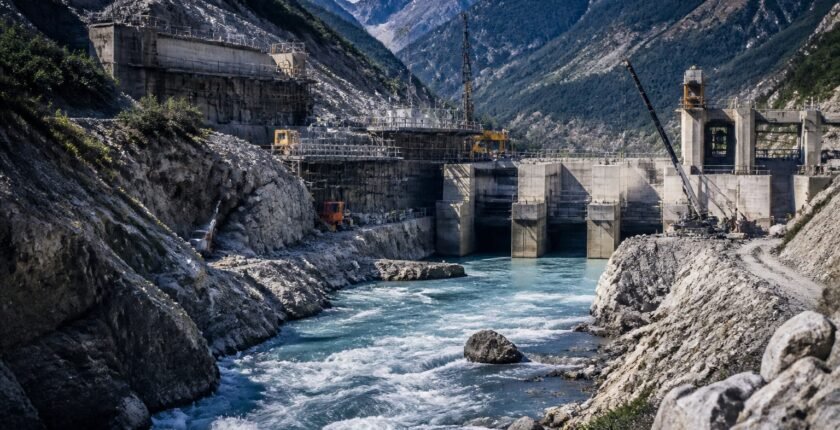
Beyond immediate loss of life, the event disrupted generation and export plans that form a core part of Nepal’s development strategy. Plants in the affected valleys supplied both domestic demand and cross-border sales. Repairing buried intake tunnels, crushed switchyards and destroyed transmission lines will be time-consuming in terrain where each component must be hauled up narrow mountain tracks or flown in by helicopter.
The size of the rebuilding task and logistical headaches
The Nepal government has put the overall reconstruction estimate at US$4.8 billion, a sum that covers housing, roads, bridges and energy assets. That figure frames a programme that will need engineers, materials and heavy machinery delivered into steep, unstable valleys. For hydropower specifically, projects that lost tunnels, intake structures or access roads face months of preparatory clearing before repairs can begin.
Logistics are a practical bottleneck: landslides and washed-out highways force reliance on helicopters and temporary bridges, inflating costs and slowing schedules. Contractors also face a constrained local workforce after the loss of life and displacement. For many damaged plants, insurance and financing arrangements must be renegotiated, and international donors or buyers of Nepalese power will want clearer assurances on future safety and flood risk mitigation before committing funds.
Policy, climate warnings and the shape of international aid
Nepal’s prime minister, Balendra Shah, described the floods to the UN as a warning about climate-driven hazards and urged more support for adaptation and resilient rebuilding. That line of argument widens the task from restoring pre-flood capacity to redesigning corridors, roads and plants for more frequent extreme events. Engineers and planners will need to reassess siting, intake protection and emergency egress for workers in tunnel projects.
David Fisher, head of delegation for the International Federation of Red Cross and Red Crescent Societies in Nepal, said the emergency phase is not over and that the aftermath requires urgent recovery steps to protect health and livelihoods. Donor coordination, targeted engineering upgrades and strengthened early-warning systems are the practical elements that will decide whether reconstruction reduces future risk or merely restores vulnerability.
| Item | Reported figure | Context |
|---|---|---|
| Fatalities | At least 1,400 | Total deaths from Aug. 26 glacial collapse |
| Missing | More than 5,000 | People unaccounted for after the floods |
| Hydropower workers missing | More than 800 | Unaccounted workers at affected projects |
| Bodies recovered at project sites | 47 | From flood-hit hydropower sites |
| Estimated reconstruction cost | US$4.8 billion | Government estimate across sectors |
How reconstruction could succeed or stall
The case for
- International assistance and donor finance focused on resilient designs could fund protective engineering and faster, safer restoration of generation capacity.
- Using the rebuild to relocate vulnerable access roads and harden intake structures would reduce future closure risk and protect workers.
The case against
- Steep terrain, washed-out transport links and a reduced local workforce will raise costs and slow project timelines, pushing some repairs into a multi-year phase.
- If reconstruction prioritises speed over resilience, damaged assets may be rebuilt to the same exposure, increasing the chance of repeat losses.
What to be careful about
- Worker safety at tunnel and mountain construction sites remains exposed while access and emergency egress are impaired.
- Supply-chain and transport constraints in the mountains could drive reconstruction costs above the US$4.8 billion estimate.
- Delays in donor coordination or escrowed financing could stall repairs to generation and transmission, prolonging energy shortfalls.
The bottom line
The rescue of Kabir Maharjan offered a human face to a catastrophe that has damaged Nepal’s mountain communities and its energy backbone. The Aug. 26 collapse killed at least 1,400 people, left over 5,000 missing and has placed immediate pressure on hydropower projects where more than 800 workers are unaccounted for. Rebuilding will cost a government-estimated US$4.8 billion and requires difficult trade-offs between speed and resilience. How Nepal, donors and engineers respond will determine whether reconstruction reduces future risk or simply restores vulnerability.
What to watch
- Watch for the government’s published reconstruction plan and its timetable; no final dates have been set.
- Watch announcements of major international donor pledges for Nepal’s recovery; no specific pledges with dates were listed in the reporting.
Frequently asked questions
How many people died and remain missing after the Aug. 26 collapse?
The Aug. 26 glacial collapse and flood killed at least 1,400 people and left more than 5,000 missing in Nepal’s northern regions, according to the reporting.
What is the estimated cost to rebuild after the floods?
The government has estimated overall reconstruction could cost US$4.8 billion, covering housing, roads, bridges and energy infrastructure.
How many hydropower workers are unaccounted for and what does that mean for projects?
The energy minister told lawmakers the shortfall — more than 800 missing workers from hydropower projects — complicates efforts to restart site work and raises immediate safety and labour concerns.
Related reading