
Blog
Expert explains Nepal hydropower tunnel rescue challenges
Estimated reading time: 3 minutes · Last updated:
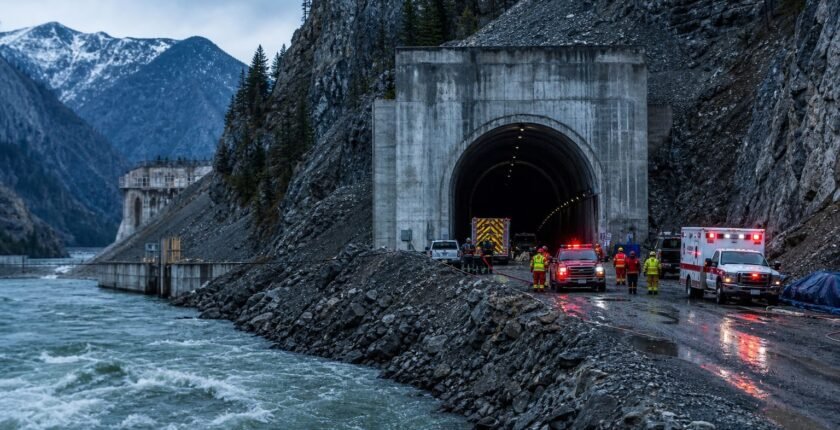
Arnold Dix, who is advising efforts to free workers trapped in hydropower tunnels in Nepal, has outlined the operation's latest developments and key challenges — access, unstable ground and worker welfare. The first public clip of his analysis was posted at 9:19 PM EDT on 1 September 2026. This summary sets out who Dix is, what he identifies as central to the operation, and which practical details remain absent from public updates.
Key takeaways
- Advisor named: Arnold Dix is advising the rescue effort; he is identified as a disaster specialist and a professor of tunnel engineering.
- Location: Workers are trapped inside hydropower tunnels in Nepal.
- Published time: A video of Dix breaking down developments and challenges was posted at 9:19 PM EDT, Tue September 1, 2026.
Table of contents
Who Arnold Dix is and his role advising the operation
Arnold Dix is identified in the published clip as a disaster expert and a tunnel engineering professor who is advising rescue teams working on the incident in Nepal. His role, as described, is to interpret tunnel behaviour and to brief rescuers on technical constraints. That combination of disaster and tunnelling expertise is widely used in complex underground incidents because it pairs hazard assessment with practical excavation and access methods.
Dix described his role as technical and advisory rather than as a rescue commander. A public clip identifies him in that advisory capacity and lists no university or employer beyond the title 'tunnel engineering professor.'
What rescuers face according to the briefings
Dix laid out recent developments and the challenges facing the operation in the hydropower tunnels, summarizing them in general terms: reaching the trapped workers, stabilizing tunnel sections, and managing the workers' welfare while engineering solutions are prepared. He did not provide a detailed timeline of developments or enumerate specific engineering measures.
The coverage identifies the location as hydropower tunnels in Nepal and stresses that the briefing is a technical explanation for ongoing operations rather than a full incident log. No casualty counts, exact worker numbers or detailed timelines for interventions appear in the available briefing.
What public information is still missing
The public briefing named the adviser and the setting but omitted several operational facts readers and responders commonly need: the number of workers trapped, the exact tunnel section affected, the agencies leading the rescue, and a concrete timeline for access attempts. Those omissions limit how thoroughly outside specialists or interested parties can assess the immediate prospects.
The clip gives a technical framing but leaves tactical and logistical details to official operational updates. Without those specifics, outside observers must treat the briefing as an expert interpretation of current challenges rather than a full status report.
How the situation could move in either direction
The case for
- If access shafts or a stable approach can be engineered, expert-guided interventions typically speed worker recovery; Dix’s advisory role aims to guide that engineering.
- Public technical briefings can focus resources and outside assistance if officials publish the missing operational details Dix did not provide in the clip.
The case against
- A lack of concrete operational details—number of trapped workers, exact tunnel location and responsible agencies—keeps outside support constrained and slows external coordination.
- Unstable ground or ongoing tunnel collapse risks that Dix flagged as challenges would lengthen timelines and complicate any direct-access rescue attempt.
What to be careful about
- Operational risk from unstable tunnel sections that can endanger rescuers and trapped workers.
- Limited public information on worker numbers and tunnel location, which hampers outside coordination and resource offers.
- Potential delays while engineering access is assessed and stabilised, increasing medical and welfare risks for those trapped.
The bottom line
The public briefing names Arnold Dix as the technical adviser and frames the rescue as a complex tunnelling problem in Nepal. It highlights access, ground stability and welfare as central challenges but leaves out operational specifics—worker counts, exact locations and the agencies in charge. Those omissions make it hard for outside experts to offer detailed help. Follow official operational updates and any statement from Dix or his institution for the concrete timelines and engineering measures that will determine the rescue outcome.
What to watch
- Watch for an operational update from Nepalese authorities; no date has been set.
- Watch for a public statement or technical note by Arnold Dix or the institution he represents; no date has been set.
Frequently asked questions
Who is Arnold Dix?
Arnold Dix is described in the published clip as a disaster expert and a tunnel engineering professor who is advising the rescue teams working on the incident in Nepal.
Where are the workers trapped?
The workers are trapped inside hydropower tunnels in Nepal, as identified in the briefing cited in the published clip.
When was the expert briefing published?
A video of the expert breaking down developments was posted at 9:19 PM EDT on September 1, 2026.
Related reading