
Blog
Nepal Floods Expose Hydropower Vulnerabilities
Estimated reading time: 5 minutes · Last updated:
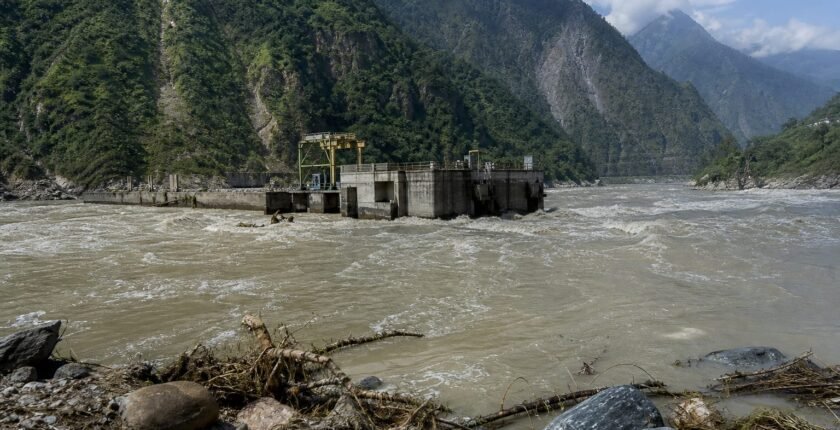
Floods that swept Nepal and adjacent areas of China in late August 2026 overran hydropower works and knocked out roughly 10% of Nepal’s power capacity, leaving more than 20,000 people without electricity. The event exposed a central hydropower vulnerability in the warming Himalayas: many run-of-river and valley projects sit in steep corridors where glacial retreat, unstable slopes and extreme rainfall can cascade into rapid debris flows. The Coalition for Disaster Resilient Infrastructure said rebuilding should prioritise continuity and risk-based siting rather than simple replacement.
Authorities have to take a hard look in the mirror now and ask how they will be rebuilding in these places. They will also have to take a close look at other projects in Nepal that have not been built yet, whether they’ll be approved after this event.
Jakob Steiner, geoscientist at the University of Graz
Key takeaways
- Floods in late August 2026 knocked out about 10% of Nepal’s power capacity, AP News reported.
- Workers were trying to restore electricity to more than 20,000 people after the floods reached hydropower sites in Rasuwa, Nuwakot and Dhading districts.
- The Coalition for Disaster Resilient Infrastructure estimates $124 billion of Nepal’s infrastructure is exposed to climate-driven disasters.
- A Coalition report earlier this year found Nepal’s average annual losses from disasters are nearly $760 million while national disaster funds are only a fraction of that amount.
Table of contents
How the August floods hit Nepal’s hydropower system
The floods moved rapidly from their source on the China-Nepal border and overwhelmed multiple hydropower sites and access tunnels in mountain valleys. Operations and construction works in Rasuwa, Nuwakot and Dhading were fully or partly destroyed and rescue teams cleared thick mud from damaged power stations while restoring service to affected communities.
The disruption has immediate implications for the grid: about 10% of the country’s generating capacity was offline after the event, and more than 20,000 people lost electricity as repair teams worked. Independent Power Producers’ Association, Nepal told officials that personnel sheltering in tunnels were stuck and awaiting rescue at several project sites.
Repair crews face constrained sites where roads and bridges were also washed away, so restoring capacity depends as much on access as on turbine or dam repairs. That combination — damaged access routes plus valley-bound project footprints — is one reason hydropower losses can cascade into prolonged outages in mountain systems.
Why Himalayan hydropower is increasingly exposed
Climate researchers point to accelerating glacier melt, permafrost loss, unstable slopes and more erratic monsoon rainfall as the set of drivers raising flood, landslide and debris-flow risk across the Hindu Kush Himalaya. The International Center for Integrated Mountain Development, based in Kathmandu, has documented accelerating ice loss across regional glaciers and warned these processes change how rivers behave in mountainous valleys.
Himanshu Thakkar, coordinator of the South Asia Network on Dams, Rivers and People, said environmental, social and disaster-risk assessments must take each valley’s hazard history into account and be paired with land-use regulations and enforceable accountability.
The Coalition for Disaster Resilient Infrastructure noted that lesser floods may be handled by rerouting flows and placing debris barriers, but very large events can overwhelm physical defences; that shifts emphasis to early warning systems and emergency procedures to move workers and communities out of harm’s way before destructive flows arrive.
Rebuilding: redundancy, siting and financial preparedness
Coalition for Disaster Resilient Infrastructure senior director Ramraj Narasimhan said reconstruction should focus on continuity of services rather than making every asset indestructible. He suggested measures such as alternate routes, backup power and financial tools like insurance to speed recovery when damage occurs.
The coalition’s recent analysis puts $124 billion of Nepal’s infrastructure in harm’s way and estimates annual disaster losses near $760 million, underscoring a funding gap between likely losses and national disaster funds. That gap means planners must weigh whether to replace a damaged installation in the same valley or shift to lower-risk options.
Some voices argue for a more decentralised electricity mix. Himanshu Thakkar said Nepal should consider greater rollout of distributed solar to diversify sources of generation and reduce dependence on valley-constrained hydropower that can act as a force multiplier when large structures and debris alter downstream channels.
| Item | Where hit | Impact noted | Source |
|---|---|---|---|
| Hydropower sites in Rasuwa, Nuwakot, Dhading | Mountain valleys and tunnels | Fully or partly destroyed; workers trapped in tunnels; power offline | The Associated Press |
| Nepal’s exposed infrastructure (estimate) | Nationwide | $124 billion exposed to climate-driven disasters | Coalition for Disaster Resilient Infrastructure |
| Nepal annual disaster losses (estimate) | Nationwide | Nearly $760 million average annual losses | Coalition for Disaster Resilient Infrastructure report |
Two paths for Nepal’s energy recovery
The case for
- If reconstruction prioritises redundancy, alternate routes and early warnings, hydropower sites can resume service faster and reduce human exposure during extreme floods.
- Shifting part of new capacity toward decentralised solar and small-scale systems would lower the consequence of single-valley failures and spread generation closer to load centers.
The case against
- If damaged plants are rebuilt in the same valley footprints without stricter siting and land-use enforcement, future floods or debris flows could produce repeated large outages and compounded downstream damage.
- The scale of exposed infrastructure ($124 billion) and the estimated annual loss nearly $760 million suggest a funding shortfall that could delay resilient rebuilding unless insurance, international finance or budget priorities change.
What to be careful about
- Rebuilding infrastructure in the same high-hazard valleys could repeat the pattern of repeated damage and prolonged outages.
- Insufficient early warning coverage upstream means downstream hydropower workers and communities may have little time to evacuate from rapidly moving floods.
- A funding gap between estimated annual losses (nearly $760 million) and available national disaster funds could slow resilient reconstruction and recovery.
The bottom line
The August floods were a stark reminder that Himalayan hydropower sits at the intersection of valuable generation and concentrated hazard. Restoring capacity will require decisions about where to rebuild, when to accept redundancy versus relocation, and how to close a financing gap that the Coalition for Disaster Resilient Infrastructure puts at $124 billion in exposed assets and nearly $760 million in annual losses. Engineers and community advocates agree the emphasis must shift from replacing single assets to strengthening system continuity and early warning if Nepal is to avoid repeating the same disruptions.
What to watch
- Watch whether Nepal’s government announces a formal review or moratorium on approvals for pending hydropower projects; no date has been set.
- Watch for new national guidance or funding commitments that prioritise redundancy and early warning for mountain infrastructure; no date has been set.
Frequently asked questions
How much of Nepal’s power did the floods knock out?
Reporting indicates the floods knocked out about 10% of Nepal’s power capacity and left more than 20,000 people without electricity while repair teams worked at damaged sites.
What kinds of climate processes are raising risks for Himalayan hydropower?
Researchers point to accelerating glacier loss, permafrost degradation, unstable slopes and increasingly erratic rainfall across the Hindu Kush Himalaya, and the International Center for Integrated Mountain Development has documented accelerating ice loss on regional glaciers.
What financial exposure does Nepal face from climate-driven disasters?
The Coalition for Disaster Resilient Infrastructure estimates about $124 billion of Nepal’s infrastructure is exposed to climate-driven disasters, and the Coalition estimates the country’s average annual losses are nearly $760 million.
Related reading