
Blog
Repurposed Wind Blades and Clean-Energy Signs in the Southeast
Estimated reading time: 5 minutes · Last updated:
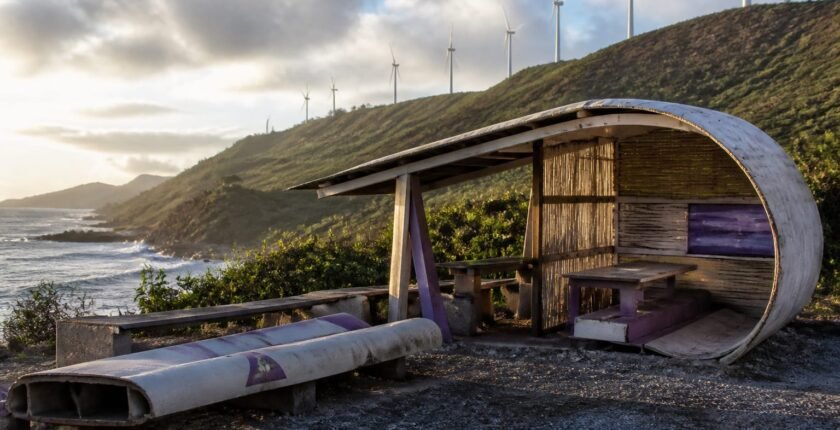
Repurposed wind turbine blades are appearing as public infrastructure in the Southeast alongside other practical clean-energy advances. In Huntersville, North Carolina a retired blade now serves as a 2,500-pound bus-stop bench, and a decommissioned blade in Colorado transformed into a 49-foot footbridge that opened access to about 2 acres. Those reuse examples sit beside rapid deployment of vehicle-to-grid (V2G) school-bus batteries — more than 200 buses are already feeding power back to the grid — and site-scale projects such as Costco’s Port St. Lucie solar plus battery storage. These examples are presented as first reported by Southern Alliance for Clean Energy.
Solar development uses a very small amount of farmland compared to many other common land uses, while also delivering affordable energy, local tax revenue, and reliable income for farmers and landowners.
SEIA
Key takeaways
- Blade reuse: A retired wind turbine blade in Huntersville, North Carolina now forms a public bench weighing about 2,500 pounds.
- Footbridge example: A decommissioned 49-foot wind blade became a footbridge in Colorado, opening access to about 2 acres of parkland.
- V2G school buses: Batteries from more than 200 electric school buses are sending power back to the grid, with at least 31 utilities in 21 states running V2G programs.
- Costco solar + storage: Costco’s Port St. Lucie, Florida distribution center combines on-site solar and battery storage to power the facility and its electric fleet chargers.
- Local policy and rebates: Atlanta now requires reflective new roofs, and Tennessee’s rebate program backs EV charging at multifamily sites that contain at least four units, funding as many as 10 chargers per location.
Table of contents
How communities are reusing retired blades
Communities in and near the Southeast are finding practical second lives for decommissioned turbine blades instead of routing them to landfill. One Huntersville installation repurposed a blade into an artistic bus-stop bench that weighs about 2,500 pounds. Another project recycled a 49-foot blade into a footbridge in Colorado that opened access to roughly 2 acres of park space; that example has inspired similar reuse thinking elsewhere.
Blade repurposing does two things at once: it showcases an immediate, local use for a hard-to-process composite part and it buys time while longer-term recycling or industrial processing solutions scale up. The practical reuse options shown here — benches, bridges and similar structures — avoid the near-term need for specialist composite recycling capacity and create visible community amenities.
Vehicle-to-grid school buses easing peak demand
Electric school buses are emerging as grid assets in hot-weather events and peak-demand hours. The batteries of more than 200 electric school buses are already being dispatched back to the grid, and at least 31 utilities across 21 states run V2G programs that aggregate bus capacity for system services.
Using school-bus batteries for grid support repurposes existing fleet assets and can reduce peak strain from summer cooling demand. The model requires coordination between school districts, fleet operators and utilities on scheduling, charging infrastructure and compensation, but the deployments reported to date illustrate a practical path for vehicle batteries to deliver bulk system value while still serving transportation needs.
Site-scale solar and storage closing gaps for commercial loads
Large commercial facilities are pairing solar with batteries to lower operating costs and support electrified fleets. Costco’s Port St. Lucie distribution center now operates on a combined system that supplies building loads and on-site chargers for its electric fleet, illustrating how distributed solar-plus-storage can reduce exposure to rising energy prices and peak-grid stress.
Those systems behave as flexible on-site capacity: they shift daytime solar output into evening hours, and batteries provide resiliency when grid conditions strain. The Port St. Lucie example is one of several corporate projects in the region that demonstrate an economic case for pairing generation and storage at scale at high-demand sites.
Policy and incentives that expand access
Local policy and targeted rebates are widening clean-energy benefits. Atlanta’s new requirement that new roofs be reflective is intended to cool buildings and neighborhoods — the measure is expected to lower local temperatures by as much as six degrees in the city’s hottest neighborhoods — while lowering household cooling bills. In Tennessee, a rebate scheme for multifamily housing supports installation of EV chargers at properties that have at least four units, providing funding for up to 10 charging ports per site.
Those two measures illustrate different levers: municipal building requirements reduce urban heat island effects at scale, while targeted rebates reduce the upfront cost barrier to electrifying multifamily housing. Together they show how regulation and incentive programs can work in parallel to expand both resilience and access to charging infrastructure.
| Story | Location | Action | Key figure |
|---|---|---|---|
| Solar and farmland co-location | North Carolina | Agrivoltaics and land-use coordination | SEIA-cited benefits |
| V2G school buses | Multiple states | Buses dispatch battery power to the grid | More than 200 buses; 31 utilities in 21 states |
| Costco distribution center | Port St. Lucie, Florida | On-site solar plus battery storage | Facility powers building and fleet chargers |
| Reflective roof requirement | Atlanta | New roofs must be reflective to cool neighborhoods | Up to six degrees local cooling |
| Tennessee EV-charger rebates | Tennessee | Rebates for multifamily charging | Minimum of four units; up to 10 plugs per site |
| Blade repurposing projects | Huntersville and Atlanta-area examples | Retired blades reused as benches and bridges | 2,500-pound bench; 49-foot bridge opens ~2 acres |
How these trends could play out
The case for
- Local reuse and showpiece projects could accelerate recycling investment by demonstrating demand and lowering public resistance to temporary blade storage.
- Further roll‑out of V2G in school-bus fleets could provide measurable peak shaving for utilities during summer heat events if coordination and compensation frameworks expand.
The case against
- Composite turbine blades remain difficult to recycle at scale; without new processing capacity, reuse options will only absorb a fraction of retired blades.
- Policy gains such as reflective-roof rules and apartment-charging rebates depend on funding and enforcement; limited budgets or narrow eligibility rules could constrain uptake.
What to be careful about
- Limited industrial recycling capacity for composite blades could leave many decommissioned blades without an economically viable processing route.
- V2G benefits depend on fleet schedules and utility integration; school-bus availability for grid services can conflict with transportation needs if not carefully managed.
- Multifamily charging rebates tied to a minimum of four units and a 10-plug cap may not reach smaller properties or sites that need more chargers.
The bottom line
The Southeast’s recent examples show clean‑energy adoption taking many forms: visible reuse of turbine blades, grid services from vehicle fleets, corporate solar paired with storage, and targeted local rules and rebates. Each project addresses a specific need — community amenity, peak demand, facility resilience or charging access — and together they reveal practical, incremental pathways to circularity and grid flexibility. Scaling these approaches will depend on funding for recycling infrastructure, clearer utility‑program frameworks for V2G, and policies that keep incentives broad enough to reach diverse property types.
What to watch
- Watch for local parks or transit agencies to approve additional blade‑reuse installations; no date has been set.
- Watch for expansion of V2G pilot agreements between school districts and utilities; no date has been set.
- Watch for announcements of new multifamily charging projects in Tennessee using the rebate program; no date has been set.
Frequently asked questions
How are retired wind turbine blades being reused in communities?
Communities have adapted retired blades into local infrastructure such as the Huntersville bench that weighs about 2,500 pounds and a 49-foot blade repurposed as a footbridge in Colorado that opened access to about 2 acres. Those projects avoid immediate composite recycling and provide visible public benefits.
What scale of vehicle-to-grid use do school buses represent today?
Reported deployments involve batteries from more than 200 electric school buses feeding power back to the grid, with at least 31 utilities across 21 states operating V2G programs that aggregate that capacity for peak shaving and grid services.
Who can get Tennessee’s multifamily EV charger rebate and how many plugs are covered?
Those eligible include property owners, authorized lessees, on-site managers and homeowner association boards for multifamily buildings that contain at least four units; the rebate covers as many as 10 charging ports per location.
Related reading