
Blog
Southwest Hydropower Fell 28% Below Average This Summer
Estimated reading time: 6 minutes · Last updated:
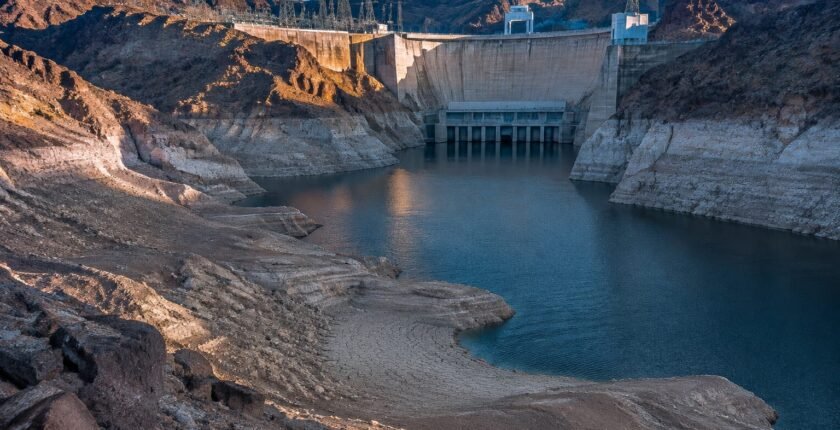
US Southwest hydropower output ran 28% below its 10-year average from April through August, US Energy Information Administration data show. The cause is a drought in the Colorado River Basin that has drained the reservoirs feeding the region's dams. Lake Powell and Lake Mead supply the Glen Canyon and Hoover Dam power plants, and both sat barely above the water levels those turbines need to run. The EIA projects hydropower production will fall to its lowest point in over a decade in 2026 and drop further in 2027. Wet weather in October and early November lifted Lake Powell by more than 20 feet, but that only dents a 27-year drought.
Key takeaways
- A 28% generation gap: Hydropower generation in the US Southwest between April and August came in 28% below the 10-year average, according to US Energy Information Administration data.
- Lake Powell near its floor: Lake Powell stood at 3,518 feet at the end of September, less than 1% above the minimum the Glen Canyon power plant needs to generate, while Lake Mead was 9% above Hoover Dam's 950-foot requirement.
- Two plants, 2 million people: The Glen Canyon and Hoover Dam power plants together produced nearly seven terawatt-hours in 2025, enough electricity to serve over 2 million people.
- EIA expects further declines: EIA projections show hydropower production at its weakest in more than a decade in 2026, with output slipping again in 2027.
- An emissions link: The International Energy Agency found a worldwide hydropower shortfall caused about 40% of the 1.1% rise in global energy-related greenhouse-gas emissions in 2023.
Table of contents
- Key takeaways
- How Drought Drains the Southwest's Hydropower Supply
- Why Glen Canyon and Hoover Dam Are Running Near Their Limits
- Why Climate Change Makes Hydropower Less Dependable
- Can El Niño Rains Rescue Lake Powell?
- What could lift or sink Southwest hydropower
- What to be careful about
- Frequently asked questions
How Drought Drains the Southwest's Hydropower Supply
Dams make most US hydropower possible. Each one holds back a river to form a reservoir, and operators send that stored water through turbines whenever the grid calls for electricity. The system works only while enough water sits behind the dam to feed the machinery.
In the Southwest, that water begins as mountain snow. Snowfall in the Rocky Mountains supplies about 85% of the Colorado River's yearly flow. The melt arrives each spring, and dam releases let it move south gradually to residents and farmers in Arizona, New Mexico and parts of Nevada and California.
Flows on the river have dropped sharply in recent years, and the region has been in drought for 27 years. A thinner snowpack means less melt reaching Lake Powell and Lake Mead, so each dam has less water to split between taps, fields and turbines.
Why Glen Canyon and Hoover Dam Are Running Near Their Limits
Every dam-based plant has a minimum reservoir elevation. Below it, water can no longer be run through the turbines, and generation stops.
At the end of September, Lake Powell measured 3,518 feet, less than 1% above the level the Glen Canyon power plant needs to generate electricity. Lake Mead had more headroom but not much: the Hoover Dam power plant requires the lake at 950 feet, and in September the reservoir sat 9% above that minimum.
Those thin margins put real output at stake. In 2025 the two plants supplied close to seven terawatt-hours to the grid, a volume of power that could meet the needs of more than 2 million people. Losing either one would remove a source that can be dispatched on demand, which is exactly what makes hydropower valuable to the grid.
Why Climate Change Makes Hydropower Less Dependable
Climate change does not cut hydropower everywhere. Shifting weather patterns are expected to bring more rain and snow to some regions and less to others.
A 2022 review study still identifies warming as a factor in how much hydropower is available, through three routes. Higher temperatures bring more frequent droughts. Warmer winters leave less snow and ice to refill reservoirs. Greater swings in precipitation can produce floods followed by dry spells, which makes output harder to rely on.
The Southwest is exposed to the first two at once, with its long drought and climate change continuing to alter its snowfall and rainfall. EIA projections show hydropower production in 2026 falling to its weakest point in more than a decade, with a further dip expected in 2027.
Can El Niño Rains Rescue Lake Powell?
El Niño is a weather pattern that sometimes brings cooler, wetter conditions to the southern US, and it could ease the pressure for a while.
Heavy rain caused flooding across the region in October and early November. Lake Powell rose more than 20 feet from its mid-September low as a result.
That gain should be kept in proportion. The lake is still low, and recovering from decades of drought will take far more water than one stormy autumn supplied. A reservoir that was hovering just above its turbine threshold in September has some breathing room now, not a cushion.
Relief from El Niño is also temporary by nature. It does not change the snowpack arithmetic that sets how much water reaches the reservoirs each spring, or the EIA's expectation of weaker output into 2027.
| Reservoir | Power plant | Minimum level for generation | Latest reading |
|---|---|---|---|
| Lake Powell | Glen Canyon power plant | Not stated | 3,518 feet at end of September, less than 1% above minimum |
| Lake Mead | Hoover Dam power plant | 950 feet | 9% above minimum in September |
What could lift or sink Southwest hydropower
The case for
- El Niño can bring cooler, wetter conditions to the southern US, and autumn rains already raised Lake Powell more than 20 feet from its mid-September low.
- Lake Mead retained a 9% margin above Hoover Dam's 950-foot requirement in September, giving that plant more room than Glen Canyon.
The case against
- The region has been in drought for 27 years, and one wet season does not refill reservoirs drained over decades.
- EIA projections point to hydropower production at its weakest in more than a decade in 2026 and lower still in 2027.
- Warmer winters mean less snow and ice reaching reservoirs, cutting into the snowmelt that supplies about 85% of the Colorado River's flow.
What to be careful about
- If Lake Powell falls below its minimum level, the Glen Canyon power plant can no longer run water through its turbines.
- Reduced output from Glen Canyon and Hoover Dam affects plants that together supplied nearly seven terawatt-hours in 2025.
- A shortfall in hydropower could push greenhouse-gas emissions higher, as the IEA found happened globally in 2023.
The bottom line
The stakes extend beyond the Southwest's power supply. The International Energy Agency found that energy-related greenhouse-gas emissions rose 1.1% worldwide in 2023, and that a global shortfall in hydropower output accounted for about 40% of that increase. Shrinking hydropower could therefore push emissions up even as the climate pressures behind the shortfall persist. For the Southwest, the evidence points one way: a 28% generation gap this summer, two lakes hovering just above their turbine minimums and an EIA forecast of further declines into 2027. One wet autumn has bought some margin at Lake Powell. It has not reversed a drought that began 27 years ago, and it does not restore the snowpack the whole system depends on.
What to watch
- Watch for the EIA's full-year figures for 2026, which its projections suggest will show hydropower production at its weakest in more than a decade; no release date has been set.
- Watch whether El Niño keeps delivering wet weather to the southern US through the coming winter, building on the more than 20 feet Lake Powell has regained since mid-September; no date can be fixed for that.
- Watch the EIA's tracking of 2027 output, the year in which it expects hydropower production to fall below the 2026 level.
Frequently asked questions
Which states rely on water from the Colorado River dams?
Residents and farmers across Arizona, New Mexico and parts of Nevada and California depend on spring snowmelt released south through the dams. Rocky Mountain snowfall supplies about 85% of the Colorado River's annual flow.
How much electricity do Hoover Dam and Glen Canyon Dam produce?
Combined, power generated last year at Hoover Dam and Glen Canyon came to almost seven terawatt-hours in 2025. More than 2 million people could have been served by that much electricity.
Does losing hydropower increase carbon emissions?
It can. The International Energy Agency found global energy-related greenhouse-gas emissions rose 1.1% in 2023, and a worldwide hydropower shortfall accounted for about 40% of that rise.
Related reading