
Blog
Fort Bend Offers Tesla Solar Factory 35 Years of Tax Breaks
Estimated reading time: 8 minutes · Last updated:
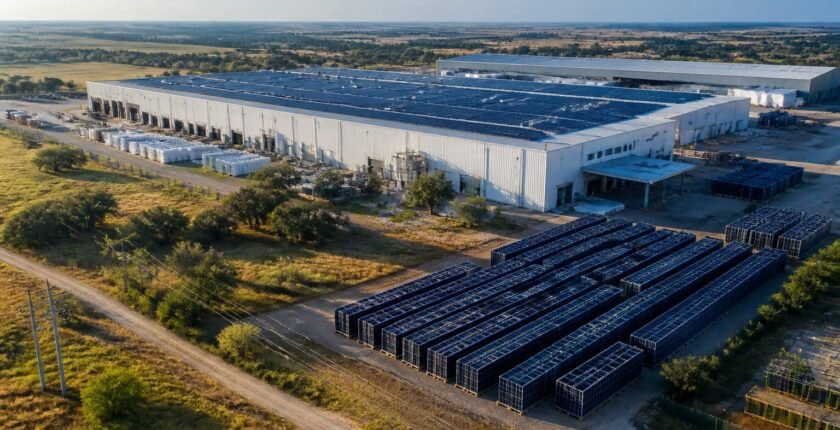
Fort Bend County commissioners voted 4-0 on 22 October 2026 to approve four incentive agreements. Together they could spare the Tesla solar factory planned near Richmond, Texas, from most county tax on its equipment for up to 35 years. The $10 billion project, code-named Project Crystal Sun, would pay no county tax on production equipment for its first decade. For 20 more years after that, it would get 90% of that tax back as grants. A jobs bonus can add five more years. Tesla has not said it will build in Texas. Its state application points to a rival site in another state, and that state's name is redacted.
The SpaceX and Tesla team, both separately, are working to build to 100 GW a year of solar power in the U.S., of manufactured solar power.
Elon Musk, at Davos in January 2026, as cited in Tesla's JETI application
Key takeaways
- The vote: Fort Bend County commissioners approved four Project Crystal Sun agreements 4-0 on 22 October 2026, with Interim County Judge Daniel Wong abstaining.
- First decade: A Chapter 312 abatement removes 100% of county tax on Tesla's equipment for 10 tax years, covering most of the $8.6 billion in personal property in the $10.1 billion budget.
- Next 20 years: Under a Chapter 381 deal, the county returns 90% of the equipment tax as grants, and averaging 12,000 workers can stretch the deal to Project Year 35.
- Not committed: Tesla's application calls the Fort Bend economics not competitive with a redacted out-of-state site unless it gets the incentives.
Table of contents
- Key takeaways
- How Four Agreements Split Tesla's County Tax Bill
- What Tesla Pays and Gets Back Over 30 Years
- What Tesla Must Deliver, and the 12,000-Job Bonus
- Why the Penalties and the County Floor Look Thin
- Is Fort Bend the Real Choice or a Bargaining Chip?
- Will Project Crystal Sun be built in Fort Bend?
- What to be careful about
- Frequently asked questions
How Four Agreements Split Tesla's County Tax Bill
The county vote followed a state filing. Tesla applied under Texas's JETI program for a 10-year limit on school property taxes, working through Lamar CISD and the Texas Comptroller. The school district approved that piece in September. The application describes a vertically integrated plant near Richmond, southwest of Houston. It would turn silicon ingots into finished modules, with commercial output targeted for the first quarter of 2029.
On 22 October the commissioners court passed agenda items 25A to 25D. The four items are a Chapter 312 tax abatement, a Chapter 381 incentive agreement, a foreign trade zone agreement and a true-up agreement. The last two rely on a payment in lieu of taxes, or PILOT. That is a sum a company pays the county instead of the tax it would otherwise owe.
Interim County Judge Daniel Wong sat the vote out. He abstained because his engineering firm has worked with Tesla. Each of the four items covers a separate part of the tax bill, and stacked together they run for decades.
What Tesla Pays and Gets Back Over 30 Years
For the first 10 tax years, the Chapter 312 deal removes all county property tax on Tesla's equipment and other tangible personal property at the site. The default start is tax year 2029. Tesla can move it to the first year after production begins, as late as 2031, without the county's approval.
That covers most of the money. Tesla's JETI application divides the $10.1 billion budget into $1.52 billion of real property and $8.6 billion of personal property, mainly production gear. That puts roughly 85% of the spend in the abated category. The agreement keeps land and buildings fully taxable.
Inventory goes through Port Freeport's Foreign-Trade Zone No. 149, which exempts eligible goods from local property tax. The county agreed not to object. In return, Tesla's PILOT on that inventory is set at zero for as long as the abatement lasts.
From year 11, the Chapter 381 agreement takes over. Tesla starts paying county tax on its equipment. Fort Bend returns 90% of it as an annual grant for 20 years and keeps 10% for its general fund. The inventory PILOT rises to 10% of the tax it replaces.
What Tesla Must Deliver, and the 12,000-Job Bonus
The breaks come with deadlines. Tesla must break ground by 30 June 2027 and begin regular commercial production of solar cells by 31 December 2030. It must also invest $10 billion by 31 December 2031 or two years after production starts, whichever comes later. Force majeure and ERCOT Delay clauses can push those dates out.
Hiring is meant to ramp from 2,500 to 5,000, then 7,500, and reach 9,712 employees by the fourth year of operations. Average pay is set at $55 an hour. Reaching 90% of the headcount target, about 8,741 people, is enough to keep the full abatement.
There is also a bonus. Tesla must average 12,000 or more workers across any two consecutive years in the first decade. If it does, the first five rebate years become 100% grants, and the rebate window grows from 20 to 25 years. That carries the arrangement to Project Year 35. The threshold sits 2,288 jobs above the number Tesla says it will create.
Why the Penalties and the County Floor Look Thin
If Tesla misses a jobs or wage goal in one year, it loses only that year's break. Two misses in a row allow the county to end the agreement. Under the Chapter 381 deal, grants already paid cannot be recovered because of a headcount shortfall.
Full recapture of abated taxes applies only to Material Defaults. Those are missing the $10 billion investment, blowing the construction deadlines, or abandoning the plant for 12 months. Sums not repaid within 60 days can draw a 15% penalty.
The true-up agreement guarantees Fort Bend at least $2 million a year. A quarter of Tesla's real property tax, the county's 10% share and the FTZ payments all count toward that minimum. Kroll, Tesla's consultant, estimated in the JETI filing what the project would pay without incentives. It put the total at $276.5 million in county general taxes over 38 years, peaking at $16.2 million in 2030. That estimate combines land, buildings and equipment.
Is Fort Bend the Real Choice or a Bargaining Chip?
Tesla's application says the Fort Bend site's economics are "not competitive" with a site in another state unless it gets the JETI limit and the local abatements. The rival state is redacted in a confidential supplement. Carlos Guzman, Fort Bend's economic development director, told ABC13 that the county "would've been eliminated from consideration" without the agreements.
The filings give no production capacity. The application cites Elon Musk at Davos in January on SpaceX and Tesla each working toward 100 GW a year of US solar manufacturing. For comparison, Qcells is spending $2.5 billion on its ingot-to-module campus in Cartersville, Georgia, where a 3.5 GW cell line began production in 2026. Crystal Sun's budget is four times that.
Tesla has been here before. New York spent $950 million on the Buffalo factory for Tesla's solar business. When those plans fell apart, Tesla met its jobs requirements partly with other work, including data labeling for Autopilot. Tesla did announce production of a new solar panel in Buffalo in 2025. Reuters reported in March 2026 that Tesla was in talks to buy $2.9 billion of Chinese solar equipment, and its supply chain is caught in a patent fight between Chinese suppliers. Even so, Tesla is set on the Houston-area location, as first reported by Electrek, whose editor in chief Fred Lambert says that is what he is hearing.
| Agreement | What it covers | Years 1-10 | After the abatement |
|---|---|---|---|
| Chapter 312 abatement (25A) | Equipment and other personal property | 100% of county tax abated | Ends after 10 tax years |
| Chapter 381 incentive (25B) | Equipment tax after abatement | Not active | 90% rebated for 20 years, up to 25 with bonus |
| FTZ PILOT (25C) | Inventory in FTZ No. 149 | PILOT set at zero | PILOT rises to 10% of forgone tax |
| True-up PILOT (25D) | County minimum take | $2 million a year floor | $2 million a year floor |
Will Project Crystal Sun be built in Fort Bend?
The case for
- Lamar CISD and Fort Bend County have both approved their pieces, which leaves the state's school-tax sign-off as the remaining public step.
- Lambert says he is hearing that Tesla is set on the Houston-area location.
- Tesla's application ties Fort Bend's competitiveness to exactly these incentives, and the county has now granted them.
The case against
- Tesla has not committed, and a redacted out-of-state site remains in contention.
- Tesla has been in talks to buy $2.9 billion of Chinese equipment, and its supply chain faces a patent fight among Chinese suppliers.
- The Buffalo factory shows Tesla's solar plans have stalled before, leaving it to meet jobs commitments with other work.
What to be careful about
- Tesla could use Fort Bend's offer as leverage and build in the unnamed rival state instead.
- Grants paid under the Chapter 381 deal cannot be clawed back over a headcount shortfall, which limits the county's recourse if employment fades.
- The 12,000-worker bonus turns on two years of average headcount, so a short-term hiring surge could unlock five extra years of rebates.
- Force majeure and ERCOT Delay clauses can extend the construction, production and investment deadlines.
The bottom line
Fort Bend has made its offer, and Tesla has not answered. The state still has to approve the school-tax limitation, and after that the decision is Tesla's. If the plant comes, Texas gains a rare US factory running from ingots to modules. Lambert counts it among the few Tesla businesses still tied to the company's old clean-energy mission. The county's return in that case is modest by design: no equipment tax for a decade, a 10% share for two decades after, and a $2 million floor. Guzman's point that the alternative may be nothing is hard to dismiss. It also explains why such deals keep growing, and the 12,000-job bonus shows how far Fort Bend was willing to go.
What to watch
- Watch for the state's approval of the school-tax limitation under JETI; no date has been set.
- Tesla must start construction by 30 June 2027 to keep the county breaks, so a groundbreaking or a site decision should come before then.
- Commercial production is targeted for the first quarter of 2029, with a hard deadline of 31 December 2030 for regular solar cell output.
Frequently asked questions
Where would Tesla's Project Crystal Sun factory be built?
The site is near Richmond, southwest of Houston, in Fort Bend County. It would sit inside Port Freeport's Foreign-Trade Zone No. 149.
How many jobs does Tesla promise at the Texas solar factory?
Tesla says it will create 9,712 jobs by the fourth year of operations, at average pay of $55 an hour. It keeps the full abatement at 90% of that target, about 8,741 people.
Does Fort Bend County get any tax money from the Tesla plant?
Land and buildings stay fully taxable, and the county keeps 10% of equipment tax after year 10. A true-up agreement guarantees Fort Bend at least $2 million a year.
What happens if Tesla misses its deadlines?
Missing the 30 June 2027 construction start, the $10 billion investment, or abandoning the plant for 12 months counts as a Material Default. That triggers full recapture of abated taxes, with a possible 15% penalty if they are not repaid within 60 days.
Related reading