
Blog
University of Utah Wins DOE Geothermal Project Awards
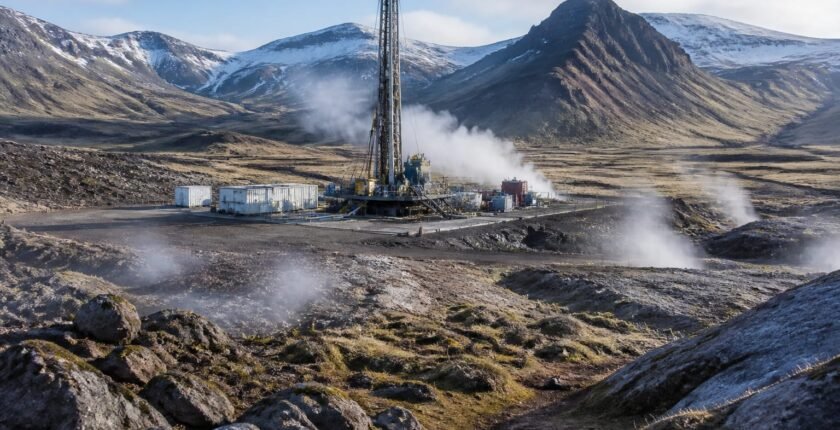
Estimated reading time: 6 minutes · Last updated:
Energy & Geoscience Institute (EGI) has had two projects chosen by the U.S. Department of Energy for field-scale geothermal work: an enhanced geothermal systems (EGS) demonstration at Dixie Valley West, Nevada, and an exploration drilling program at Cove Fort, Utah. Together the efforts are eligible to receive up to $35 million from DOE pending final award negotiations; the Dixie Valley West demonstration could be supported with as much as $25 million and the Cove Fort program with about $9.7 million. EGI will lead the work alongside industry partners such as Ormat Technologies and SLB, and DOE plans to make the project data available through its Geothermal Data Repository.
“The University of Utah has spent decades building the scientific expertise, field experience and industry relationships needed to advance geothermal technologies in real-world settings,”
Erin Rothwell, Ph.D., senior vice president for research at the University of Utah
Key takeaways
- DOE selection and funding: Two projects managed by EGI were chosen by the U.S. Department of Energy for field-scale geothermal activities, together qualifying for up to $35 million in DOE support.
- Dixie Valley West: The Dixie Valley West project was selected as one of five field-scale EGS tests and is eligible for up to $25 million in DOE funding.
- Cove Fort exploration: The Cove Fort project, concentrating on targeted drilling and detailed subsurface characterization of carbonate rocks, could receive up to $9.7 million from DOE.
- National initiative: The DOE initiative selected 21 projects nationwide: five field-scale EGS tests and sixteen exploration drilling projects.
Table of contents
How EGI will test an EGS doublet at Dixie Valley West
At Dixie Valley West, Nevada, EGI will lead a field-scale enhanced geothermal systems demonstration with Ormat Technologies and SLB. The team will design, drill, stimulate, operate and validate what the announcement calls a high-performance EGS doublet; DOE may provide as much as $25 million to support this project. Enhanced geothermal systems are engineered reservoirs that create or widen subsurface pathways so fluids can circulate through hot rock and bring heat to the surface where natural permeability is lacking. The Dixie Valley West experiment will install an engineered reservoir next to an existing hydrothermal system to test whether induced circulation can be maintained, whether permeability gains endure, and whether thermal production can reach levels useful for commercial development.
The principal investigator, Kristie McLin, frames the aim as producing field data and operational knowledge beyond prior tests: 'The goal is not simply to further demonstrate that the technology works, but to generate even more field data and operational knowledge needed to understand how these systems can be developed reliably and at scale.' The project directly follows technical lessons from Utah FORGE and moves those methods into an operating geothermal environment where existing production and infrastructure can inform performance evaluation.
Targeted drilling and subsurface work at Cove Fort
The Cove Fort effort in Utah was awarded up to $9.7 million for exploration drilling, placing it among the sixteen exploration projects supported through the DOE program. EGI and Ormat will carry out targeted drilling and apply modern logging and data-integration techniques to better resolve a large thermal anomaly beneath Cove Fort. The project aims to map heat and fluid distribution within carbonate formations and reduce the exploration uncertainty that often slows commercial development.
Clay Jones, principal investigator on the Cove Fort Project, emphasizes the subsurface focus: 'Geothermal research is fundamentally a subsurface challenge: understanding where the heat is, how fluids move and how we can engineer systems that perform predictably is imperative.' The Cove Fort work is presented as risk-reduction: improved subsurface models and integrated logs can change a prospect's economic calculus by narrowing the range of possible temperatures, permeability, and fluid pathways ahead of larger capital investment.
Partnerships, data sharing and the regional research model
Beyond the two lead projects, EGI is also a subawardee on two other DOE-selected efforts, extending its field involvement with partners Zanskar Geothermal & Minerals and 400C Energy. The 400C Energy project will deepen an existing well at Salt Cove to test whether an extension of the Roosevelt Hot Springs hydrothermal system or another high‑temperature resource exists. EGI’s approach combines laboratory science, field-scale tests and industry partnerships as the route to move geothermal concepts toward commercial deployment.
DOE has said it will make data from the funded projects publicly available via its Geothermal Data Repository. Public release of logs, stimulation records and monitoring datasets is intended to let researchers and industry analyze performance across sites; that replicability is central to the DOE initiative, which selected 21 projects across the country to test next-generation geothermal technologies. EGI directors frame the selection as a continuation of a multi-decade research effort: Erin Rothwell says the university has 'spent decades building the scientific expertise, field experience and industry relationships needed to advance geothermal technologies in real-world settings,' and Milind Deo highlights EGI’s history in moving results from theory into practice.
| Project | Location | Type | DOE funding (up to) |
|---|---|---|---|
| Dixie Valley West | Nevada | Enhanced geothermal systems (EGS) demonstration | up to $25 million |
| Cove Fort | Utah | Exploration drilling and subsurface characterization | up to $9.7 million |
Why these projects matter and what could slow them
The case for
- Field-scale EGS testing at Dixie Valley West could validate reservoir-stimulation workflows from Utah FORGE under commercial-like operating conditions and accelerate engineering standards for induced circulation.
- Public release of logs and monitoring datasets to DOE’s Geothermal Data Repository will allow cross-site comparisons that reduce exploration uncertainty and improve models for carbonate systems like Cove Fort.
The case against
- Award outcomes remain subject to negotiations; final DOE grant amounts could differ from the 'up to' figures the selections cite.
- Subsurface uncertainty — temperature, permeability and fluid distribution in carbonate rock — may limit how easily Cove Fort converts from an anomaly into a commercially viable resource.
What to be careful about
- Project budgets are described as selection amounts and are 'subject to award negotiations', so final funding could be lower or accompanied by different terms.
- EGS stimulation carries technical risk: induced fractures may not yield sustained permeability or the thermal output required for commercial economics.
- Drilling and logging in carbonate rock can encounter unexpected heterogeneity and lost circulation, raising costs and timelines for Cove Fort.
- Permitting, local surface infrastructure and contractor schedules can delay field operations and data publication.
The bottom line
EGI has positioned itself at the center of a U.S. Department of Energy initiative to deploy next-generation geothermal tools in the field. The Dixie Valley West EGS test and the Cove Fort exploration program combine an engineering effort—creating induced reservoirs where infrastructure exists—with a data-focused effort to lower exploration risk in carbonate systems. Both remain contingent on final DOE awards and on the technical results from subsurface work, but they build on decades of EGI research and industry collaboration and will generate publicly reusable datasets that could guide future geothermal development.
What to watch
- Watch for the conclusion of DOE award negotiations and the final grant agreements for the selected projects; no date has been set.
- Watch for DOE to publish monitoring, logging and stimulation datasets from Dixie Valley West and Cove Fort in the Geothermal Data Repository; no date has been set.
- Watch for technical results from the Salt Cove deepening by 400C Energy (Salt Cove/Roosevelt Hot Springs extension); no date has been set.
Frequently asked questions
Which University of Utah projects did DOE select?
DOE selected two University of Utah projects: an EGS field-scale demonstration at Dixie Valley West, Nevada (eligible for up to $25 million), and an exploration drilling program at Cove Fort, Utah (eligible for up to $9.7 million). Both selections are part of a 21-project national initiative.
What is an enhanced geothermal system (EGS)?
An enhanced geothermal system (EGS) is an engineered reservoir that creates or improves underground pathways so fluid can circulate through hot rock where natural permeability is insufficient; the Dixie Valley West project will test a 'high-performance EGS doublet' to evaluate circulation, permeability gains and thermal output.
How will the project data be shared?
DOE has said data generated by the projects will be made publicly available through the Geothermal Data Repository, making logs, stimulation records and monitoring datasets available for researchers and industry.
Related reading