
Blog
Vilnius Completes €10M Green Hydrogen Plant
Estimated reading time: 6 minutes · Last updated:
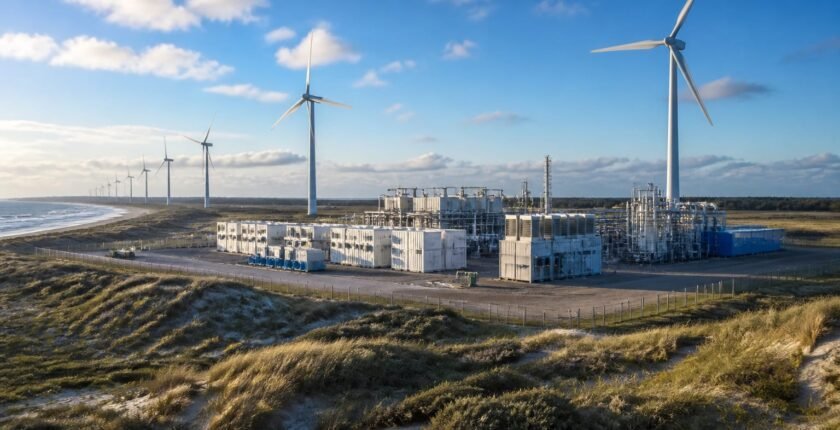
Vilnius has finished construction of a 3 MW green hydrogen plant at the Vilnius Second Combined Heat and Power Plant (CHP-2). The project, valued at about €10 million with €5,639,285.09 supplied by the EU, installs the capital's first public hydrogen filling point at the Viršuliškės public transport park (Justiniškių g. 14). Equipment testing is underway and green hydrogen production is planned to begin by the end of 2026. The plant will initially supply 16 city buses and is sized to support roughly 40 buses, with an estimated annual emissions reduction of about 1,400 tonnes of CO₂.
The city has developed infrastructure that did not exist in Vilnius or the region a few years ago – from clean energy production to its supply to public transport and beyond. The European Union investments attracted to Vilnius have also contributed significantly to this,
Vilnius Mayor Valdas Benkunskas
Key takeaways
- Capacity: A 3 MW green hydrogen plant has been completed at Vilnius Second Combined Heat and Power Plant (CHP-2).
- Cost and funding: The project is valued at about €10 million, with the EU providing €5,639,285.09 and Vilnius City Municipality covering the remainder.
- Production targets: During a five-year continuity period the plant must produce at least 1,425,000 cubic metres — 128,000 kg of green hydrogen in at least one year, and it can produce up to 285,000 kg/year at maximum.
- Transport impact: In phase one, 16 city buses will run on green hydrogen, cutting an estimated 1,400 tonnes of CO₂ a year; capacity is sufficient for around 40 buses.
Table of contents
What Vilnius built and who paid for it
Vilnius has completed a 3 MW green hydrogen plant on the grounds of its Vilnius Second Combined Heat and Power Plant (CHP-2). The facility was delivered under the project named "Production of Green Hydrogen for Public Transport in Vilnius City," led by Miesto gijos together with its shareholder Vilnius City Municipality, with MT Group as general contractor.
The overall project value is reported at about €10 million. The European Union contributed €5,639,285.09 under the funding agreement; Vilnius City Municipality covered the remaining project costs, and the support agreement’s payments have been made in full. The project financing agreement was concluded with the Central Project Management Agency.
Infrastructure installed at the site includes electrolysis equipment sized to 3 MW and a publicly accessible filling point being placed in the Viršuliškės public transport park (Justiniškių g. 14). With equipment testing currently under way, the city aims to move from commissioning into commercial green hydrogen production before the end of 2026.
Production obligations, purity standards and output limits
The financing agreement includes a five-year continuity period with explicit production requirements and quality standards. The plant must produce hydrogen exclusively from renewable energy sources and meet ISO 14687:2019 purity requirements, delivering a product with at least 99.99% purity suitable for transport use.
As a measurable condition, during the five-year period the plant must produce at least 1,425,000 cubic metres — 128,000 kg of green hydrogen in at least one year. The project statement also notes the facility could produce up to 285,000 kg per year at maximum output. Those thresholds are contractual obligations the city and operator must meet and report publicly.
Compliance with ISO 14687:2019 and the renewable‑electricity condition will determine whether funding conditions remain satisfied. The testing phase ahead of production will therefore have to demonstrate both the electrolyser’s ability to meet purity specs and an assured renewable power supply.
How the plant connects to buses and the CHP site
The immediate customer for the plant is Vilnius public transport. In its first phase the facility will fuel 16 hydrogen buses in the capital, replacing diesel vehicles and reducing local bus emissions by an estimated 1,400 tonnes of CO₂ annually. The 3 MW capacity is reported to be sufficient for roughly 40 buses, leaving headroom to expand the hydrogen fleet.
The Viršuliškės filling point will be publicly accessible, serving buses, commercial transport and private drivers. The choice of the CHP-2 site reflects an operational plan to reuse resources from electrolysis: waste heat from electrolysis can be used for district heating at the cogeneration site, and process water arrangements can be integrated with existing plant systems.
That physical integration aims to improve overall energy efficiency and lower operating costs for hydrogen production and local heat provision. The announcements do not, however, detail the arrangement with the electricity transmission system or the specific renewable electricity contracts that will supply the electrolyser.
Open questions: supplier, price and the next steps
Several practical details remain undisclosed in the public announcement. Notably, no electrolyser supplier was named, and no hydrogen price or offtake terms for the bus operator were disclosed. Those gaps make it difficult to assess unit economics for the fuel or the commercial sustainability of supplying buses and third parties through the Viršuliškės station.
The project statement says equipment testing is under way and that green hydrogen production is planned to begin by the end of 2026 once tests and filling‑point installation are complete. Public reporting obligations tied to EU funding mean the city will publish measurable results against the production targets, but the schedule for station commissioning and first customer deliveries has not been fixed in the available text.
Procurement timing for a named electrolyser vendor, the contract terms with the bus operator and the source of the renewable electricity that will feed the electrolyser are the key unknowns that will shape how quickly the plant moves from test mode to sustained operation.
| Contributor | Amount (EUR) | Notes |
|---|---|---|
| European Union | €5,639,285.09 | Funding agreement recognised as eligible and fully paid |
| Vilnius City Municipality | the remainder of approximately €10 million | Covered remaining project costs |
What could speed or stall the project
The case for
- Integration with the CHP‑2 site could lower operating costs through reuse of electrolysis waste heat and existing water handling, improving overall project economics.
- EU funding of €5,639,285.09 and municipal backing mean the capital expenses are covered and the project can move into operational testing without immediate additional capital raises.
The case against
- Contractual production requirements — at least 1,425,000 m³ (128,000 kg) of green hydrogen in one year during the five‑year continuity period — create a material delivery risk that could trigger remedies if unmet.
- The absence of a named electrolyser supplier, hydrogen price or offtake agreement raises the risk that operating costs or market demand will fall short of the assumptions behind the project’s sizing.
What to be careful about
- Failure to meet the production milestone of 1,425,000 m³ (128,000 kg) in at least one year during the five‑year continuity period could breach the funding agreement.
- Non‑compliance with ISO 14687:2019 (99.99% purity) would prevent use in transport and jeopardise contractual obligations.
- Unspecified electrolyser procurement and missing offtake/pricing terms create commercial risk for sustained operation beyond the initial municipal fleet.
The bottom line
Vilnius has taken a concrete step toward hydrogen mobility with a 3 MW plant, EU co‑funding and a publicly accessible filling point planned at Viršuliškės. The project’s contractual production and purity requirements — and the target to begin production by end‑2026 — set a high bar that will be tested during commissioning. The missing commercial details, chiefly the electrolyser vendor and hydrogen pricing or offtake terms, are the decisive variables for whether the plant can supply beyond the initial 16‑bus phase and deliver sustained emissions reductions.
What to watch
- Watch for green hydrogen production to begin by the end of 2026, when equipment tests and the Viršuliškės filling point installation are complete.
- Watch for publication of the plant’s first operating report showing whether it achieves at least 1,425,000 cubic metres — 128,000 kg — of green hydrogen in a single year during the five‑year continuity period; no date has been set.
- Watch for the announcement of the electrolyser supplier and any published hydrogen price or offtake terms for the bus operator; no date has been set.
Frequently asked questions
What is the plant's production capacity?
The plant has an installed electrolysis capacity of 3 MW. It is contractually capable of producing up to 285,000 kg of hydrogen per year at maximum output and must produce at least 1,425,000 cubic metres — 128,000 kg — in at least one year during the five‑year continuity period.
How will the hydrogen be used and how much CO₂ will it save?
In phase one, the plant will fuel 16 city buses in Vilnius, which is expected to cut about 1,400 tonnes of CO₂ annually; the installation is reported to be sufficient for roughly 40 hydrogen buses in total.
Who funded the project and what did it cost?
The project is valued at about €10 million. The European Union supplied €5,639,285.09 under the funding agreement, and Vilnius City Municipality covered the remaining costs.
Related reading