
Blog
Alabama Data Centers Could Use More Power Than Homes
Estimated reading time: 6 minutes · Last updated: 2026-08-19
Reporter Lee Hedgepeth for Inside Climate News documented at least a dozen proposed data center developments across Alabama and found that, if built to full capacity, they would consume more energy than all of the state’s homes combined; as first reported by Inside Climate News, that scale is the central claim driving public concern. The projects range from a 300-megawatt site in Birmingham to hyperscale proposals such as Project Red Clay, which requested 1,500 megawatts and up to 100,000 gallons of water per day, and Project Marvel, which the paper says would use 90 times more power than all Bessemer residences. Whether residential customers shoulder costs will depend largely on how the state Public Service Commission (PSC) implements SB 270 and on the financial terms hidden inside heavily redacted utility contracts.
It is one thousand percent a PR move to quell everyone’s concerns.
Shannon Vanden Heuvel
Key takeaways
- Scope of proposals: Inside Climate News documented at least a dozen proposed data center developments across Alabama.
- Project Red Clay request: Cloverleaf Infrastructure requested 1,500 megawatts of capacity and up to 100,000 gallons of water per day for Project Red Clay.
- Project Marvel scale: Project Marvel in Bessemer is described as slated to consume 90 times more energy than all Bessemer residences combined.
- Named project capacity: Alabama Power submitted a copy of a contract for a planned 300-megawatt data center in Birmingham that regulators released heavily redacted.
- Company finances and rate timing: Alabama Power reported second-quarter profits up 15 percent year-over-year, from $381 million to $437 million, and the utility delayed charging customers for a $622 million gas plant until 2028.
Table of contents
How big are the proposed data centers, and where they would sit
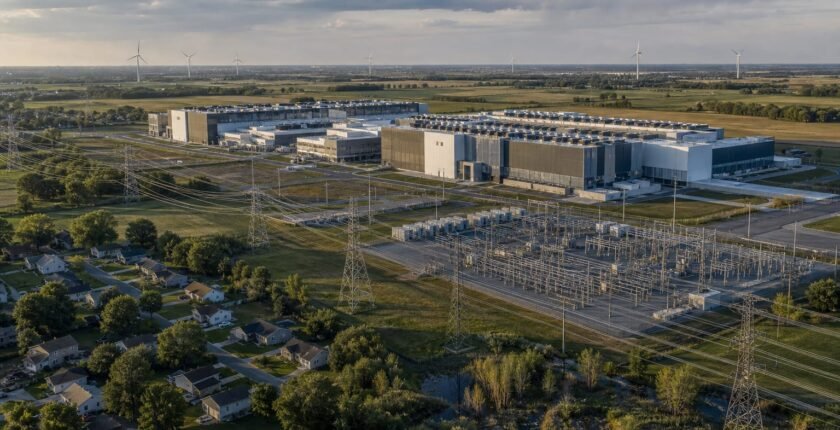
Inside Climate News’ review of public records and filings identified projects that vary from modest facilities to hyperscale campuses requiring hundreds of acres, large volumes of water and multi-hundred-megawatt power deliveries. Project Marvel in Bessemer is described in local records as a campus of 17 buildings the size of Walmart Supercenters and, according to the reporting, would use about 90 times the energy consumed by all Bessemer residences. In Lowndes County, Cloverleaf Infrastructure’s Project Red Clay is mapped to roughly 800 acres and the company has publicly requested 1,500 megawatts of electric capacity and up to 100,000 gallons of water per day from a small rural water system.
Several towns and counties have approved rezoning or conceptual plans, but residents say access to contracts, load estimates and build-out schedules has been limited by non-disclosure agreements signed by local officials and by heavily redacted documents filed with the state. One filing the utility provided to the PSC covers a 300-megawatt Birmingham site; the 12-page contract submitted to regulators is mostly redacted, obscuring minimum-bill terms, the initial term length and specific financial-security provisions that would show how much developers pay up front.
What SB 270 and the PSC can — and might — require
SB 270, the law passed this year, instructs the Public Service Commission to determine whether contracts with large-load data centers are in the public interest and to weigh several named considerations, including whether pricing and contract terms could lower costs for other customers and whether the contract recovers all incremental costs the utility would not incur but for the data center. The statute goes into effect Oct. 1, 2026, and PSC staff are accepting public comments on how to implement its rules. Those implementation choices will determine whether contractual guarantees — for example, minimum bills, dedicated facilities or customer-specific capacity obligations — are enforced in a way that protects residential ratepayers.
Clean-energy advocates and the Southern Environmental Law Center argue the statute is a step forward but insufficient if the PSC allows secret, customized contracts to substitute for public hearings or a standardized rate for large-load customers. In filings and public comments, residents and advocates have urged the commission to demand unredacted financial terms and to apply consumer-protection standards to projects that received local approval before the law passed.
Why residents worry they could pay and what the utility says
Alabama Power has run statewide advertising and posted online statements promising that data centers will pay the “full cost to serve” their energy needs and that agreements include protections such as minimum bills and minimum terms. The company also pointed to a statutory rate freeze written into law that it says provides predictability for customers through 2027. Yet those same corporate filings show rising profits: Alabama Power reported second-quarter profits rose 15 percent year-over-year, from $381 million to $437 million, and the utility agreed to delay charging customers for a $622 million natural gas plant until 2028 — a delay the utility says avoids an immediate rate increase of about $3.32 a month for an average customer.
Residents and some consumer advocates counter that the combination of secret contracts, NDAs at the local level and redacted PSC filings leaves the public unable to independently verify the utility’s claim that ratepayers will not shoulder incremental costs. That gap in transparency is why many communities and environmental groups are pressing the PSC to demand clearer financial disclosure and to apply SB 270’s protections rigorously.
| Project | Location | Public capacity or energy detail | Water request | Notes / source |
|---|---|---|---|---|
| Project Marvel | Bessemer | Said to use 90× the energy of all Bessemer residences | Not specified in reporting | Rezoning approved; size ~700 acres (Inside Climate News) |
| Project Red Clay | Lowndes County | Company requested 1,500 megawatts | Up to 100,000 gallons per day | Developer: Cloverleaf Infrastructure (Inside Climate News) |
| Unidentified Birmingham site | Birmingham | Planned 300-megawatt data center | Not specified in public filing | 12-page contract submitted to PSC; heavily redacted |
How the situation could evolve
The case for
- If the PSC adopts strict implementing rules for SB 270 by Oct. 1, 2026, commissioners could require unredacted financial terms and explicit recovery of incremental costs, limiting cost-shift to residential customers.
- A move to a standardized, transparent rate for large-load customers — advocated by the Southern Environmental Law Center and other commenters — would create a predictable framework for future contracts and reduce bespoke terms that could hide subsidies.
The case against
- If the PSC accepts heavily redacted contracts or treats projects approved locally as exempt, then large-capacity customers could receive custom terms that do not fully cover the utility’s incremental costs, increasing the risk of cost-shifting to other customers.
- NDAs and local confidentiality provisions mean critical contract details may remain off the public record, preventing independent verification of Alabama Power’s public claims that residential bills will not rise.
What to be careful about
- Cost-shifting risk if contracts fail to recover the incremental generation, transmission or distribution costs associated with large-load data centers.
- Transparency risk from heavily redacted contracts and NDAs that block public and Attorney General review of pricing and minimum-bill terms.
- Local environmental and land-use impacts, including clear-cutting of more than 100 acres for at least one proposed site and large water withdrawals from rural systems.
- Deferred rate exposure tied to the $622 million gas plant, whose customer charge was delayed until 2028 and is estimated to raise the average bill by about $3.32 a month when applied.
The bottom line
The outcome for Alabama ratepayers hinges on how the Public Service Commission implements SB 270 and how transparent utility contracts will be. Inside Climate News’ reporting highlights projects that, on paper, range from a 300-megawatt site to proposals seeking 1,500 megawatts and massive water draws; residents and advocates want the PSC to force clear, public financial terms so the incremental costs of serving hyperscale loads are not shifted to households. The coming months — rulemaking, PSC decisions on redactions and the approach to previously approved projects — will determine whether the state’s homes ultimately bear those costs.
What to watch
- Watch for the Oct. 1, 2026 effective date of SB 270 and whether the PSC issues implementing rules that require unredacted financial terms.
- Watch for the PSC to decide whether projects already approved at the local level will be subject to the standards created under SB 270; no date has been set for that determination.
- Watch for 2028, when Alabama Power plans to resume charging customers for the $622 million natural gas plant, reversing the delay that kept the average bill from rising by about $3.32 per month.
Frequently asked questions
What does SB 270 require the Public Service Commission to consider?
SB 270, effective Oct. 1, 2026, requires the PSC to weigh whether a data center contract is in the public interest and to consider specific factors including whether pricing and terms could lower costs for other customers and whether the contract recovers all incremental costs the utility would not incur but for the data center.
How large are the biggest proposed projects named in reporting?
Project Red Clay sought 1,500 megawatts of capacity and up to 100,000 gallons of water per day, Project Marvel was described as using about 90 times the energy of all Bessemer residences, and one Birmingham site is described in filings as a planned 300-megawatt data center.
Will the rate freeze protect customers from new costs from data centers?
Alabama Power points to a rate freeze through 2027 as providing predictability, but corporate filings show the utility delayed charging customers for a $622 million gas plant until 2028; the postponed charge was estimated to avoid about a $3.32 per month increase for the average customer in the near term.
Related reading
This article is information, not financial advice. Anyone acting on it should do their own checks.