
Blog
Suki Kinari Hydropower Adds 884 MW to Pakistan’s Grid
Estimated reading time: 5 minutes · Last updated:
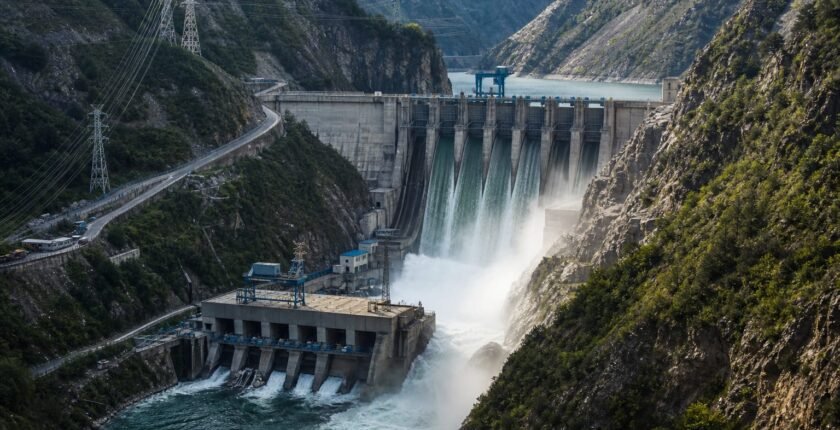
Suki Kinari Hydropower Project in Kaghan Valley supplies about 884 megawatts to Pakistan’s national grid and entered commercial operation in September 2024. Since then it has produced over 2.8 billion kWh and avoids almost 1.3 million tons of standard coal each year, supporting the country’s shift toward low‑carbon power. The scheme, developed under the China‑Pakistan Economic Corridor at an estimated nearly two‑billion‑dollar cost, draws on the Kunhar River and mountain headroom to generate its output. As first reported by CGTN, its correspondent Danial Khan filed from Kaghan Valley.
Our project is producing 884 megawatts of electricity. When it goes into the national grid, it benefits not just all our provinces, but the whole country.
Mubashir Hassan, Senior Engineer, Suki Kinari Hydropower Project
Key takeaways
- Suki Kinari Hydropower Project is designed to generate around 884 megawatts of electricity.
- Since starting operations in September 2024 the plant has produced over 2.8 billion kWh of clean electricity.
- The nearly two‑billion‑dollar project saves almost 1.3 million tons of standard coal annually.
- The scheme harnesses the Kunhar River in Kaghan Valley, Khyber Pakhtunkhwa, under the China‑Pakistan Economic Corridor.
Table of contents
- Key takeaways
- How Suki Kinari delivers 884 megawatts and the reported generation
- China‑Pakistan cooperation on construction and on‑the‑job skills transfer
- What Suki Kinari means for Pakistan’s grid and renewable mix
- Near‑term cases for and against broader gains from Suki Kinari
- What to be careful about
- Frequently asked questions
How Suki Kinari delivers 884 megawatts and the reported generation
Suki Kinari’s installed capability is about 884 megawatts and the facility uses the valley’s elevation and the Kunhar River flow to drive its turbines. Project documentation and on‑site statements point to conventional hydropower engineering: civil works that route river flow into penstocks, generating units sized for continuous output where water permits, and grid connections to send power to distant load centres. Since commercial start in September 2024 the operators report over 2.8 billion kWh produced, a figure the plant’s management uses to quantify its contribution to national supply.
The project developer reports the construction cost at nearly two billion dollars. The developer identifies annual generation and the resulting fossil‑fuel savings as the plant’s primary measures of value, and says operation will replace almost 1.3 million tons of standard coal each year. Because the plant sits on a mountain site, electricity must travel long distances to reach major demand centres, so transmission assets and their integration costs significantly affect the facility’s system value.
China‑Pakistan cooperation on construction and on‑the‑job skills transfer
The project developer under the China‑Pakistan Economic Corridor says Pakistani and Chinese staff worked alongside one another during design, construction and commissioning. The developer says that collaboration functioned as a delivery mechanism and provided opportunities for local skills development, noting that new equipment and methods were introduced during construction and that on‑site training was offered to early‑career Pakistani personnel.
That hands‑on transfer matters for operations: the people who run and maintain turbines, manage intake structures and handle routine servicing determine how reliably the plant converts river flow into electricity. The coverage names Mubashir Hassan and Malik Muhannad Danial as project engineers and describes teams from both countries cooperating across roles. Those personnel links underpin the claim that the plant is now producing at scale while building local technical capacity.
What Suki Kinari means for Pakistan’s grid and renewable mix
Hydropower remains a major renewable source globally, and Pakistan’s northern mountains contain additional sites that could deliver baseload‑style renewable energy when water and transmission align. Suki Kinari’s output and its reported displacement of almost 1.3 million tons of standard coal each year illustrate how a single large plant can alter the fuel mix, reduce reliance on imported fuels or thermal generation, and lower emissions where the grid can absorb the power.
That effect is not automatic. Seasonal river flows, sediment management and the need for sustained operations and maintenance determine long‑term yield. Similarly, the project developer says the facility’s full system value depends on grid upgrades that can carry mountain generation to cities and industry. If those network investments follow, the developer says the plant could strengthen Pakistan’s renewable share; without them, some generation potential will be constrained by transmission limits and seasonal variability.
Near‑term cases for and against broader gains from Suki Kinari
The case for
- If river flows remain consistent, Suki Kinari can supply steady bulk power and displace thermal generation, supporting national emissions reductions based on the reported 2.8 billion kWh output.
- On‑the‑job training of Pakistani engineers with Chinese partners may accelerate local ability to operate similar plants, lowering future project delivery risk and operating costs.
The case against
- Seasonal hydrology and sedimentation risks could reduce annual output compared with the reported figures unless active river and intake management is maintained.
- Without parallel investment in long‑distance transmission, part of the plant’s generation may be constrained by network bottlenecks and not reach major demand centres.
What to be careful about
- Seasonal variability in Kunhar River flows that could lower annual generation versus the reported 2.8 billion kWh.
- Sediment and mountain‑catchment maintenance demands that increase operating costs or require periodic outages.
- Transmission constraints between the remote Kaghan Valley site and primary load centres, which could limit usable output.
- Reliance on cross‑border technical teams during early operations, which raises continuity and handover risks if skill transfer is incomplete.
The bottom line
Suki Kinari is now an operational large hydropower asset in Pakistan’s north, carrying a reported 884 megawatts of capacity and the early output figures—over 2.8 billion kWh—used to quantify its impact. The plant’s stated avoidance of almost 1.3 million tons of standard coal annually frames it as a material carbon and fuel‑mix contributor, but the long‑term system benefit depends on consistent river flows, maintenance regimes and the grid’s ability to move mountain generation to centres of demand. Named engineers and the China‑Pakistan cooperation on site are central to turning the reported performance into sustained, local value.
What to watch
- Watch for the plant’s official annual generation and coal‑saving report; no date has been set.
- Watch for public announcements of transmission upgrades that carry power from Kaghan Valley to major demand centres; no date has been set.
Frequently asked questions
How much capacity does Suki Kinari have?
The Suki Kinari Hydropower Project is designed to deliver around 884 megawatts of installed capacity, a figure the project’s engineers cite as the plant’s nameplate output.
How much electricity has the plant produced since it began?
Operators report the plant has produced over 2.8 billion kWh since commercial start in September 2024, a cumulative metric used to show early operational performance.
Who built and operates the project and where is it located?
The scheme was developed under the China‑Pakistan Economic Corridor on the Kunhar River in Kaghan Valley, Khyber Pakhtunkhwa, and the project developer reports joint Pakistani and Chinese engineering teams participated in design, construction and operation.
Related reading