
Blog
Plug-in solar panels to hit UK shops and how they work
Estimated reading time: 5 minutes · Last updated:
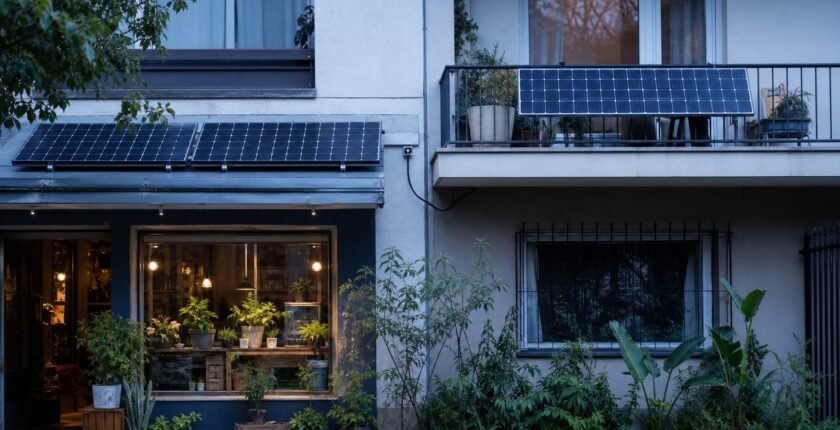
The UK has changed the rules to allow plug-in solar panels to be legally sold for home use, offering a cheaper, portable route into residential solar. Kits from UKSOL start at £699 for a one-panel bundle and £1,089 for a two-panel set; the microinverter built into each device will cap usable output at 800 watts. Households must notify their Distribution Network Operator within 28 days of plugging a unit in. This policy shift, as first reported by the BBC, aims to cut daytime power purchases but stops short of the certifications and export payments that apply to rooftop systems.
meaningfully reduce how much electricity you need to buy during the daytime
British Gas
Key takeaways
- Retail pricing: UKSOL lists a one-panel kit at £699 and a two-panel kit at £1,089.
- Output limit: Each plug-in system is limited to 800 watts of usable output by its microinverter.
- Rules and notice: Current regulations allow a single plug-in device per property and require DNO notification within 28 days.
Table of contents
- Key takeaways
- How plug-in solar panels work and why they are capped at 800W
- What they cost and how much households might save
- Safety, standards and where to buy compliant units
- Installation, suitability and the practical limits for homes
- How the policy could play out
- What to be careful about
- Frequently asked questions
How plug-in solar panels work and why they are capped at 800W
Plug-in solar panels combine a rooftop-like photovoltaic module with a small microinverter that sits between the panel and a house socket. The microinverter converts the panel's DC output into AC for immediate household use and constantly monitors the grid connection so it shuts the device down if the supply goes off.
For safety and network-management reasons the microinverter limits usable output to 800 watts; that cap means the system can run always-on loads — for example fridges or devices on standby — and, the government says, supply about a fifth of average household electricity use while the sun shines. High-demand appliances such as a kettle, which needs 3 kilowatts, will still draw most of their power from the grid with only part supplied by the panel.
Because the inverter restricts how much power can flow to the home, manufacturers can offer plug-in units without the heavier certification and grid-integration work required for rooftop arrays, but that also restricts how much bill savings a household can expect.
What they cost and how much households might save
Entry-level kits are substantially cheaper than a fitted rooftop system. UKSOL lists a one-panel kit at £699 and a two-panel kit at £1,089; the government says competition may push some retail prices down to around £400-£600 over time.
The government's modelling suggests household bills could fall by between £70 and £110 a year, but that depends on roof orientation, household daytime consumption and local sunshine. Because export rules differ from rooftop installations, excess electricity sent back to the grid is unlikely to attract payments under the Smart Export Guarantee in most cases.
Buyers should therefore treat plug-in panels as a daytime consumption reducer rather than a revenue-generating asset: the systems cut how much you need to buy from suppliers during daylight, rather than creating a new income stream.
Safety, standards and where to buy compliant units
To be sold legally in Great Britain new plug-in panels must pass the industry's G98 standard and the government's product specification; compliant devices will appear on the Energy Networks Association's public register. Government tests found sample systems could operate with no unacceptable heating or unsafe energy flows when installed and used as intended.
Electrical Safety First advises customers to buy from established retailers rather than unvetted third-party marketplace sellers and recommends having household wiring checked by a registered electrician before purchase, particularly in older properties. The charity also warns never to connect a panel through an extension lead, cable reel or plug-in adaptor because those accessories can overheat.
Major retailers including Argos are named as stocking products, and manufacturers ship panels with mounting kits and instructions so professional installation is not required in most cases; landlords or freeholders may still need to give permission for mounting or external sockets.
Installation, suitability and the practical limits for homes
Plug-in panels are designed for people with outdoor space such as gardens or some balconies and for households that use power during daylight hours, because generated electricity must be used as it arrives. Units are not permanently fixed and can be moved with the occupant, but tenants should check permission from landlords or building owners before installing.
Current regulation permits only one plug-in device per property, which caps how much generation a single household can add via this route. Households that want larger, export-capable systems will still need full MCS certification and the agreements that allow export payments under the Smart Export Guarantee.
After plugging a device in, users must notify their area's Distribution Network Operator within 28 days; find your DNO using National Grid's postcode search tool. That notification is administrative — it does not replace a safety check by a qualified electrician where wiring condition is uncertain.
| Kit | Price | Usable output | MCS/SEG eligibility |
|---|---|---|---|
| One-panel kit | £699 | 800 W | Not normally eligible |
| Two-panel kit | £1,089 | 800 W | Not normally eligible |
How the policy could play out
The case for
- Lower up-front costs and plug-and-play installation could widen access to daytime solar for renters and owners who cannot install rooftop arrays.
- Widespread daytime self-consumption would reduce household purchases from suppliers and ease short-term import pressure during sunny periods.
The case against
- The 800W limit and the one-device rule cap total generation, reducing the technology's impact on household bills and carbon relative to rooftop systems.
- Lack of MCS certification and likely ineligibility for the Smart Export Guarantee mean most users cannot be paid for exported power, which lowers the financial case for purchase.
What to be careful about
- Overheating or fire risk if a panel is connected via an extension lead, cable reel or plug-in adaptor, contrary to Electrical Safety First guidance.
- Shoppers buying from third-party marketplace sellers may receive devices that do not meet the G98 or government product specification and therefore are not compliant.
- Households may not receive payments for exported electricity because plug-in panels typically do not qualify for the Smart Export Guarantee.
- Older home wiring can interact poorly with plug-in systems; an uninspected installation could create safety or nuisance tripping issues.
The bottom line
Plug-in solar panels offer a lower-cost, portable way into day-time solar generation by pairing a PV panel with a safety-focused microinverter that limits output to 800 watts. The economics are modest: kits start at £699, possible annual bill savings are in the £70–£110 range, and users should not expect export payments in most cases. Safety checks and a DNO notification within 28 days are practical requirements that households must not skip. For many, the new class of product will provide small but reliable daytime cuts to purchased electricity rather than replacing a full rooftop system.
What to watch
- Watch for Argos and other retailers to announce exact retail start dates; no public start date has been given.
- Watch the Energy Networks Association register for new compliant device listings; no date has been set for those updates.
Frequently asked questions
How much power will a plug-in panel deliver to my home?
Each device is capped at 800 watts of usable output by its microinverter, which the government says should cover about a fifth of average household electricity use while the sun is shining.
What do plug-in panels cost and how much can I save?
UKSOL lists a one-panel kit at £699 and a two-panel kit at £1,089; government modelling suggests typical household savings of between £70 and £110 a year.
Do I need certification or permission to install one?
Plug-in panels sold in Great Britain must meet the industry's G98 standard and the government's product specification, but they do not normally need Microgeneration Certification Scheme (MCS) certification; tenants may still need landlord or freeholder permission to mount panels.
Related reading
This article is information, not financial advice. Anyone acting on it should do their own checks.