
Blog
Certain Energy raises £10M for flow batteries
Estimated reading time: 4 minutes · Last updated:
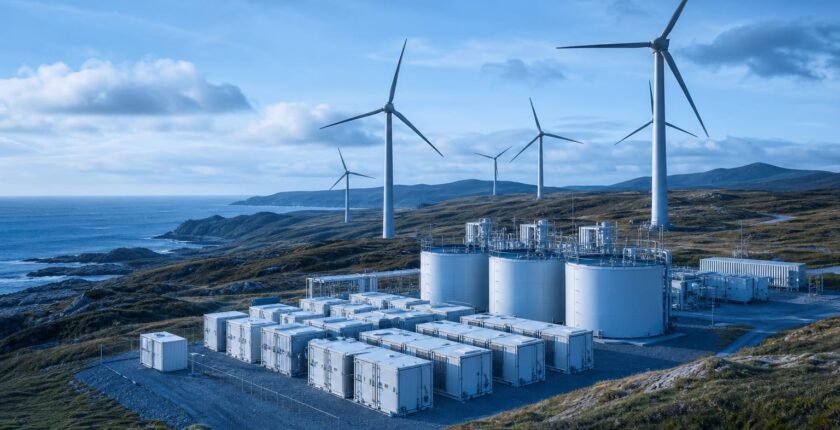
Certain Energy has raised £10 million in a Series A to commercialise manganese flow batteries for grid-scale storage, backing an MWh-class demonstrator in India and an expansion of its UK research facility. Flow batteries store energy in liquid electrolytes kept in external tanks, so capacity and discharge duration can be increased by enlarging tanks rather than changing the cell stack. Founded in 2017 as a spin-off from Imperial College London and formerly RFC Power, Certain Energy positions its chemistry as lower‑cost long-duration storage to reduce curtailment and reliance on gas peakers. The listing places the size of the round around the 75th percentile by amount for Series A, as first reported by Dealroom.
Key takeaways
- Certain Energy raised £10 million in a Series A round to commercialise manganese flow battery systems.
- The round includes the British Business Bank as lead investor and participation from Centrica, Ceres Power Holdings, Catalytic Capital for Climate and Health (Temasek Trust) and c3h.
- Certain Energy says its patented electrolyte targets a 20-year operating life and the system delivers round-trip efficiency above 75%.
- Proceeds will fund an MWh-class grid-connected system in India, expansion of UK R&D, and supply-chain build-out for commercial deployments.
Table of contents
Why manganese flow batteries matter
Certain Energy produces a manganese flow battery in which energy is stored in liquid electrolytes contained in external tanks. The company says manganese's abundance makes it less expensive than the materials used in some competing long-duration chemistries, and it claims the design can cut marginal storage costs to roughly one-tenth of those for vanadium flow batteries.
Flow chemistry separates energy capacity (tank volume) from power (cell stacks), which makes longer discharges a matter of scaling tanks. Certain Energy also highlights a patented electrolyte formulated for a 20-year operating life; the company says that endurance is a key metric for grid-scale projects that must supply reserves over seasons.
Who backed the round and what it signals
The Series A was led by the British Business Bank, with Centrica, Ceres Power Holdings, Temasek Trust's Catalytic Capital for Climate and Health, and c3h taking part. Those names combine public-development capital, an energy utility and strategic industry players.
By amount the round sits toward the upper end for Series A financing; the listing places it around the 75th percentile for that stage, which the company and investors interpret as a sign of confidence in long-duration storage propositions.
Certain Energy was founded in 2017 as a spin-off from Imperial College London and previously traded as RFC Power, giving it an academic origin common to battery spin-outs.
What the funding will be used for and competitive positioning
Certain Energy says the Series A will pay for an MWh-class system in India, expansion of its UK research facility, and the early build-out of a supply chain to take the design toward volume production. The India demonstrator is presented as the first grid-connected validation of performance.
On performance the company claims round-trip efficiency above 75% and projects much lower marginal costs versus vanadium-based flow options; it also frames that efficiency as competitive with lithium-ion for many grid services while offering longer-duration discharge from scaled tanks.
Cases for and against rapid deployment
The case for
- Manganese’s abundance could lower raw-material exposure and cost compared with vanadium-based flow chemistries.
- A validated MWh-class demonstrator in India would provide an operational reference for utilities in renewable-heavy markets seeking multi-hour to multi-day reserves.
The case against
- The company’s cost and lifetime claims rely on proprietary chemistry and projections that require independent verification and longer-term field data.
- Competition from established lithium-ion manufacturers and alternative long-duration chemistries could compress margins and slow customer adoption.
What to be careful about
- Supply‑chain scaling: moving from prototype to commercial volumes requires manufacturing partners and secured feedstock for manganese electrolytes.
- Performance verification: the claimed >75% round-trip efficiency and 20-year electrolyte life need third-party testing and multi-year operation to be proven at scale.
- Project execution in India: grid integration, permitting and local procurement could delay the MWh-class demonstrator and postpone revenue milestones.
The bottom line
The £10 million Series A gives Certain Energy an early runway to move its manganese flow battery out of the lab and into grid-connected demonstration. The funding combines development capital and strategic partners and is earmarked for an MWh-class system in India plus UK R&D and supply-chain work. The company’s headline claims—above-75% round-trip efficiency, a 20-year electrolyte life and a marginal-cost advantage versus vanadium—are the metrics that will determine commercial credibility; observers should look for independent performance data and firm manufacturing agreements as the next proof points.
What to watch
- Watch for Certain Energy’s commercial commissioning date for its MWh-class system in India; no date has been set.
- Watch for announcements of manufacturing partners or supply-chain contracts that would underpin volume production; no date has been set.
Frequently asked questions
What is Certain Energy building?
Certain Energy develops a manganese flow battery system, a long-duration storage design that stores energy in liquid electrolytes held in external tanks; the company targets a 20-year operating life for its patented electrolyte.
Who invested in the Series A?
The £10 million Series A was led by the British Business Bank and included Centrica, Ceres Power Holdings, Catalytic Capital for Climate and Health (Temasek Trust) and c3h.
How will the funding be used?
The proceeds will be used to deploy a grid-connected, MWh-class system in India, to expand Certain Energy’s UK research facility, and to carry out an initial supply-chain build-out to ready the technology for commercial deployments.
Related reading