
Blog
Solar for Schools cuts Philly-area schools’ utility bills
Estimated reading time: 5 minutes · Last updated:
By September 26, 2026, Pennsylvania’s Solar for Schools program had awarded grants to 85 schools (10 in Philadelphia) to defray rooftop solar installations. The program, first funded in 2024, received $25 million in this year’s state budget and offers grants that cover up to 75% of project costs or up to $900,000. Two recently installed systems include a 350-kilowatt solar array at Universal Audenried Charter School and a 650-kilowatt array at Unionville High School; together they total about 1,000 kW. As first reported by WHYY, district officials and installers say the arrays cut utility spending and provide hands-on learning for students.
“The state grant almost made it like a no‑brainer to do it,” Whitesel said.
James Whitesel
Key takeaways
- Solar for Schools has given grants to 85 Pennsylvania schools, including 10 in Philadelphia, and the program received $25 million in this year’s state budget.
- Universal Audenried Charter School is installing a 350-kilowatt solar array expected to cover roughly 40% to 50% of the school’s electricity needs.
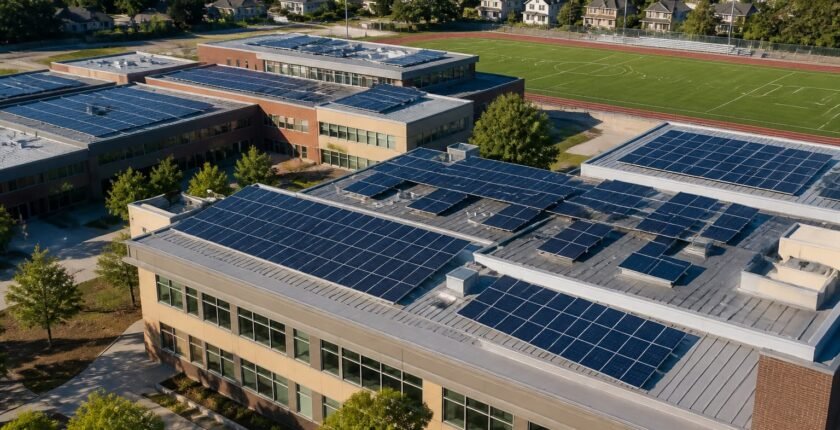
- Unionville High School turned on a 650-kilowatt array that will supply about a quarter of the school’s and district office’s energy and is built from over 900 roof panels.
- Audenried expects to pay around $100,000 after a state grant covering half the cost and a 40% federal tax credit; installers say that project could pay for itself in one to two years.
- Unionville forecasts roughly $75,000 in annual electricity savings, a payback of about seven years and more than $1 million in savings over 25 years.
Table of contents
How Solar for Schools funds rooftop arrays
Solar for Schools, first funded in 2024, offers matching grants to K–12 districts across Pennsylvania and has approved projects for 85 schools, including 10 in Philadelphia. Grants can cover up to 75% of a project’s cost or provide up to $900,000 per project; this year’s state budget included a $25 million appropriation for the program. Districts apply for funding and then work with installers; at Universal Audenried Charter School the installer is Solar States, whose founder Micah Gold-Markel is overseeing the rooftop work.
The program’s structure combines state grant support with the federal investment tax credit where eligible. At Audenried the state grant covered half the project cost and a 40% federal tax credit applied, lowering the school’s out‑of‑pocket expense to around $100,000, Solar States’ founder said. That blended funding model is the primary lever making many districts able to proceed without taking on large capital burdens.
Project economics at Audenried and Unionville
Universal Audenried Charter School is installing a 350-kilowatt solar array that installers estimate will meet roughly 40% to 50% of the school’s electricity consumption. With the state grant covering half the cost and a 40% federal tax credit applied, Micah Gold-Markel of Solar States says Audenried will pay about $100,000 and that the project should pay for itself in one to two years based on energy savings.
Unionville High School’s new 650-kilowatt rooftop system — built from over 900 panels — is expected to provide about a quarter of the high school and district office’s electricity. James Whitesel, Unionville Chadds Ford School District’s director of facilities, estimates the district will save roughly $75,000 per year, reach payback in around seven years, and save over $1 million across 25 years. Those timelines reflect local electricity prices, grant levels, and system production assumptions the districts and installers used in budgeting.
Learning, jobs and on‑site training from rooftop arrays
District leaders say education and workforce development were central to pursuing grants. Universal Audenried plans a “solar lab” so students in engineering career and technical education classes can gather real‑time production data and learn to connect, disconnect and service panels. Principal Josh Anderson described the curricular value as a major motivator for the project, and seniors have already watched roof work and data demonstrations.
Installers and classroom visits also make pay rates visible: Micah Gold‑Markel pointed students to the crane operator and said that person was making about $80 an hour, while roof workers installing the panels would earn about $100 an hour. Students such as 18‑year‑old Malakai Tim and 17‑year‑old Richie Palillero told reporters they were curious about solar work and saw the installations as a pathway into hands‑on technical careers.
| Attribute | Universal Audenried Charter School | Unionville High School |
|---|---|---|
| Capacity | 350 kilowatts | 650 kilowatts |
| Estimated share of school electricity | About 40%–50% | About a quarter |
| School out‑of‑pocket cost | Around $100,000 (state grant covered half; 40% federal tax credit) | Not specified |
| Installer | Solar States | Not specified |
| Payback estimate | About 1–2 years | About 7 years |
| Estimated annual savings | Not specified | Roughly $75,000 per year |
What could move this either way
The case for
- The grant-plus‑tax‑credit model reduces up‑front costs and can deliver payback in one to seven years depending on grant share and project size.
- Rooftop installations create on‑site teaching resources such as a planned “solar lab” and expose students to construction and service wages noted by installers.
The case against
- The regional grid remains nearly 60% fueled by natural gas and coal, so panels reduce on‑site electricity purchases but do not eliminate upstream fossil generation entirely.
- Future projects depend on continued state budget support: the program received $25 million this year, and a drop in appropriations would force districts to cover more of the initial cost.
What to be careful about
- Projects rely on grant funding and the federal tax credit; if either is reduced or inapplicable to a site, school budgets could face larger capital requirements.
- Rooftop constraints and wind‑uplift mitigation — for example, using stacked cinder blocks as ballast — add installation complexity and potential maintenance exposures.
- Estimated savings and payback assumptions depend on future electricity prices and system production; lower-than-expected generation would lengthen payback.
The bottom line
Pennsylvania’s Solar for Schools program has turned state and federal incentives into working rooftop systems that reduce utility spending and create local training opportunities. The two recent installations — a 350‑kilowatt array at Universal Audenried and a 650‑kilowatt system at Unionville, together about 1,000 kW — illustrate the program’s typical tradeoffs: larger systems yield steady multi‑decade savings but require more capital and longer paybacks, while smaller, heavily subsidised projects can pay for themselves in a year or two. Continued state funding and predictable system performance will determine how many more districts can follow these examples.
What to watch
- Watch for the rollout of the planned “solar lab” at Universal Audenried; no date has been set.
- Watch for additional Solar for Schools grant approvals and new school announcements; no date has been set.
- Watch for next state budget discussions that could adjust the Solar for Schools appropriation; no date has been set.
Frequently asked questions
What is Solar for Schools and how much funding did it receive?
Solar for Schools is a Pennsylvania grant program first funded in 2024 that helps K–12 districts install solar; it received $25 million in this year’s state budget and has approved grants for 85 schools.
How much electricity will the new systems produce at Audenried and Unionville?
Universal Audenried is installing a 350‑kilowatt array expected to cover roughly 40%–50% of the school's electricity, while Unionville’s 650‑kilowatt system should supply about a quarter of the high school and district office demand.
What are the projected savings and payback periods?
Audenried’s project, with a state grant covering half the cost plus a 40% federal tax credit, is expected to cost the school about $100,000 and pay back in one to two years, according to the installer; Unionville estimates roughly $75,000 in annual savings, a payback of around seven years, and more than $1 million saved over 25 years.
Related reading