
Blog
Ballard fuel cells to equip Romania’s first hydrogen trains
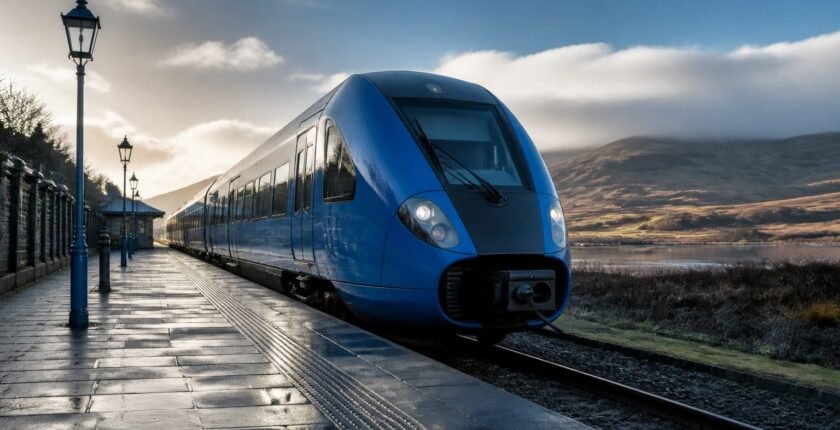
Estimated reading time: 5 minutes · Last updated:
Ballard has won a $373m contract to supply 200kW FCrail fuel cell units that together total 4.8MW to power Romania’s first hydrogen-powered passenger trains. The cells will outfit 12 Siemens Mobility Association Mireo Plus H trainsets that are due to enter service in 2029; delivery of the fuel cell units is scheduled for 2027. The procurement was approved by Romania’s National Authority for Public Procurement and follows an April purchase of the trainsets by the Romanian Rail Authority (RRA). The project is presented as eligible to help meet the country’s Renewable Energy Directive III transport targets and the RFNBO quota for 2030.
Key takeaways
- Order size: Ballard won a $373m contract to supply 200 kW FCrail units, with a combined capacity of 4.8 MW, intended to power 12 Siemens Mireo Plus H trains.
- Delivery and service dates: Delivery of the fuel cell units is scheduled for 2027 and the trains are set to enter service in 2029.
- Regulatory context: Romania has transposed RED III and its RFNBO targets; hydrogen rail can contribute toward a 1% transport-energy quota by 2030.
- Supply risk: Hydrogen rail adoption in Europe faces fuel supply and reliability challenges illustrated by earlier fleet scale-backs over defective fuel cells.
Table of contents
The Ballard supply deal and what it supplies
Ballard will deliver FCrail fuel cell modules tied to a $373m contract for units rated at 200kW each and totalling 4.8MW of installed fuel-cell power. The customer is the Romanian Rail Authority’s recent procurement of 12 Siemens Mobility Association Mireo Plus H trainsets; those trainsets are scheduled to enter passenger service in 2029 and the fuel cell units are due to be delivered in 2027. Romania’s National Authority for Public Procurement approved the order after a previously cancelled tender process, and the purchase follows the April procurement of the Mireo Plus H trains by the RRA.
Using the figures stated in the procurement announcement, the overall power package implies roughly two FCrail units per trainset given the 12 trains and the 4.8MW total. Ballard’s supply covers the fuel-cell module hardware; the announcement does not set out details such as on-board integration, spare-unit holdings, or final system acceptance milestones, items that typically determine fleet reliability in initial operating years.
Why Romania sees hydrogen rail as a policy fit
Romania has transposed the transport elements of the EU Renewable Energy Directive III, which creates a role for renewable fuels of non-biological origin (RFNBOs) in transport accounting. The announcement cites that hydrogen traction could count toward a 1% transport-energy quota by 2030 under those rules, potentially giving the new trains a regulatory subsidy or compliance value beyond their direct operating economics.
Despite the policy framing, the Romanian Rail Authority has not disclosed how the trains will be refuelled. The procurement note confirms eligibility against RED III targets but leaves open whether the hydrogen will be produced locally, supplied by third parties, delivered as compressed gas, or carried in on-board storage formats. Those choices affect operating costs, greenhouse-gas accounting for RFNBOs, and resilience of service—factors that transport operators typically resolve during infrastructure and supplier contracting phases.
Market context: adoption, constraints and Ballard’s vertical move
Hydrogen traction has moved from pilots toward small fleets, but two constraints recur: reliable fuel-cell hardware and a secure low-carbon hydrogen supply chain. The sector has recently seen programs delayed or reduced because of defective fuel cells; August 2025 saw a German operator scale back hydrogen services for that reason. Manufacturers such as Stadler have planned regional rollouts in Italy for 2028, and elsewhere India introduced a large-capacity hydrogen train powered by two 1.2MW fuel cells, showing the technology’s geographic spread.
Ballard has been extending its role along the hydrogen value chain: it completed a multi‑million‑dollar purchase of UK-based hydrogen generator GeoPura, a transaction the seller said pushes Ballard toward integrated hydrogen solutions. The move echoes a broader industry pattern in which original equipment manufacturers and component suppliers secure upstream fuel production or supply partners to reduce dependence on third-party fuel sources and to offer rail operators bundled procurement options.
| Item | Detail |
|---|---|
| Contract value | $373m |
| FCrail unit rating | 200kW |
| Total fuel-cell power | 4.8MW |
| Number of trains | 12 Siemens Mireo Plus H |
| Service entry | 2029 |
How the project could unfold
The case for
- If Ballard delivers on schedule in 2027 and integration goes smoothly, the trains could provide reliable low-emission regional services and help Romania meet RED III RFNBO accounting toward the 2030 target.
- Ballard’s purchase of GeoPura could enable closer coordination of hydrogen supply and fuel-cell availability, reducing interruptions tied to third-party shortages.
The case against
- Persistent fuel supply constraints or delays in establishing low-carbon hydrogen logistics could force services to revert to diesel or remain curtailed, as occurred in previous fleet roll-backs.
- If the FCrail modules prove less reliable in early service than expected, the operator could face capacity reductions and higher maintenance costs, delaying the climate benefits and regulatory compliance gains.
What to be careful about
- No refuelling plan disclosed by the Romanian Rail Authority creates uncertainty over hydrogen source, delivery method and operating costs.
- Past defective fuel-cell incidents have led to service scale-backs, showing a concrete operational risk to early hydrogen fleets.
- Delivery slippage on either the FCrail units or the Mireo Plus H integration work could push entry into service past 2029.
The bottom line
The Ballard contract gives Romania a first-mover hydrogen-train fleet built around 200kW FCrail modules and a declared 4.8MW of onboard fuel-cell power for 12 Siemens Mireo Plus H trainsets. The procurement intersects with EU RED III rules and RFNBO quotas, offering a regulatory rationale for the investment, but a missing refuelling plan and the sector’s recent reliability problems are immediate operational uncertainties. How Ballard, the RRA and hydrogen suppliers resolve hydrogen logistics and early maintenance will determine whether the programme delivers consistent low-carbon services by 2029.
What to watch
- watch for delivery of the Ballard FCrail units in 2027, as the procurement states delivery is scheduled for next year.
- watch for the Mireo Plus H trainsets entering passenger service in 2029.
Frequently asked questions
How many Ballard fuel-cell units were ordered and what power do they provide?
The contract covers 200kW FCrail units that together total 4.8MW of fuel-cell power under a $373m order; that capacity is intended to equip 12 Siemens Mireo Plus H trains.
When are the trains expected to enter service and when are the cells due for delivery?
The Mireo Plus H trainsets are planned to enter passenger service in 2029, and the fuel-cell unit delivery is scheduled for 2027 according to the procurement note.
Has Romania said how the hydrogen will be supplied and refuel the trains?
No; the Romanian Rail Authority has not released details of the refuelling method or hydrogen source, a gap that affects operating cost and RFNBO accounting.
Related reading