
Blog
Türkiye Geothermal Deal Signed by TPAO and Baker Hughes
Estimated reading time: 4 minutes · Last updated:
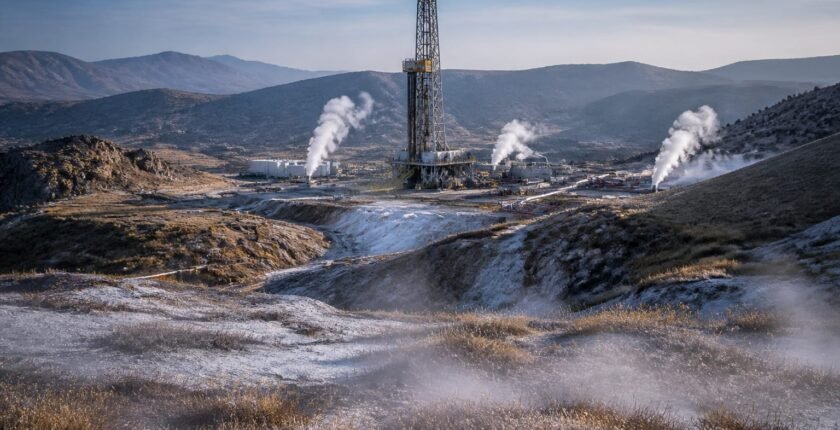
Turkish Petroleum Corporation (TPAO), owned by the Turkish state, and U.S. energy services company Baker Hughes have agreed to cooperate on developing Türkiye's geothermal energy. Energy and Natural Resources Minister Alparslan Bayraktar announced the deal on 11 November 2026. The Türkiye geothermal deal works in two stages. First, the partners measure national potential from records kept by TPAO and the General Directorate of Mineral Research and Exploration (MTA). Then they look for well sites fit for commercial-scale projects. Bayraktar announced the agreement on X after it was signed in Antalya, where the COP31 climate summit was under way. He disclosed no financial terms.
Key takeaways
- The deal: TPAO and Baker Hughes signed a geothermal cooperation agreement in Antalya during COP31, and Energy and Natural Resources Minister Alparslan Bayraktar announced it on X on 11 November 2026.
- The data: Türkiye's geothermal potential will first be assessed from records held by TPAO and the General Directorate of Mineral Research and Exploration (MTA), Bayraktar said.
- The money: Bayraktar gave no cost, investment or revenue figures for the TPAO and Baker Hughes agreement.
- The aim: Bayraktar linked the partnership to Türkiye's goals of diversifying its energy sources and strengthening supply security, without setting a capacity or date target.
Table of contents
What TPAO and Baker Hughes Agreed in Antalya
Bayraktar said the agreement followed his meeting with Lorenzo Simonelli, chief executive of Baker Hughes, during COP31 in the southern Turkish city of Antalya. A photograph he posted on X shows the minister overseeing the signing between the two companies.
The deal is described as a cooperation agreement. That is a commitment to work together, not a contract for drilling or equipment. Bayraktar gave no figures on cost or investment, and he did not say how the work would be divided between the two companies.
That leaves the scale of the deal open. What exists so far is a named partnership and a stated purpose, announced by the minister himself on social media.
How the Assessment Will Use TPAO and MTA Data
The first task is a survey of what Türkiye holds underground. Bayraktar said the country's geothermal potential will be evaluated from records kept by TPAO and by the General Directorate of Mineral Research and Exploration, the state body known as MTA.
Only after that review will the partners look for places where commercial-scale geothermal output makes sense, concentrating on well locations judged suitable. The minister did not say how many sites might qualify or when the assessment would finish.
The order matters. Existing data is screened before any new site is chosen. That means the next concrete step Bayraktar described is a desk review of data, not a power plant.
Why Ankara Frames Geothermal as Supply Security
Bayraktar tied the agreement to two national aims: spreading Türkiye's energy supply across more sources and making that supply more secure. He presented this as a hope, saying he expected the step to contribute strongly to both goals.
That is a statement of intent. No capacity target, megawatt figure or delivery date came with it, so there is not yet any measure against which the contribution can be judged.
The setting carries its own message. Signing a geothermal partnership at a climate summit held in Antalya put the deal in front of an international audience before a single well had been assessed.
| Party | Description | Role in the deal |
|---|---|---|
| TPAO | State-owned Turkish Petroleum Corporation | Signatory and data holder |
| Baker Hughes | U.S. energy services firm | Signatory |
| MTA | General Directorate of Mineral Research and Exploration | Data source for the assessment |
| Alparslan Bayraktar | Energy and Natural Resources Minister | Oversaw signing, announced deal on X |
| Lorenzo Simonelli | Baker Hughes CEO | Met Bayraktar before the signing |
What could help or hold back the partnership
The case for
- Both TPAO and MTA already hold data, so the assessment begins from existing records rather than new surveys.
- Ministerial backing is explicit: Bayraktar oversaw the signing and announced it himself.
The case against
- No financial terms were disclosed, so the size of either company's commitment is unknown.
- Commercial development depends on the assessment finding suitable well locations, and no sites have been named.
What to be careful about
- The agreement carries no published money or timetable, so it could remain a framework without moving to development.
- If the TPAO and MTA data point to few suitable well locations, the commercial-scale stage may be narrow.
The bottom line
For now, the TPAO and Baker Hughes partnership is a starting point rather than a project. Its shape depends on three things: what the TPAO and MTA data reveal, which well locations pass the screen, and whether financial terms are ever made public. Until those answers arrive, Bayraktar's hopes for supply security and diversification remain aims without numbers attached.
What to watch
- Watch for disclosure of the deal's financial terms by TPAO, Baker Hughes or the energy ministry; no date has been set.
- Watch for results of the assessment of TPAO and MTA data; no completion date has been given.
- Watch for the first well locations chosen for commercial-scale development; no timetable has been announced.
Frequently asked questions
Who announced the TPAO and Baker Hughes geothermal deal?
Energy and Natural Resources Minister Alparslan Bayraktar announced it on X on 11 November 2026. He said it followed his meeting with Baker Hughes CEO Lorenzo Simonelli in Antalya.
How much is the TPAO and Baker Hughes deal worth?
No figure has been published. Bayraktar gave no financial details when he announced the agreement, so its value and cost sharing are unknown.
What is MTA and why does it matter here?
MTA is Türkiye's General Directorate of Mineral Research and Exploration. Bayraktar said its data, alongside TPAO's, will be used to assess the country's geothermal potential.
Related reading