
Blog
34 MW Hydrogen Turbine Starts at RWE Lingen Plant
Estimated reading time: 6 minutes · Last updated:
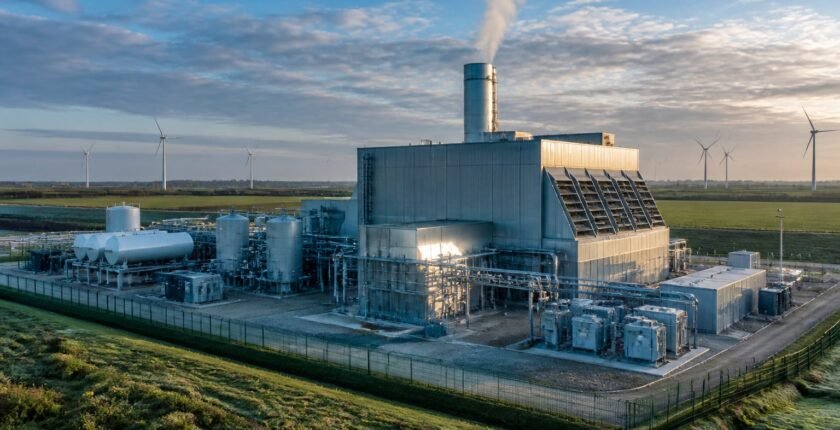
RWE and Kawasaki Heavy Industries have put a 34-megawatt hydrogen turbine into service at the Emsland gas-fired power station in Lingen, Germany. They marked the commissioning at a ceremony on 6 November 2026. The machine burns natural gas, hydrogen or any blend of the two. Over the coming months the partners plan to run it on as much as 100% hydrogen at industrial scale. RWE describes it as the largest hydrogen turbine of its kind in Europe and says it will be the first to produce electricity from hydrogen industrially. The hydrogen burned during testing will be supplied by electrolysers next to the plant, part of the GET H2 Nukleus project. Whether the turbine lives up to those claims depends on test results that have not yet been published.
Key takeaways
- Commissioning: RWE and Kawasaki Heavy Industries commissioned a 34 MW hydrogen-compatible turbine at RWE's Emsland power station in Lingen on 6 November 2026.
- Trial goal: In the coming months the partners will test industrial-scale power generation on hydrogen shares of up to 100%, across varied operating modes and loads.
- Company claims: RWE calls the unit Europe's largest turbine of its kind, and RWE Generation CEO Nikolaus Valerius says it delivers up to ten times the power of earlier hydrogen turbines.
- Fuel source: Hydrogen for the tests comes from the GET H2 Nukleus electrolysers next to the plant, which RWE says run on renewable electricity.
- Policy link: RWE ties the project to backup needs in a wind- and solar-heavy grid and recently won a Bundesnetzagentur tender for flexible power stations.
Table of contents
What RWE and Kawasaki Commissioned at Emsland
The new unit is a 34 MW gas turbine designed to be hydrogen-compatible, installed at RWE's Emsland gas-fired power station in Lingen. RWE and Kawasaki Heavy Industries, known as KHI, marked its commissioning on 6 November 2026 in front of around 130 invited guests drawn from politics, business and the media.
RWE makes two strong claims for the machine. The company says no turbine of this type in Europe is larger, and that it will be the first to turn hydrogen into electricity at industrial scale. Both are RWE's own descriptions. No independent comparison of European hydrogen turbines has been published alongside them, so the ranking is best read as the operator's assessment rather than a settled fact.
The guest list signalled the project's diplomatic weight. Lower Saxony's Minister-President, Olaf Lies, attended along with Mitsuko Shino, Japan's Ambassador to Germany. Representatives of KHI, RWE and NEDO, the Japanese funding organisation, also took part.
How the Trials Will Test Running on Pure Hydrogen
A gas turbine burns fuel to spin a generator, and this one accepts natural gas, hydrogen or any mixture of the two. During the coming months, RWE and Kawasaki intend to test power generation at industrial scale on hydrogen shares as high as 100%. They will put the unit through different operating modes and load conditions, the kind a flexible plant would face in a grid dominated by wind and solar.
Motohiko Nishimura, head of KHI's Energy Solution & Marine Engineering Company, where he holds the title of President, says operators can change the proportion of hydrogen co-fired with natural gas depending on how much hydrogen is available and what it costs. Co-firing means burning both fuels together in one combustion process. In practice, that lets the plant lean on gas when hydrogen is scarce or expensive.
Nikolaus Valerius, CEO of RWE Generation, says the turbine can produce up to ten times the power of earlier hydrogen turbines. He adds that what the team learns from operating it will be central to rolling out bigger units later. Neither claim can be checked until trial data is released.
The fuel is made on site. RWE says the GET H2 Nukleus electrolysers, which stand right beside the plant, use renewable electricity to separate water into hydrogen and oxygen. For as long as the trials run, that hydrogen goes straight into the turbine.
Why RWE Says the Grid Needs Hydrogen-Ready Backup
RWE's case for the project rests on the rising share of wind and solar in electricity generation. When those sources fall short, something reliable and flexible has to fill the gap. RWE argues that hydrogen-compatible gas plants can supply that backup through long stretches of weak renewable output, not just brief dips.
The company also has a commercial reason to build the capability. RWE recently won a tender for flexible power stations run by the Federal Network Agency, the Bundesnetzagentur. How the Lingen trials connect to that award, and what the contract involves, has not been set out.
Lies framed the turbine as a symbol of partnership between Lower Saxony and Japan. He said it brings new technology, value creation for the region and prospects for climate-neutral industry. For scale, the European Hydrogen Observatory, run by the Clean Hydrogen JU, charts installed electrolysis capacity of 120 MW in Germany, ahead of 38.5 MW in Spain and 21.5 MW in France.
What could help or hold back the Lingen turbine
The case for
- The turbine's adjustable hydrogen-to-gas ratio, as Nishimura describes it, lets the plant keep running when hydrogen supply or price is unfavourable.
- On-site supply from the GET H2 Nukleus electrolysers removes the need to transport hydrogen to the plant during trials.
- RWE's recent Bundesnetzagentur flexible power station tender win gives the company a commercial route for hydrogen-ready backup capacity.
The case against
- RWE's claims of Europe's largest unit and Valerius's tenfold power comparison have no published performance data behind them yet.
- Running on 100% hydrogen is a test objective for the coming months, not a demonstrated result.
- Germany's charted electrolysis capacity of 120 MW, per the European Hydrogen Observatory, is modest against the fuel needs of larger hydrogen turbines RWE wants to deploy.
What to be careful about
- Trial results across different load conditions may fall short of the 100% hydrogen target, limiting the turbine to blended operation.
- Hydrogen output from the GET H2 Nukleus electrolysers depends on renewable electricity, which could constrain how long full-hydrogen runs can last.
- The link between the Lingen trials and RWE's Bundesnetzagentur tender award is undefined, so the project's commercial follow-through remains unclear.
The bottom line
The Lingen turbine is, for now, a commissioned machine and a set of promises. What is established: a 34 MW hydrogen-compatible unit is installed at Emsland, it can burn any blend of gas and hydrogen, and an electrolyser plant next door will feed it during trials. What is still pending is the evidence. RWE's ranking of the turbine as Europe's largest of its kind, and Valerius's tenfold power comparison, are company claims awaiting performance data. The trials over the coming months will show whether a full hydrogen run holds up across varied loads. They will also show whether the operating lessons carry over to the larger turbines RWE says it wants to deploy next.
What to watch
- Watch for the first published results from the Lingen trials on up to 100% hydrogen, which RWE and Kawasaki say will run over the coming months; no specific date has been set.
- Watch for RWE to say how the Emsland test findings feed into the flexible power stations covered by its Bundesnetzagentur tender win; no timetable has been given.
- Watch for any announcement of the larger hydrogen turbines Valerius says the Lingen experience will support; no date has been set.
Frequently asked questions
Is the RWE Lingen turbine really the largest hydrogen turbine in Europe?
That is RWE's own claim, made for the 34 MW unit at its Emsland station. No independent ranking was released with it, so it stands as the operator's description until performance data is available.
Why was Japan's ambassador at the RWE hydrogen turbine ceremony?
Mitsuko Shino, Japan's Ambassador to Germany, attended alongside KHI and the Japanese funding organisation NEDO. Lower Saxony Minister-President Olaf Lies described the turbine as a symbol of cooperation between his state and Japan.
How much electrolysis capacity does Germany have for hydrogen?
The European Hydrogen Observatory, run by the Clean Hydrogen JU, charts Germany's installed electrolysis capacity at 120 MW. That compares with 38.5 MW in Spain and 21.5 MW in France on the same chart.
Can the Lingen turbine still run on natural gas?
Yes. The unit accepts natural gas, hydrogen or any mix of the two, and Motohiko Nishimura of KHI says the hydrogen share can be adjusted to match availability and cost.
Related reading