
Blog
Bay Area Chefs on Switching to All-Electric Kitchens
Estimated reading time: 5 minutes · Last updated:
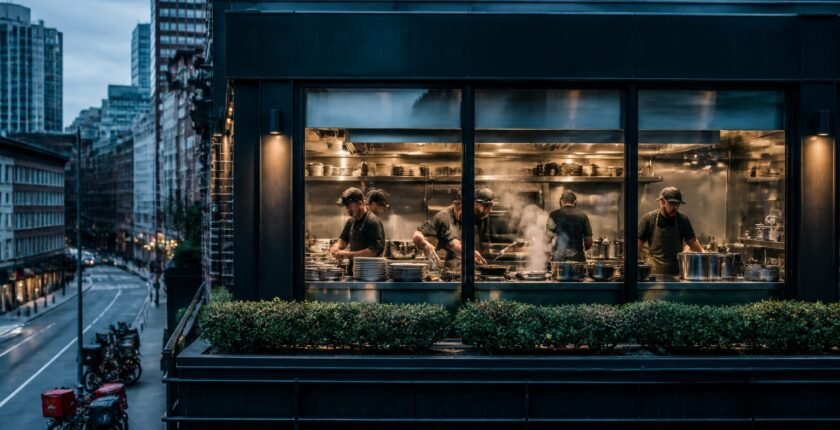
Chefs across the Bay Area who have converted to all-electric restaurants say the change preserves—or even improves—food quality while reducing indoor pollution, but it can require costly electrical upgrades. Flour + Water Hospitality Group, which runs six Bay Area restaurants, opened an all-electric Oakland location in Jan. 2026 and shared a utility bill showing about $8,000 a month in electricity usage, as first reported by KQED. The group committed to all-electric buildouts three years ago and now operates two gas-less sites. Kitchen electrification relies on high-capacity wiring and commercial electric ovens and induction cooktops rather than gas burners.
If you’re talking deck ovens, the electric models now outperform gas ovens one hundred percent.
Thomas McNaughton
Key takeaways
- Flour + Water Hospitality Group operates six Bay Area restaurants, opened an all-electric Oakland site in Jan. 2026, and now has two gas-less locations.
- Stanford environmental scientist Rob Jackson says 85% of California restaurants use gas, versus a 76% national average, and shifting to electric reduces indoor combustion pollutants.
- Jackson led a 2024 study estimating up to 19,000 U.S. deaths annually from nitrogen dioxide exposure tied to gas stoves, an amount equal to roughly 40% of secondhand-smoke deaths.
Table of contents
- Key takeaways
- Why some chefs chose electric ovens and induction
- Health and emissions: what the data and scientists say
- Costs and the practical challenge of retrofits
- Policy, industry response and market momentum
- Two-sided outlook for restaurant electrification
- What to be careful about
- Frequently asked questions
Why some chefs chose electric ovens and induction
Several Bay Area chefs who have tested professional electric pizza ovens and induction ranges say the equipment meets their heat and control needs. Thomas McNaughton, CEO of Flour + Water Hospitality Group, said he discovered professional electric pizza ovens around six years ago and now uses them in the Oakland shop that opened in Jan. 2026. Chefs describe the controls on induction as more precise than an open flame and say electric deck ovens can match the high temperatures pizza service requires.
Line cooks and chefs quoted in the reporting emphasize faster temperature response and reduced clean-up. Ava Agopsowicz, a line cook at Flour + Water’s Oakland shop, said switching to induction lowers surface grease buildup and keeps kitchen temperatures down. Those practical improvements are why some kitchens committed to all-electric buildouts three years ago and are applying the approach in subsequent openings.
Health and emissions: what the data and scientists say
Rob Jackson, an environmental scientist at Stanford University, frames commercial kitchens as amplifiers of combustion pollution because multiple burners run for hours. Jackson notes that methane is roughly 28 times as potent as carbon dioxide over a short time frame and that replacing gas with electric appliances removes direct combustion emissions from the kitchen.
Jackson also led a 2024 study that estimated up to 19,000 deaths a year in the United States could be attributable to nitrogen dioxide exposure from gas and propane stoves; the study compared that toll to about 40% of deaths linked to secondhand smoke. Brady Seals, director of electrification for health at Stanford’s Center for Human and Planetary Health, says decarbonizing demand must accompany cleaner supply if California is to reach net-zero greenhouse gas emissions by 2045.
Costs and the practical challenge of retrofits
Chefs and electrification specialists say the main barrier to converting existing restaurants is the building electrical infrastructure rather than appliance price. Brady Seals told researchers that much of the expense lies in upgrading service, transformers and running thick conduit through existing walls and turns. Flour + Water’s Oakland kitchen required heavy conduit work and now shows roughly $8,000 in monthly electricity bills; the reporting noted usage about 34 times that of an average California household in a typical month, based on U.S. Energy Information Administration data.
High retail electricity rates in California and the cost of rewiring older properties mean owners must weigh retrofit capital versus operating costs. Kitchen staff report savings in time: Jilly Middleton of the Global Cooksafe Coalition said induction surfaces wipe clean in about a 20-second pass, lowering labor for cleaning. Owners contemplating electrification must decide whether their lease, building layout and access to contractors make retrofits feasible.
Policy, industry response and market momentum
Municipal and state measures are shaping the context for restaurant electrification. Berkeley passed a natural-gas-hookup ban for new construction in 2019, and California adopted electric-ready requirements for some commercial kitchens in 2024; Seals and former Berkeley councilmember Kate Harrison say those rules push the next wave of commercial builds away from gas. Utilities in California are under a mandate to reach 100% renewable electricity by 2045, and the state reported 67% renewables in 2024.
Not all industry groups have accepted the shift. The California Restaurant Association contested Berkeley’s rule in court, and trade association leaders have argued that flame cooking is essential for some techniques. Advocates respond with training and demonstrations: chefs such as Katie Chin report that induction wok burners can get "super hot, so quickly," and many cooks learn new techniques within weeks.
| Appliance | Reported benefit | Typical retrofit issue |
|---|---|---|
| Electric pizza oven | High sustained heat for pizzas | Requires high electrical service |
| Induction cooktop | Fast response; precise temperature control | Needs compatible cookware and circuit capacity |
| Electric deep fryer / slush machine | Cleaner surfaces and safer operation | Additional dedicated circuits can be needed |
Two-sided outlook for restaurant electrification
The case for
- Improved indoor air quality and reduced combustion pollutants in kitchens as gas appliances are removed.
- Market momentum from electric-ready building codes and growing chef experience—several high-profile operators now run gas-less locations.
The case against
- High one-time retrofit costs and limited electrical capacity in many older commercial spaces make broad retrofit rollout slow.
- Pushback from industry trade groups and legal challenges can delay municipal electrification mandates.
What to be careful about
- Owners may face substantial upfront wiring and transformer costs when converting spaces that previously relied on gas service.
- Higher monthly electricity bills in California raise operating costs; Flour + Water reported about $8,000 monthly for its Oakland site.
- Supply-chain or contractor bottlenecks for high-capacity electrical work could delay openings or require choosing different locations.
- Some cuisine-specific techniques will require training and equipment changes, creating short-term productivity drops during the learning period.
The bottom line
The Bay Area examples show that full kitchen electrification is operationally possible: chefs report better temperature control, cleaner kitchens and viable high-heat electric ovens. At the same time, the shift is constrained by the electrical capacity of older buildings and higher monthly power bills; Flour + Water’s Oakland site—opened in Jan. 2026 and now one of two gas-less locations for the group—illustrates both sides with a reported $8,000 monthly electricity cost. Policy steps such as electric-ready codes adopted in 2024 and municipal debates that began with Berkeley in 2019 will shape whether restaurants can retrofit affordably at scale before California reaches its 100% renewable goals and net-zero target in 2045.
What to watch
- Watch for local building-code or city-council votes that set commercial electrification rules; no date has been set.
- Watch for updates to California’s commercial electric-ready standards and enforcement timelines; no date has been set.
- Watch for municipal program launches that subsidize retrofits for older commercial kitchens; no date has been set.
Frequently asked questions
Do electric kitchens perform as well as gas for professional cooking?
Chefs interviewed say modern electric deck ovens and induction cooktops meet professional needs; Thomas McNaughton reported discovering professional electric pizza ovens around six years ago and now uses them at Flour + Water’s Jan. 2026 Oakland location.
What health benefits come from removing gas from kitchens?
Stanford’s Rob Jackson says removing gas reduces combustion pollutants such as nitrogen dioxide and methane; Jackson led a 2024 study that estimated up to 19,000 annual U.S. deaths linked to nitrogen dioxide from gas stoves.
How much more will electrification change operating costs?
Operating costs can rise: Flour + Water’s Oakland site reported about $8,000 per month in electricity and kitchen usage about 34 times an average California home’s monthly use, though owners cite cleaner surfaces and labor savings from faster, roughly 20-second wipe-downs.
Related reading