
Blog
Moeve starts Onuba, 300 MW Andalusian green hydrogen plant
Estimated reading time: 6 minutes · Last updated:
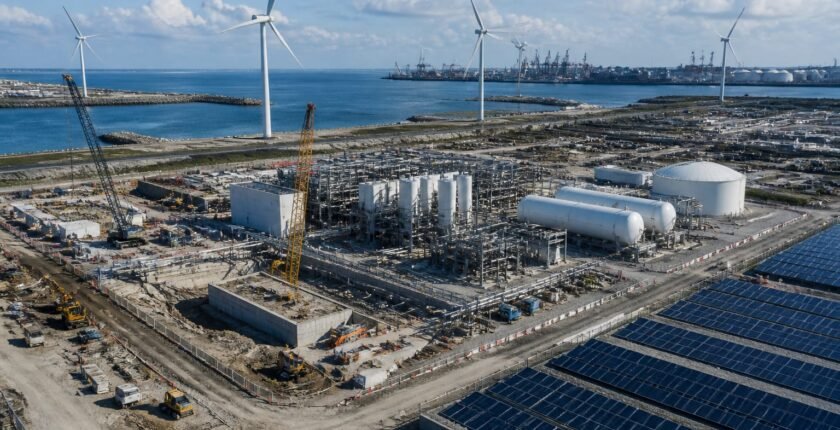
Moeve has begun construction of Onuba, a 300 MW electrolyser at its Energy Park in Palos de la Frontera (Huelva), the first phase of the Andalusian Green Hydrogen Valley. The plant is designed to produce about 45,000 tonnes of renewable hydrogen a year and to avoid roughly 250,000 tonnes of CO2 annually. On 25 September 2026 Moeve opened the site with senior Spanish and EU officials; the project has been designated a Project of Common Interest and benefits from €304 million of Spanish funding under NextGenerationEU, as first reported by Hydrocarbon Processing. The project sits inside a wider €2.4 billion investment programme for green molecules in Andalusia.
Key takeaways
- Electrolysis capacity: Onuba’s initial build is 300 MW of electrolysis with an option to add 105 MW.
- Annual hydrogen output: The first phase is expected to produce about 45,000 tonnes of renewable hydrogen per year.
- Public and private funding: Onuba has secured €304 million from the Spanish Recovery, Transformation and Resilience Plan and is part of Moeve’s €2.4 billion Andalusian programme.
- Ownership split: Moeve holds 51% of the phase; Hy24 and COFIDES together hold 29%; Enagás Renovable and Alter Enersun share 20%.
Table of contents
What Onuba will build and the project’s headline numbers
Onuba is the name given to the first phase of the Andalusian Green Hydrogen Valley located in Palos de la Frontera, Huelva. Its initial electrolyser capacity is 300 MW, with an option to expand by a further 105 MW. Moeve and its partners expect that the phase will produce about 45,000 tonnes of renewable hydrogen a year and avoid roughly 250,000 tonnes of CO2 emissions each year; the hydrogen will supply decarbonisation of road, aviation and maritime fuels and other industrial users. The Spanish Government has designated the phase a Project of Common Interest (PCI) and allocated €304 million from NextGenerationEU to support 405 MW of capacity inside the wider valley.
Site and regional scope
The Andalusian Green Hydrogen Valley is planned to deliver 2 GW of electrolysis capacity across Moeve’s Energy Parks in Palos de la Frontera (Huelva) and San Roque (Cádiz). Moeve says the broader programme represents a €2.4 billion investment in Andalusia that combines a green hydrogen plant and a second-generation biofuels facility. Local authorities and industry representatives at the ground‑breaking highlighted Andalusia’s land availability, port infrastructure and favourable renewable power economics as reasons for locating the hub there. The company expects the construction and commissioning stages of Onuba to generate more than 8,000 direct, indirect and induced jobs and to support the activity of over 400 local SMEs and self‑employed businesses.
Who owns and finances the first phase
Moeve is the majority owner and project lead with a 51% stake in Onuba. Strategic partners Hy24 and COFIDES together hold 29% and the remaining 20% is split between Enagás Renovable and Alter Enersun. The Spanish Government’s €304 million award comes from the Recovery, Transformation and Resilience Plan financed by NextGenerationEU and sits inside a wider Renewable Hydrogen Valleys support programme. Moeve describes the €2.4 billion Andalusian programme as including both Onuba and a new 2G biofuels plant; the company also cites national allocations that exceed €3 billion to more than 120 renewable hydrogen projects across Spain.
Technology, digital design and intended outputs
Moeve says Onuba will be its first digitally‑native plant: the design includes a digital twin and a unified data and IoT platform intended to enable safer, more efficient and predictive operations from start‑up. The plant will couple electrolysers with renewable power sources and associated infrastructure sized to feed the initial 300 MW unit and future additions. Onuba’s product plan is to supply green hydrogen for the production of sustainable aviation fuel (SAF) and renewable HVO diesel, and for industrial decarbonisation. The developer expects the 2G biofuels facility to begin producing SAF and renewable HVO diesel next year; the biofuels project is part of the same €2.4 billion investment envelope.
Regional and European context
European and Spanish officials present at the ceremony framed Onuba as both an industrial transformation and a strategic contribution to energy security. The European Commission has granted PCI status to the first phase, and the project is described by its backers as a building block of a larger effort to grow green molecules capability in Europe. Moeve and PwC have published a joint report arguing that green molecules could materially reduce Europe’s external energy dependence by 2040 and shift a large share of the continent’s energy mix to low‑carbon alternatives by 2050. Policymakers at the event reiterated that public funding and mandatory uptake targets are intended to create market pull for renewable hydrogen and derivative fuels.
| Partner | Stake | Role |
|---|---|---|
| Moeve | 51% | Project lead and majority investor |
| Hy24 & COFIDES | 29% (combined) | Strategic financial partners |
| Enagás Renovable & Alter Enersun | 20% (combined) | Renewable gases and generation developers |
How Onuba’s success could play out
The case for
- If construction and permitting proceed to schedule, Onuba will create an operational 300 MW electrolyser producing roughly 45,000 t/yr of hydrogen and demonstrate a commercially integrated green molecules hub in southern Spain.
- PCI recognition and the €304 million NextGenerationEU support reduce regulatory and funding uncertainty, increasing the likelihood of follow‑on private investment into the planned 2 GW valley.
- A digitally‑native plant deployed from day‑one could shorten commissioning windows and lower operating costs if the digital twin and IoT platform deliver predictable maintenance and optimisation gains.
The case against
- Grid connection, renewable power contracting and permitting for downstream fuel synthesis could delay sustained output, reducing early revenue streams and the timing of job creation.
- Delivery risk for major equipment and long lead items, plus any local supply chain bottlenecks, could increase costs or push out commissioning beyond current timelines.
- If market demand for renewable fuels and industrial hydrogen does not materialise at projected pace, the project could face lower utilisation and pressure on return profiles.
What to be careful about
- Grid connection and power‑supply contracting risk for the electrolyser, which would limit production if firm renewable offtake is not secured.
- Construction and supply‑chain delays for electrolyser stacks and balance‑of‑plant equipment, which would push commissioning dates later than planned.
- Dependence on disbursal and timing of public funding (the €304 million NextGenerationEU allocation) and on market measures that create demand for renewable hydrogen and SAF.
The bottom line
Onuba is the operational first step in a larger plan to build a 2 GW green hydrogen cluster in Andalusia and sits inside Moeve’s €2.4 billion programme of green molecules investments. The initial phase brings concrete production and emissions‑avoidance targets—about 45,000 tonnes of hydrogen per year and circa 250,000 tonnes of CO2 saved—and a mix of public and private finance that includes €304 million from NextGenerationEU. The project’s technical ambition (a digitally‑native, twin‑enabled plant) and the regional advantages cited for Huelva underpin Moeve’s case, but delivery will depend on equipment procurement, grid and power agreements, and the timing of downstream fuel synthesis and market uptake.
What to watch
- watch for the 2G biofuels plant to begin producing sustainable aviation fuel and renewable HVO diesel; no firm start date has been published beyond 'next year'.
- watch for any formal decision to exercise the 105 MW expansion option at Onuba; no date for that decision has been set.
- watch for national or EU disbursement notices tied to the €304 million NextGenerationEU award for the Renewable Hydrogen Valleys programme; no payment timetable has been published.
Frequently asked questions
How large is the Onuba electrolyser and can it be expanded?
Onuba’s initial electrolyser capacity is 300 MW with an option to add a further 105 MW; the €304 million public support is targeted at 405 MW within the Andalusian Green Hydrogen Valley programme.
What output and emissions benefit does the first phase expect to deliver?
The first phase is expected to produce about 45,000 tonnes of renewable hydrogen a year and to avoid roughly 250,000 tonnes of CO2 annually, according to project figures.
Who are the main investors and what is the ownership split?
Moeve holds a 51% majority stake; Hy24 and COFIDES together hold 29%; Enagás Renovable and Alter Enersun hold the remaining 20%.
Related reading