
Blog
NineDot Energizes 20 MW Bronx Battery in Hunts Point
Estimated reading time: 4 minutes · Last updated:
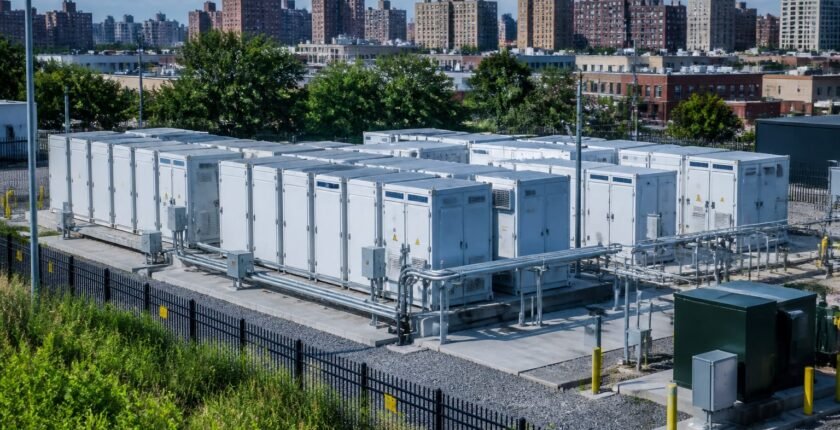
NineDot Energy has brought a 20 MW battery storage installation online in Hunts Point, The Bronx, able to supply peak power for roughly 20,000 homes during peak hours and to shore up local grid reliability. The system goes live amid local concerns over pollution and public-health burdens; NineDot says the site targets longstanding environmental injustice in the Hunts Point neighborhood. The firm reported that its fleet helped relieve grid stress during an extreme heat wave in early July 2026. These project details and NineDot’s fleet figures were first reported by Solar Builder’s Martin McConnell.
Hunts Point has historically been overburdened by high-emitting fossil fuels, and this battery storage facility marks an inflection point in improving the local environment and grid reliability.
Adam Cohen, NineDot’s co-founder and CTO
Key takeaways
- NineDot Energy has energized a 20 MW battery storage site in Hunts Point, The Bronx.
- NineDot says the installation can supply peak power for about 20,000 homes during high-load hours.
- As of September 2026 NineDot operates eleven projects totaling 39 MW in New York City and has 60 additional projects in development.
- NineDot is on track to reach a company goal of 400 MW of battery storage in operation, construction or development by the end of 2026.
Table of contents
What the Hunts Point installation is and who it serves
The Hunts Point facility is a 20 MW battery energy storage system sited to serve the local distribution network and to supply capacity in peak hours. NineDot frames the build as a local resilience and public-health measure: the company links area pollution — it estimates about 10,000 diesel trucks pass through the borough each day — to higher asthma burdens in Hunts Point and Mott Haven recorded in 2023 at roughly two to three times New York City’s average. The site’s output, NineDot says, is enough to meet short-duration peak demand for about 20,000 homes, a figure it presents as the operational planning target for demand relief and outage mitigation.
NineDot’s co-founder and CTO, Adam Cohen, described the project as addressing a history of heavy local emissions while also improving grid reliability for the neighbourhood.
How this fits into NineDot’s New York City fleet
NineDot reports it currently has eleven operating projects across six locations in Staten Island and The Bronx that together total 39 MW. The company says that makes its fleet the largest operating battery group inside Con Edison’s New York City territory. Beyond that operating base, NineDot states it has 60 additional projects in development and remains on track to have 400 MW in operation, construction or development by the end of 2026.
Those figures position NineDot as a significant local aggregator of community-scale storage. The firm argues that distributed batteries installed near load centers reduce stress on distribution transformers and can substitute for or defer upgrades to conventional generation during summer peaks; NineDot points to reduced local grid stress during the early July 2026 heat wave as practical evidence.
Why New York policymakers and NYSERDA highlight community storage
State and regional actors have emphasised battery storage as a tool for resilience and emissions reduction. David Sandbank, senior vice president at the New York State Energy Research and Development Authority (NYSERDA), explained that projects like Hunts Point illustrate how policy, partners and programs can deliver local benefits and bolster the grid against extreme weather.
NineDot and NYSERDA frame community batteries as both capacity and resilience assets: they store energy when supply is plentiful and discharge during peak demand or heat-driven stress events, reducing reliance on older, higher-emitting peakers. That operational model underpins the policy rationale for expedited interconnection and incentives in city and state planning documents.
| Site | Capacity | Location | Status |
|---|---|---|---|
| Hunts Point | 20 MW | The Bronx | Operational |
| Other NYC sites (aggregate) | 39 MW | Staten Island & The Bronx | Operating across 11 projects |
| Pipeline | 60 projects | NYC territory | In development |
Near-term case for and against wider rollout
The case for
- Distributed batteries relieve peak load at distribution level and can provide short-term backup during heat-driven demand spikes, as NineDot cites from early July 2026.
- Policy support and incentive programs in New York make community storage projects administratively and financially tractable near load centers.
The case against
- Interconnection delays, permitting friction and site-specific constraints can slow project deliveries and push targets beyond the year-end goal.
- Community benefits depend on dispatch arrangements and local program design; capacity alone does not guarantee reduced truck traffic or immediate public-health improvements.
What to be careful about
- Interconnection and permitting setbacks that delay the 60 projects presently in development.
- Overstated local air-quality benefits if battery dispatch does not replace higher-emitting sources during relevant hours.
- Operational or contractual limits that constrain how often the 20 MW asset can discharge during peak demand.
The bottom line
The Hunts Point battery adds a measurable chunk of flexible capacity to a neighbourhood that NineDot describes as overburdened by fossil-fuel emissions. At 20 MW and with an operational fleet that now totals 39 MW across eleven projects, the company argues these assets provide both resilience and local environmental benefits. The wider question is whether NineDot converts its 60-project pipeline into operating assets quickly enough to meet the 400 MW aim by the end of 2026; that cadence will determine how meaningful the firm’s cumulative impact becomes for New York City distribution grids and for the specific communities the company highlights.
What to watch
- Watch for NineDot to reach its stated 400 MW goal of battery storage in operation, construction or development by the end of 2026, as the company set out in September 2026.
- Watch for individual projects from the 60 in development to enter operation; no specific dates for those handovers have been set.
Frequently asked questions
How much capacity does the Hunts Point battery provide?
The Hunts Point installation supplies 20 MW of battery capacity, which NineDot says is sufficient to deliver peak power for about 20,000 homes during high-stress hours.
What is NineDot’s footprint in New York City now?
As of September 2026 NineDot operates eleven projects totalling 39 MW across Staten Island and The Bronx, and the company reports 60 additional projects in development within Con Edison’s NYC territory.
What timeline should observers watch for next?
NineDot is on track, per its public statement in September 2026, to reach a 400 MW portfolio in operation, construction or development by the end of 2026; the schedule for individual projects in the 60-project pipeline is not specified.
Related reading