
Blog
Fervo brings 33 MW geothermal online in Utah
Estimated reading time: 6 minutes · Last updated:
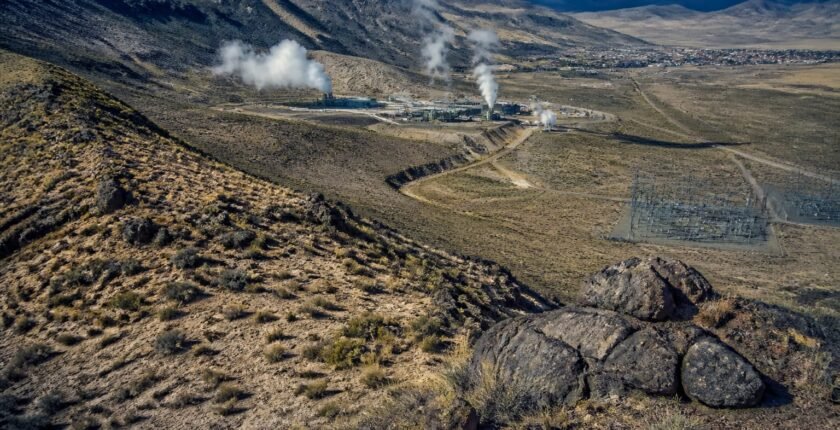
Fervo Energy has switched the first 33 MW GeoBlock at its Cape Station project in Beaver County, Utah into grid supply, and the company says the plant should enter commercial operation next week. The startup block is the first of three 33 MW GeoBlocks on the site; Fervo expects another 66 MW before New Year and says the project can scale to more than four gigawatts of capacity while targeting 0.5 GW by 2028. The build supports 900 MW of contracted capacity so far, and these developments were first reported by The Register.
Key takeaways
- Fervo Energy's Cape Station has supplied first power from a 33 MW GeoBlock and expects commercial operation next week.
- Fervo expects another 66 MW to come online by New Year and a total of 100 MW of capacity by 1 January 2027.
- The company says Cape Station could eventually scale to more than four gigawatts and aims for 0.5 GW by 2028 while working to fulfil 900 MW of contracted capacity.
- Google is an early backer of Fervo; Google also signed a separate 150 MW geothermal deal with Ormat and NV Energy earlier this year.
Table of contents
Cape Station is live — what the first megawatts mean
Cape Station in Beaver County has delivered first power to the grid from its maiden 33 MW GeoBlock. That unit is the first of three identical GeoBlocks described by Fervo, and the company expects the plant to reach commercial operation next week. The immediate timeline in the project documents and Fervo’s public statements is deliberately phased: the first GeoBlock proves the concept at scale, the next two blocks increase near-term output, and the company projects larger expansion as geology and permits allow.
For the coming months Fervo has given two near-term milestones. It expects another 66 MW to be available by New Year, producing roughly 100 MW of capacity by 1 January 2027, and it has stated a target of 0.5 GW by 2028. Beyond that target, Fervo says the Cape Station site has the technical potential to scale to more than four gigawatts of capacity. The company is working to meet 900 MW of contracted capacity while it phases the plant into full commercial service.
How Fervo’s enhanced geothermal system works at depth
Fervo uses enhanced geothermal systems, a method that creates a subsurface heat exchanger by connecting two wells through hydraulic fracturing and circulating water between them. At Cape Station the wells are drilled to around 8,000 feet (2,438 meters) and the fractured rock is used to heat water to roughly 190 degrees Celsius before it returns to the surface and drives turbines. Enhanced geothermal systems borrow drilling and reservoir techniques from oil and gas to make heat accessible in harder rock where natural hydrothermal reservoirs are absent.
The company previously demonstrated the approach at Project Red in 2023, a site capable of generating about 3.5 MW, and the Cape Station deployment is an order of magnitude larger in scale. The core technical risks are drilling to the target depth, establishing sufficient fracture connectivity between the two wells, and maintaining a sustainable flow and temperature over operating life. Fervo’s public statements emphasise scaling those reservoir and well designs from megawatts to the hundreds of megawatts required by datacenter-scale buyers.
Buyers, backers and the commercial case
Fervo is described in public material as Google-backed, and Google is a prominent early buyer of geothermal power for its datacenter expansion. Earlier this year Google also announced a 150 MW deal with Ormat Technologies and Nevada’s NV Energy; those contracting moves show hyperscalers are using geothermal to meet tight power needs. Meta has made similar commitments, partnering with Sage Geosystems in 2024 to deliver up to 150 MW for its operations.
Fervo says it already has 900 MW of contracted capacity commitments to satisfy, which frames Cape Station as both a technology demonstration and the start of commercial deliveries. Hyperscaler offtake deals and long-term contracts are the business model that allow new geothermal developers to proceed with drilling and plant builds, but they also set execution risk: contracted megawatts must be delivered on the schedules buyers expect, and the industry is still proving those timelines at scale.
Policy, costs and the market for datacenter power
Geothermal appeals to datacenters because it provides firm, continuous power that complements variable renewables, but Rhodium has warned of a cost trade-off. Rhodium estimated enhanced geothermal might supply as much as 64 percent of datacenter electricity demand by the end of the decade, while datacenters could face roughly a 20 percent premium for that power. That premium alters procurement decisions and may slow uptake unless developers drive down levelised costs or buyers accept higher prices for firm low-carbon energy.
Another material constraint is the grid. The same week Fervo reported first power, US grid planners and utilities continue to flag transmission and interconnection limits where hyperscalers expand. Firm geothermal reduces intermittency but still needs connection capacity; in constrained regions those upgrades can delay commercial operation or raise project costs. The path from a 33 MW GeoBlock to multi‑hundred‑megawatt clusters therefore depends on geology, permitting, grid works and sustained commercial contracts.
| Project / Deal | Capacity cited | Year / note |
|---|---|---|
| Fervo — Cape Station | 33 MW first GeoBlock; 100 MW by New Year; 0.5 GW target by 2028 | First power in Sept 2026; phased commercial start |
| Fervo — Project Red | 3.5 MW | Demonstration in 2023 |
| Ormat / NV Energy — Google deal | 150 MW | Deal announced earlier in 2026 |
How the next phase could play out
The case for
- Commercial delivery at Cape Station will validate EGS scaling and unlock contracted revenue that supports further drilling and replication.
- Hyperscaler offtake deals such as Google’s and Ormat’s 150 MW agreement provide predictable demand that can underwrite more rapid expansion to the 0.5 GW and multi‑gigawatt targets.
The case against
- If the second and third GeoBlocks miss the New Year timeline, buyer confidence and contracted schedules could be strained, delaying further investment.
- A persistent cost premium for geothermal relative to other firm or flexible supplies could limit buyer uptake and leave planned capacity idle.
What to be careful about
- Delivery risk: moving from a single 33 MW GeoBlock to the planned 100 MW by New Year and 0.5 GW by 2028 requires successful, repeatable drilling and reservoir performance.
- Cost risk: think tank analysis cites a potential ~20 percent premium for datacenters using enhanced geothermal, which could squeeze commercial margins or slow procurement.
- Grid and interconnection risk: constrained transmission capacity in regions where datacenters grow may require upgrades that delay commercial operation or raise project costs.
The bottom line
The Cape Station milestone converts laboratory‑scale demonstrations into megawatt‑class deliveries: a 33 MW GeoBlock is now supplying the grid and Fervo has set explicit near‑term targets of roughly 100 MW by New Year and 0.5 GW by 2028. Those steps, if achieved, will show enhanced geothermal can move from pilots to commercial flows at the scale hyperscalers want, but the industry must still prove repeated drilling success, cost competitiveness and timely grid connections. The next quarters will test whether contracted demand and backers such as Google are enough to convert technical potential into sustained multi‑hundred‑megawatt builds.
What to watch
- Watch for Cape Station to reach commercial operation; Fervo says this is expected next week.
- Watch for an additional 66 MW to come online by New Year, as Fervo has indicated it expects to reach roughly 100 MW of capacity by 1 January 2027.
- Watch for Fervo to scale Cape Station toward 0.5 GW by 2028 and for announcements tying specific offtake contracts to that expansion.
Frequently asked questions
How much capacity did Cape Station supply first to the grid?
Cape Station supplied first power from a 33 MW GeoBlock; that unit is the first of three 33 MW GeoBlocks Fervo has planned for the site.
How deep are the wells and how hot does the resource get?
Fervo drills two parallel wells to around 8,000 feet (2,438 meters) and says the fractured rock heats circulating water to about 190 degrees Celsius before surface power conversion.
Who is buying and backing this geothermal capacity?
Fervo is described as Google-backed and the company says it has 900 MW of contracted capacity; Google also signed a separate 150 MW geothermal deal with Ormat and NV Energy earlier in 2026.
Related reading