
Blog
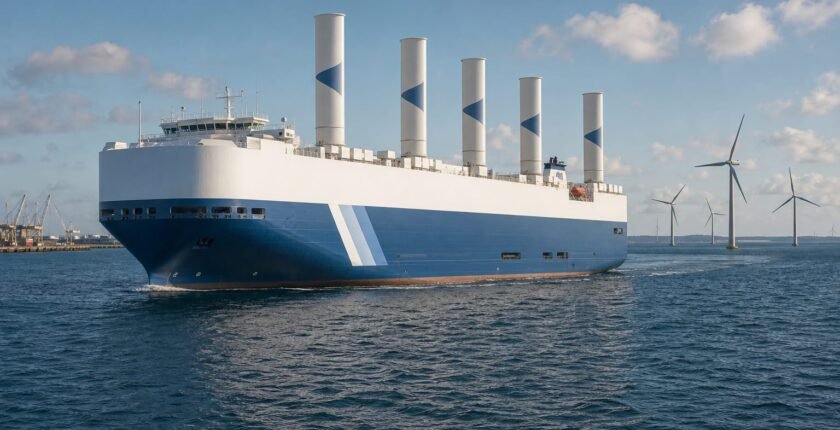
Car carriers leading maritime decarbonisation
Estimated reading time: 4 minutes · Last updated:
The car carrier segment is moving ahead of other ship types on decarbonisation, driven chiefly by rapid fleet renewal and stronger customer demand for lower-emission logistics. This analysis draws on Simon Weedy's reporting first published on 28 August 2026. He says these commercial and procurement pressures are shortening timelines for uptake of green fuels and adoption of new vessel technologies in the ro-ro and car carrier sectors. The primary keyword appears here: car carriers decarbonisation.
Key takeaways
- Simon Weedy wrote it; Heavy Lift & Project Forwarding International published it on 28 August 2026.
- The outlet reports that aggressive fleet renewal and customer demand are accelerating adoption of green fuels in the car carrier segment.
- Related site items include Conoship International's CIP3800 electric coaster (26 August 2026) and ARC Group's US logistics contract item (26 August 2026).
- The site also ran items referencing the Panama Canal Authority (24 August 2026) and the Global Ro‑Ro Community (GRC) move dated 21 August 2026.
Table of contents
Why car carriers are pulling ahead on emissions
Car carriers are showing faster change than many other shipping segments because operators face concentrated customer pressure and a clear replacement cycle for tonnage. Fleet renewal—the scheduled ordering and delivery of new ships—lets operators specify low- or zero-emission technologies at build, shortening the time between regulation and uptake. At the same time, major car manufacturers and logistics customers increasingly demand lower-carbon transport for finished vehicles; that commercial requirement makes green fuels and alternative propulsion a procurement priority rather than a regulatory afterthought.
Because market demand and technical opportunity coincide, the investment calculus shifts: shipowners can plan newbuilds to suit available green fuels instead of retrofitting older tonnage. Simon Weedy's reporting on 28 August 2026 highlights that dynamic as the core mechanism behind the segment's progress.
Signals on the site: recent items and model developments
The same site running the main piece also published several adjacent items that illustrate the industry moves behind the headline. On 26 August 2026 it carried news about Conoship International's CIP-Series, citing a fully electric CIP3800 variant for shortsea work, and a separate 26 August 2026 item on American Roll‑On/Roll‑Off Carrier Group (ARC Group) winning a major US logistics contract. Those stories show manufacturers and operators pursuing low-emission options across different vessel types.
Earlier posts include a 24 August 2026 item on the Panama Canal Authority introducing caps on daily transits to manage drought, and a 21 August 2026 note on the Global Ro‑Ro Community (GRC) moving to a member-led decarbonisation council. Taken together, the entries dated 21–26 August 2026 form a short timeline of industry and infrastructure signals that complement the main argument.
What the trend means for carriers and customers
For shipowners, the implication is that ordering cycles and fuel strategy must align with customer contracts to capture this advantage. If customers continue to press for lower emissions, carriers that schedule newbuilds with green-fuel compatibility will gain commercial preference. For cargo owners, choosing carriers investing in low-emission tonnage reduces supply-chain carbon exposure and supports corporate decarbonisation targets.
The article, published 28 August 2026, emphasises that commercial demand and newbuild timing—not regulation alone—are the proximate drivers of change in the car carrier sector. That makes procurement policy and fleet planning the levers to watch as decarbonisation accelerates.
| Item | Date | Subject |
|---|---|---|
| Conoship CIP3800 | 26 August 2026 | Electric coaster variant |
| ARC Group contract | 26 August 2026 | US logistics role |
| Panama Canal transit caps | 24 August 2026 | Water-management measure |
| GRC decarbonisation council | 21 August 2026 | Member-led governance |
What could move this either way
The case for
- Continued customer demand and scheduled fleet renewal could speed green-fuel adoption across more routes.
- Shipyard deliveries aligned to low-emission specifications will reduce the need for costly retrofits and accelerate fleet turnover.
The case against
- If green-fuel supply chains or bunker infrastructure lag, new low-emission ships may sit underutilised or require interim fuels.
- A shift in customer procurement priorities would slow the commercial incentive that the story identifies as a driver.
What to be careful about
- Mismatch between newbuild specifications and available green-fuel bunkering infrastructure at key ports.
- A reversal or softening of customer demand for low-emission logistics could delay operators' return on green-technology investment.
- Operational disruptions such as Panama Canal transit limits (noted 24 August 2026) that change routing economics and affect deployment timetables.
The bottom line
Simon Weedy reported on 28 August 2026 that car carriers are in a fast lane for decarbonisation because fleet renewal aligns with customer requirements for lower emissions. Supporting items dated 21–26 August 2026 on the same site reinforce that manufacturers, operators and governance groups are moving in concert. That combination—commercial demand plus timely newbuilds—creates a practical route to faster green-fuel uptake in this segment, even as infrastructure and supply-chain questions remain to be resolved.
What to watch
- Watch for the Panama Canal Authority's cap on daily transits to take effect in early September 2026; the site ran a related item on 24 August 2026.
- Watch for the Global Ro‑Ro Community to establish its member-led decarbonisation council; no date has been set.
Frequently asked questions
Who wrote the article and when was it published?
Simon Weedy wrote it, and it was published on 28 August 2026.
What evidence does the piece cite that car carriers are ahead on decarbonisation?
The piece points to aggressive fleet renewal and stronger customer demand as the proximate drivers and cites related site items such as Conoship International's CIP3800 (26 August 2026) and the GRC item dated 21 August 2026.
How can I access the source content on the site?
The reporting was accessed on the site where it appeared.
Related reading