
Blog
China solar panel price slump persists
Estimated reading time: 5 minutes · Last updated: 2026-08-13
China solar panel price slump persists because production cuts have not removed a large global glut and manufacturers refuse to cede share, keeping prices low. The industry holds a roughly 80% combined share of global panel production (CONFIRMED), and Beijing has moved to encourage capacity reductions that, by industry accounts, have so far failed to push prices back to levels seen before the production surge (CLAIMED). This pattern—government nudges met by firms guarding market position—explains why output cuts have not produced a meaningful price rebound, as first reported by Nikkei Asia on August 13, 2026.
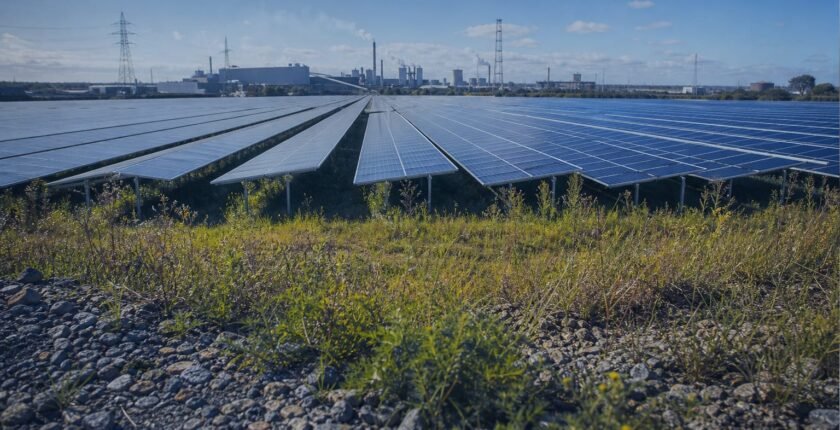
Chinese manufacturers hold roughly 80% combined share of global solar panel output.
Kohei Fujimura photo caption and reporting
Key takeaways
- Market concentration: Chinese manufacturers hold roughly 80% combined share of global solar panel output (CONFIRMED).
- Effect of cuts: Production cuts encouraged by Beijing have not reversed the price slump and prices remain below pre-surge levels (CLAIMED by reporting and industry statements).
- Industry behaviour: Major Chinese producers are reluctant to permanently close capacity because they fear losing export market share to domestic rivals (CLAIMED).
- Policy tension: Beijing is attempting to rein in competition inside the sector while balancing employment and strategic industrial aims (CLAIMED by government policy moves).
Table of contents
Why output cuts have not pushed prices higher
The immediate theory of a price rebound after supply reductions assumes capacity can be removed quickly and permanently. In China’s panel sector, producers instead opt for temporary slowdowns or idling because doing so leaves market share on the table. The result is a smaller-than-expected fall in available capacity and little tightening of available supply to buyers in major markets.
Policy-driven cutbacks have been announced or encouraged by Beijing, but the industry response has been cautious. Firms report that idled lines can be restarted as demand evolves, creating what market participants call a latent supply overhang. That latent overhang sustains downward pressure on prices even when visible output declines.
capacity glut
This interplay—partial, reversible cuts plus ready restart options—means headline production figures understate the true supply cushion. Until closures are irreversible or demand grows faster than restart capacity, prices are likely to remain depressed.
Who gains and who loses from the price slump
Low panel prices benefit downstream buyers such as project developers and utilities because capital costs fall, but they also squeeze manufacturers’ margins and capital spending. Smaller or loss-making producers face bankruptcy risk if prices stay below manufacturing cost for extended periods; larger firms may instead accept low margins to preserve or expand share.
Chinese manufacturers prioritise share and scale because global markets reward volume for export contracts and financing. That strategic choice explains why many firms prefer undercutting rivals to exiting the market. The pattern raises insolvency risk for the weakest producers while entrenching dominant exporters.
producers unwilling to shed capacity
For global supply chains, the net effect is cheaper modules but a more fragile producer base that could cleave into waves of consolidation or state-backed support if losses mount.
How Beijing's policy aims collide with commercial incentives
Beijing has signalled an intent to reduce destructive competition and stabilise domestic industry outcomes while keeping strategic manufacturing capabilities intact. That creates a policy fault line: regulators want fewer marginal players, but firms see closure as a surrender of export advantage.
Policy tools can include temporary curbs on new capacity approvals, subsidy reallocation, or guidance encouraging restructuring. Each measure alters incentives only if enforcement and compensation are credible; without that, firms will prefer tactical shutdowns and rapid restarts to permanent exits.
Beijing's efforts to rein in competition
The clash between state objectives and private incentives explains why policy nudges so far have not delivered a sustained price recovery: the commercial logic of preserving share trumps short-term alignment with the government's stabilisation aims.
What developers, buyers and policymakers should expect next
Project developers will continue to enjoy pressured module pricing in the near term, but they should price contracts with caution: a consolidation phase or sudden policy change could reduce supply and lift prices. Buyers contracting multi-year supply should seek flexibility clauses and supplier credit assurances to mitigate counterparty risk.
Policymakers who want a durable price recovery must therefore either commit to irreversible consolidation measures or provide buffers—such as transition support for closed plants—to prevent strategic restarts. Otherwise, the status quo of intermittent cuts and persistent low prices will continue.
prices below pre-surge levels
For participants in the global market, the central lesson is mechanical: unless capacity exits are permanent or demand expands materially, the price slump is likely to persist despite occasional production slowdowns.
Outlook
The case for
- If Beijing secures credible, irreversible plant closures or funds orderly consolidation, visible supply will shrink and prices could recover.
- Stronger global demand—driven by accelerated deployment targets in major markets—would absorb excess capacity and lift module prices.
The case against
- If firms continue tactical idling and rapid restarts to defend market share, latent capacity will keep downward pressure on prices.
- Continued low prices can force undercapitalised producers into distress, prompting fire-sales that perpetuate an oversupply cycle and delay recovery.
What to be careful about
- Firms restarting idled lines quickly, preserving latent supply and preventing a price rebound.
- Policy inconsistency from Beijing that signals cuts but lacks measures to make them permanent.
- Consolidation that creates dominant exporters whose strategic pricing could later raise costs for buyers.
The bottom line
The current slump in panel prices stems from a classic policy-versus-market clash: Beijing seeks to curb destructive competition, while producers prioritise share and the option value of restartable capacity. With Chinese firms holding roughly 80% of global output (CONFIRMED), their reluctance to accept permanent exits keeps a latent supply buffer in place and prevents prices from rebounding to pre-surge levels. Only credible, enforceable consolidation or a clear uptick in global demand will shift this balance; absent that, low prices are likely to persist and reshape both manufacturer viability and buyer strategies.
What to watch
- Any formal announcements from Beijing setting timelines or financial terms for plant closures or restructuring.
- Quarterly production and utilisation data from major Chinese manufacturers that show whether idled capacity is being restarted.
Frequently asked questions
Why haven't production cuts lifted solar panel prices?
Because many producers prefer reversible idling to permanent exits; that preserves latent supply. Beijing has encouraged cuts (CLAIMED), but firms guarding market share mean visible output falls without removing the underlying capacity cushion.
Who controls the global panel market?
Chinese manufacturers control roughly 80% of global solar panel production (CONFIRMED), which gives them scale advantages in export markets but also concentrates the risks of any prolonged price slump.
Will low prices help renewable deployment?
Lower module prices reduce upfront costs for developers and utilities, aiding deployment in the short term, but prolonged low margins can weaken suppliers and create counterparty and supply-chain fragility that may raise long-term project risk.
This article is information, not financial advice. Anyone acting on it should do their own checks.