
Blog
Dacia Spring vs Maserati MC20, EVs at opposite ends
Estimated reading time: 4 minutes · Last updated:
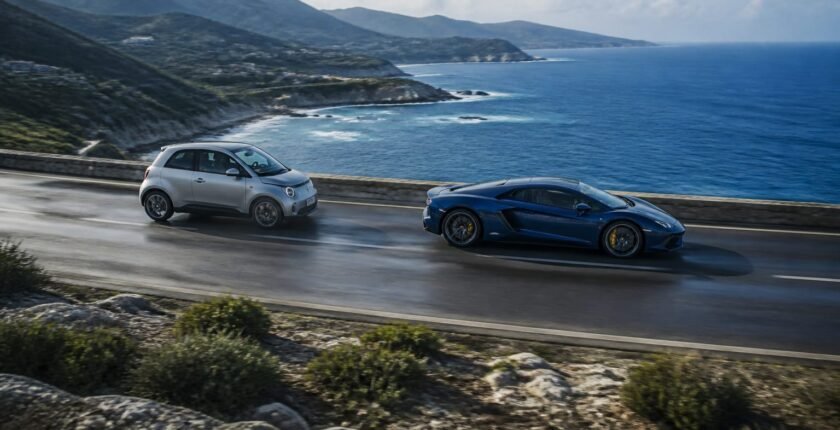
Dacia Spring vs Maserati MC20 places two very different electric vehicles side by side: the affordable Dacia Spring EV and the high-performance Italian Maserati MC20. The comparison is not a technical head-to-head in this text; it frames the two cars as representatives of distinct uses and expectations within electrification. The Dacia Spring EV is presented as an access point to electric mobility, while the Maserati MC20 is shown as an aspirational, high-performance expression of EV capability. This introduction sets out what the comparison does: highlight the contrast in positioning and the different questions consumers, media and makers ask of each model.
Key takeaways
- Models compared: The piece contrasts the Dacia Spring EV with the Maserati MC20.
- Positioning: The Dacia Spring is described as an affordable EV; the Maserati MC20 is described as a high-performance Italian supercar.
- Purpose of comparison: The comparison highlights how electrification spans both entry-level mobility and high-performance, exotic models.
Table of contents
Why put an affordable EV beside an Italian supercar?
Placing the Dacia Spring EV next to the Maserati MC20 emphasises how the shift to electric power covers a wide range of consumer needs and brand strategies. The Dacia Spring EV stands for affordability and broad access to battery-electric mobility; the Maserati MC20 stands for performance, design and an Italian supercar pedigree. The comparison invites readers to think less about which car is objectively better and more about what each model is intended to deliver to its buyer. It also makes explicit that the term electric vehicle covers many different value propositions rather than a single homogeneous product.
What each car represents for buyers and makers
The Dacia Spring EV functions as an entry point: a choice shaped by cost, everyday practicality and the goal of expanding EV uptake among price-sensitive buyers. The Maserati MC20 functions as a showcase for brand identity, performance engineering and the emotional appeal of a high-end Italian supercar in electric form. Readers should understand the comparison as a study in positioning: one model aims to lower barriers to ownership, the other aims to push perceptions of what an EV can be for enthusiasts and luxury customers. That distinction explains why different metrics and different test priorities apply to each car.
How to read the contrast constructively
A useful reading of the Dacia Spring vs Maserati MC20 contrast is to treat each as answering a separate question: accessibility versus aspiration. Comparing them helps clarify which trade-offs matter to a given buyer — cost and utility on one side, performance and status on the other. The contrast also helps journalists and commentators choose relevant angles when covering EVs: for some audiences, affordability and charging access are central; for others, engineering, sound and brand heritage matter more. The comparison therefore performs a framing role rather than delivering a single verdict.
| Model | Positioning |
|---|---|
| Dacia Spring | Affordable EV |
| Maserati MC20 | High-performance Italian supercar |
Outlook — the case for and against the comparison
The case for
- The contrast clarifies consumer choices by showing how EV technology maps to very different budgets and lifestyles.
- Juxtaposing both models can broaden public conversation about electric vehicles beyond a single market segment.
The case against
- The comparison risks misleading readers if presented as a direct technical head-to-head rather than a study in positioning.
- Without technical detail or testing context, the contrast can encourage superficial takeaways focused on prestige instead of utility.
What to be careful about
- Readers may misinterpret the comparison as implying direct parity between the two cars rather than categorical difference.
- The piece offers no technical specifications, so decisions based on perceived performance or range would be unsupported.
The bottom line
The Dacia Spring vs Maserati MC20 comparison functions as a lens on the breadth of electrification rather than a conventional car test. By treating the Dacia Spring EV as a representative of affordability and the Maserati MC20 as a representative of high-performance Italian supercars, the contrast helps readers and writers choose appropriate questions for each segment. For any technical or purchase decision, dedicated specifications and independent tests are necessary; this comparison points to those needs and to the different priorities that buyers should weigh.
What to watch
- Watch for forthcoming manufacturer statements or press materials about either model; no date has been set.
- Watch for comparative tests or reviews that place the Dacia Spring EV and Maserati MC20 into practical testing contexts; no date has been set.
Frequently asked questions
Are the Dacia Spring and Maserati MC20 direct competitors?
No; the Dacia Spring EV and the Maserati MC20 represent different segments. The Dacia Spring EV is described as an affordable EV, while the Maserati MC20 is described as a high-performance Italian supercar.
What does comparing the two models achieve?
The comparison highlights how electric vehicles span entry-level affordability and high-performance aspiration, helping readers decide which set of priorities — cost and utility or performance and brand — matters to them.
Where can I find technical details to compare performance?
This piece does not include specifications; readers should consult manufacturer specifications or independent test reports for detailed figures on the Dacia Spring EV and the Maserati MC20.
Related reading