
Blog
Energy Vault buys more than 2.3 GW of BESS
Estimated reading time: 6 minutes · Last updated:
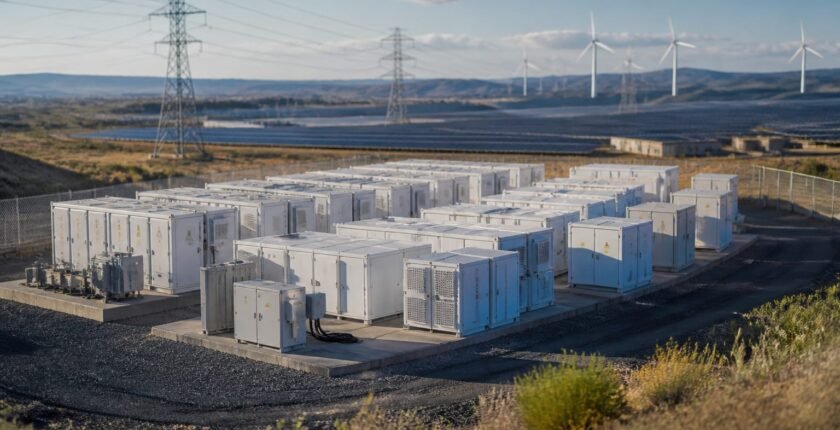
Energy Vault has acquired a portfolio of more than 2.3 GW of utility-scale battery energy storage systems (BESS) from Goshe Energy Storage, adding projects and development staff to its Asset Vault pipeline, as first reported by Solar Builder. The package includes two anchor projects of 150 MW and 200 MW that the buyer has set to reach commercial operation in Q1 2028, and the portfolio transfer brings developers and managers into Energy Vault’s team. The transaction sits alongside a week of finance and commissioning milestones in U.S. storage and solar: GridStor closed a $220 million debt package for its 100 MW / 400 MWh White Tank project, and Cloudbreak closed $60 million for a 50 MW / 200 MWh Pueblo Battery Resource project.
This portfolio fits squarely within Energy Vault’s strategy of acquiring late-stage, de-risked development projects that can be moved efficiently toward construction and operation,
Cory Magnuson, President of Asset Vault
Key takeaways
- Deal size: Energy Vault purchased more than 2.3 GW of BESS projects and development staff from Goshe Energy Storage.
- Anchor projects: Two anchor sites in the portfolio are 150 MW and 200 MW and are targeted for commercial operation in Q1 2028.
- Major financings this week: GridStor secured $220 million for a 100 MW / 400 MWh White Tank project aimed at energization in 2027; Cloudbreak closed $60 million for a 50 MW / 200 MWh Pueblo project.
- Madison's initiative: Madison Energy Infrastructure launched a Community Infrastructure Initiative aiming to develop 1 GW of distributed capacity by 2028 and to mobilize up to $2 billion in capital.
Table of contents
- Key takeaways
- What Energy Vault bought and why it matters
- This week’s financings: GridStor and Cloudbreak
- Regional project updates: solar, community projects and hyperscaler demand
- What the transactions mean for developers and owners
- Case for and against accelerated storage deployment
- What to be careful about
- Frequently asked questions
What Energy Vault bought and why it matters
Energy Vault’s purchase from Colorado-based Goshe Energy Storage brings more than 2.3 GW of BESS development into its Asset Vault business and adds the seller’s BESS development and management personnel to Energy Vault’s team. The company described the package as late-stage, de-risked projects that can be progressed toward construction and operation, and it says the move aligns with a strategy of financing, developing, owning and operating storage assets across U.S. markets.
Within the portfolio the company highlights two anchor projects sized at 150 MW and 200 MW; Energy Vault has set Q1 2028 as the target for commercial operation of those two sites. The transaction also preserves a continuity of financing: Goshe’s CEO Bailey McCallum said S2G will remain a financing partner during the transition. Bringing a set of advanced projects and an experienced development team together accelerates Energy Vault’s path to owned capacity and operational revenues.
This week’s financings: GridStor and Cloudbreak
GridStor closed a debt financing agreement worth $220 million with KeyBanc Capital Markets, ING Capital and Zions Capital Markets to fund its White Tank project in Arizona. The White Tank installation is a 100 MW / 400 MWh BESS that GridStor says aims for energization in 2027 and will operate under a 20-year tolling agreement with Arizona Public Service.
Cloudbreak Energy Partners and NORD/LB closed on $60 million in construction financing for the Pueblo Battery Resource project in Colorado. The Pueblo site is a 50 MW / 200 MWh installation described by participants as the first in Black Hills mountain range territory and Cloudbreak’s initial entry into battery-storage development. Cloudbreak’s executives and NORD/LB’s originations lead framed the financing as establishing a platform for further storage deals.
Regional project updates: solar, community projects and hyperscaler demand
NorthStar Clean Energy’s Hart Solar Project in Michigan reached completion as a 120 MW solar site expected to generate more than 200 GWh annually and to serve more than 21,000 homes under power purchase agreements with Executive Energy Services and the Michigan Public Power Agency. NorthStar said the site will avoid about 96,000 metric tons of carbon emissions each year and created more than 300 construction jobs during development.
Smaller distributed projects moved too: PureSky Energy brought a 1.45 MWac community solar farm online in Illinois that uses more than 3,360 panels to produce over 3.1 GWh a year and is targeted at income-eligible households, while Apex and Meta added 144 MW of renewable attributes from the Starling Solar project in Texas, bringing their combined portfolio to about 1.2 GW across five states.
At scale, Madison Energy Infrastructure kicked off a Community Infrastructure Initiative that aims to add 1 GW of distributed generation by 2028 and to mobilize up to $2 billion in capital to support hyperscalers and local benefits. Madison also highlighted existing projects, including 50 MW of standalone storage in Colorado and 16 MW under construction with Denver International Airport.
What the transactions mean for developers and owners
The deal flow this week shows two overlapping market dynamics: project-scale buyers consolidating late-stage pipelines, and financiers underwriting stand-alone storage as grid assets. Energy Vault’s purchase of more than 2.3 GW of projects and staff demonstrates the appetite for acquiring ready-to-build capacity that can be pushed quickly into construction and operation, shortening the time to asset ownership and revenue.
At the same time, banks and infrastructure lenders continue to provide sizeable construction debt — $220 million and $60 million in the two announced deals — indicating ongoing confidence in the revenue models being used: tolling agreements, PPAs and structured build-transfer contracts. Developers who can deliver interconnection-ready projects and secure firm offtake or tolling terms are increasingly likely to access such financing, while those without late-stage certainty risk having to sell into a consolidating market.
| Project | Owner/Buyer | Capacity (MW) | Energy (MWh/GWh) | Financing ($) | Target COD |
|---|---|---|---|---|---|
| White Tank | GridStor | 100 | 400 MWh | $220 million | 2027 energization |
| Pueblo Battery Resource | Cloudbreak Energy Partners | 50 | 200 MWh | $60 million | — |
| Anchor projects (two sites) | Energy Vault (from Goshe) | 150; 200 | — | — | Q1 2028 |
| Hart Solar | NorthStar Clean Energy | 120 | more than 200 GWh/yr | — | commissioned |
Case for and against accelerated storage deployment
The case for
- Buyers are targeting late-stage, de‑risked projects to shorten time to revenue and to scale owned-asset portfolios.
- Banks continue to underwrite construction debt for storage projects; this week’s deals included $220 million and $60 million packages that enable near-term buildout.
The case against
- Project-level risks — permitting, interconnection and supply-chain delays — can push COD dates beyond targets such as 2027 and Q1 2028.
- A consolidating market could compress developer margins and force sales of assets at prices that reflect shorter operating histories rather than long-term returns.
What to be careful about
- Permitting, interconnection or construction delays that move target energization dates such as 2027 or Q1 2028.
- Counterparty concentration risk in tolling agreements or PPAs, which can affect long-term revenue if a utility or buyer alters its needs.
- Supply-chain and equipment lead-time risks that raise project costs and extend schedules for batteries, inverters and balance-of-plant.
- Financing conditions could tighten; projects reliant on near-term debt windows may face refinancing risk if credit terms worsen.
The bottom line
This week’s announcements underline two currents shaping U.S. storage deployment: strategic consolidation by buyers seeking late-stage projects they can convert to owned assets, and continued lender willingness to fund construction for projects with firm revenue structures. Energy Vault’s acquisition of more than 2.3 GW from Goshe accelerates its Asset Vault pipeline and adds development capacity, while financings such as GridStor’s $220 million and Cloudbreak’s $60 million demonstrate that capital for BESS remains available for properly structured projects. The coming milestones to watch are energization in 2027 for White Tank and the Q1 2028 target for Energy Vault’s anchor projects; outcomes on those dates will show whether the sector’s current momentum turns swiftly into operating capacity.
What to watch
- Watch for GridStor’s White Tank energization in 2027 and the first operational deliveries under its 20-year tolling agreement with Arizona Public Service.
- Watch for the two Energy Vault anchor projects to reach commercial operation in Q1 2028.
- Watch Madison Energy Infrastructure’s progress toward delivering 1 GW of distributed capacity by 2028 and any public announcements about tranche allocations of the up to $2 billion capital plan.
Frequently asked questions
What did Energy Vault acquire from Goshe Energy Storage?
Energy Vault purchased a portfolio that totals more than 2.3 GW of utility-scale BESS development and the seller’s BESS development and management staff. The package includes two anchor projects of 150 MW and 200 MW that Energy Vault has set to reach commercial operation in Q1 2028.
How large was GridStor’s financing and what does it fund?
GridStor secured a $220 million debt financing package with KeyBanc Capital Markets, ING Capital and Zions Capital Markets to construct the White Tank project, a 100 MW / 400 MWh BESS aimed for energization in 2027 and to operate under a 20-year tolling agreement with Arizona Public Service.
What is Madison Energy Infrastructure’s Community Infrastructure Initiative?
Madison’s initiative aims to develop an additional 1 GW of distributed generation capacity by 2028 and to mobilize up to $2 billion in capital, targeting AI data centers and local community benefits; the company highlighted existing projects including 50 MW of standalone storage in Colorado and 16 MW under construction with Denver International Airport.
Related reading