
Blog
Australia’s fairy circles mark natural hydrogen seeps
Estimated reading time: 5 minutes · Last updated:
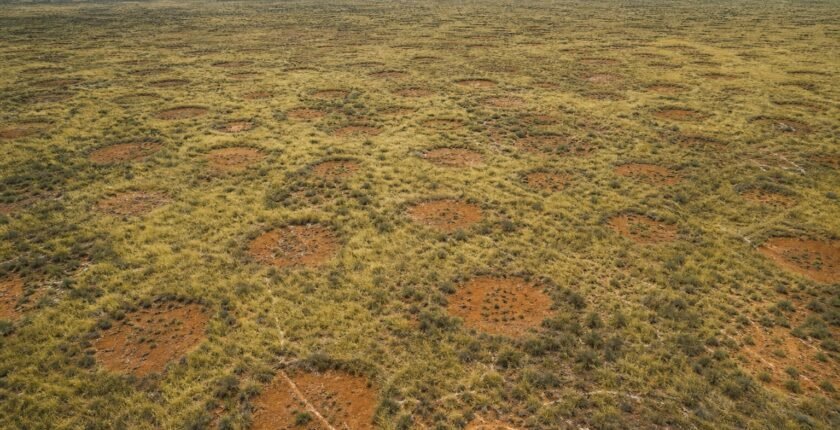
CSIRO field teams led by Dr Ema Frery have measured hydrogen gas emerging from soil at circular bare patches in parts of Western Australia. The instruments showed raised hydrogen concentrations tending to cluster around the rims of those "fairy circles," not the centres, and the sites lie close to the Darling Fault. Geologists say hydrogen can be produced when water reacts with iron‑rich ultramafic rocks at depth; detecting it at the surface is therefore a plausible sign that gas is migrating upward. The finding does not prove a producible reservoir, but it does move the features from curiosity into testable exploration targets.
Key takeaways
- Field measurement: A CSIRO team led by Dr Ema Frery put instruments in soil around Australian fairy circles and detected hydrogen emissions concentrated around the circles' rims.
- Geological setting: The sampled sites lie near the Darling Fault, a crustal boundary where reactions in iron‑rich ultramafic rocks can generate natural hydrogen.
- Exploration potential: Researchers propose the visible circles could serve as inexpensive signposts to narrow where to drill for natural hydrogen.
- Remaining gap: Detecting a seep does not establish the size, trap, or flow rates of any underground hydrogen that would be required for commercial production.
Table of contents
- Key takeaways
- What the CSIRO actually measured in the field
- Why the Darling Fault and rock type matter for natural hydrogen
- How fairy circles could act as cheap signposts for hydrogen exploration
- What drilling and engineering must prove before this becomes a resource
- How this lead could play out
- What to be careful about
- Frequently asked questions
What the CSIRO actually measured in the field
CSIRO researchers led by Dr Ema Frery conducted soil‑gas surveys at several circular bare patches in Western Australia and detected hydrogen in near‑surface samples. The measurements recorded elevated hydrogen levels at the circles' rims instead of at their centres. This consistent field pattern matters because instruments in the soil detected gas that cannot be explained by surface vegetation alone.
The work establishes a clear empirical baseline: hydrogen reaches the surface at these sites. It is the first solid confirmation that at least some Australian circles are venting natural hydrogen. What the measurement does not provide is a full inventory — it cannot say how much gas sits at depth, how that gas is trapped, or whether a well would flow at rates sufficient to support extraction. Those questions require subsurface work, principally drilling and flow testing.
Why the Darling Fault and rock type matter for natural hydrogen
Hydrogen labelled 'natural' forms below the surface when water reacts with iron‑rich rocks, especially ultramafic lithologies. The sites CSIRO sampled are close to the Darling Fault, a major crustal boundary where those rocks are exposed or come near the surface. That geological context supplies both the reactive rock and potential pathways for gas movement, so hydrogen seeps there are plausible.
In exploration terms, the geological story is the mechanism that links surface vents to a potential subsurface source. If water interacts with suitable rock at depth over geological time, hydrogen may be generated continuously. Faults and fractures then provide conduits for the gas to travel upward. Confirming generation and a connected plumbing system are two distinct subsurface problems that require geochemistry, structural mapping and, ultimately, wells.
How fairy circles could act as cheap signposts for hydrogen exploration
The most immediate practical idea is simple: use visible surface features to prioritise where to place more expensive tests. Drilling is the costliest part of any resource hunt. If a surface vent reliably signals a migrating hydrogen column beneath, explorers could read the pattern from aerial imagery or satellite data and focus initial soil‑gas sampling and later drill rigs on a smaller number of targets.
Some researchers have reported larger circles link to deeper, higher‑pressure sources; if that pattern holds, circle diameter could provide more than a binary indicator and might offer a rough gauge of subsurface potential. That association has been documented at particular sites but has not been demonstrated as a universal rule. Turning it into a dependable exploration approach will require mapping many additional locations under consistent controls and confirming any size‑to‑depth relationship through drilling.
What drilling and engineering must prove before this becomes a resource
Detecting surface hydrogen opens a textbook sequence of tests. First, geochemical analyses and geophysics must characterise sources and migration pathways. Second, exploratory wells are needed to test whether gas is present in quantities, pressures and traps that would allow production. Third, pilot flow tests must demonstrate sustainable flow rates and composition acceptable for downstream use.
None of those steps has been completed for the Australian circles. Economics and engineering of natural hydrogen at scale remain unproven worldwide. Even if a well flows, operators still face questions about capture, purification, transport and integration into low‑carbon supply chains. For now, the circles are a promising lead that demands systematic follow‑up rather than a near‑term supply proposition.
| Feature | Observed at surface | What it implies | What is unproven |
|---|---|---|---|
| Fairy circle (rim) | Elevated soil hydrogen | Gas migration pathway to surface | Subsurface reservoir size and flow |
| Geological setting (Darling Fault) | Proximity to ultramafic rocks | Potential hydrogen generation | Connectivity and trap integrity |
| Circle size | Reported correlation with depth | Possible guide to drilling priority | Generalisability across regions |
How this lead could play out
The case for
- If further mapping and consistent soil‑gas patterns hold, fairy circles could cut exploration costs by directing sampling and drilling to higher‑probability targets.
- A confirmed, accessible natural hydrogen field near existing infrastructure would sidestep much manufacturing energy, lowering the carbon intensity of hydrogen supply.
The case against
- Many seeps do not equate to producible reserves; drilling could show only trace, dispersed hydrogen that is uneconomic to extract.
- Engineering hurdles — capture, purification and transport — could make otherwise sizeable natural sources unattractive compared with industrially produced low‑carbon hydrogen.
What to be careful about
- Interpreting surface vents as indicators of commercial resources when they may reflect small, diffuse generation at depth.
- Extrapolating a size‑to‑depth correlation observed in limited locations to wider areas without sufficient control sampling.
- Public or regulatory opposition to drilling in sensitive landscapes if exploratory programs expand rapidly without community engagement.
The bottom line
The CSIRO measurements turn a visual curiosity into a testable geological lead: hydrogen does reach the surface at some Australian fairy circles, and the proximity to the Darling Fault provides a plausible generation mechanism. That combination justifies follow‑up work — more mapping, consistent sampling, geophysical imaging and targeted drilling — but it does not yet change the supply picture. For explorers and policymakers the sensible next step is systematic hypothesis testing: treat the circles as promising signposts rather than as evidence of ready resources, and let subsurface data decide whether a new, low‑carbon source of hydrogen is present.
What to watch
- watch for CSIRO to publish full peer‑reviewed data and methods from the field survey; no date has been set.
- watch for any announced follow‑up drilling permits or test wells near the Darling Fault; no date has been set.
- watch for broader satellite or aerial surveys that map similar circles beyond the initial sites; no date has been set.
Frequently asked questions
What did CSIRO find at the fairy circles?
CSIRO field teams led by Dr Ema Frery detected hydrogen in soil‑gas samples at circular bare patches in Western Australia, with elevated concentrations tending to appear around the rims of those circles.
Why is the Darling Fault important for these findings?
The sampled sites lie near the Darling Fault, a crustal boundary where iron‑rich ultramafic rocks are common; chemical reactions between water and those rocks can generate natural hydrogen over geological time.
Do these seeps mean there is a producible hydrogen field?
No — detecting a seep shows gas is migrating but does not establish the size, trap integrity or flow rates needed for production; drilling and flow tests are required to assess commercial potential.
Related reading