
Blog
Fervo Utah Geothermal Well Hits 555°F in Under 11 Days
Estimated reading time: 7 minutes · Last updated:
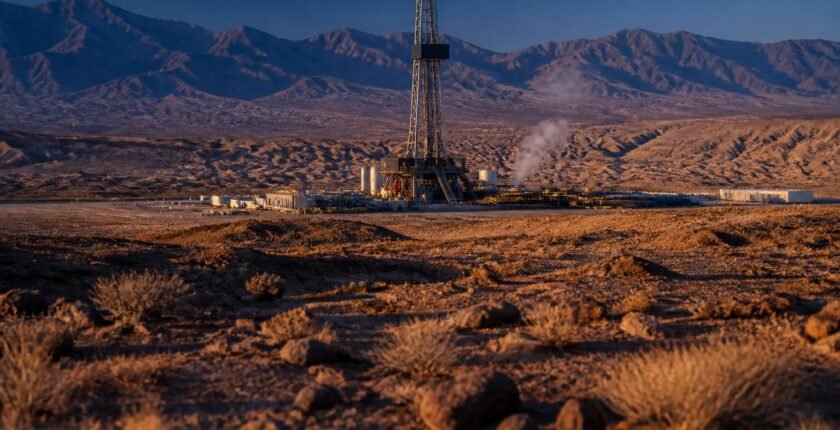
Fervo Energy's Cottonwood observation well in Millard County, Utah, went straight down to about 11,200 feet in under 11 days. Temperature logs at the bottom read above 555 degrees Fahrenheit. Fervo calls it the hottest well in its history, and it runs 155 degrees hotter than the 400-degree rock behind the company's Cape Station plant one county south, in Beaver County. This Utah geothermal well sits at a site Fervo calls Blanford, where an independent assessment the company cites puts potential at multiple gigawatts. Fervo has not published a power estimate or a timeline for the site, and it has not named the firm that did the assessment. For now, Blanford is a striking measurement, not yet a power project.
Key takeaways
- A company record: Fervo Energy's Cottonwood well at Blanford reached about 11,200 feet in under 11 days and logged rock above 555°F, which Fervo calls its hottest well ever.
- Hotter than Cape Station: Blanford's rock is 155 degrees hotter than the 400°F rock feeding Cape Station's first 33-megawatt block, which began commercial operation on September 30.
- Heat means output: Fervo CEO Tim Latimer said on 12 August that moving from 400°F to 430°F rock should yield about 27% more power from the same well flow and surface equipment.
- Softer rock: Blanford's reservoir is sedimentary sandstone, claystone and carbonate, which Fervo says is easier and cheaper to drill than the granite-type rock of its earlier projects.
- Next step: Fervo expects a new round of appraisal drilling to begin in the fourth quarter of 2026, with Nevada prospects among the first, Latimer told analysts.
Table of contents
Why 555 Degrees Matters for Enhanced Geothermal Output
Fervo practises enhanced geothermal, or EGS, which means engineering a reservoir in hot, dry rock rather than tapping a natural underground supply of hot water. Its crews drill into the rock, fracture it with the equipment shale producers use, and circulate water through the cracks until it returns hot enough to spin a turbine.
The physics favours heat. Each gallon pulled from hotter rock brings more energy to the surface. Tim Latimer, Fervo's chief executive, quantified this on the company's 12 August earnings call: shifting from 400-degree rock to the 430 degrees that Cape Station's second phase is designed for should lift output by about 27% using the same well flow and the same surface hardware.
Blanford's rock sits more than 125 degrees above that 430-degree design point. That gap is large, but Latimer's 27% should not be stretched in a straight line to 555 degrees. Fervo has released no per-well power estimate for Blanford, so the honest reading is narrower: wells in this rock should carry far more heat than Cape Station's, and more heat per well is how an EGS developer gets more electricity from every hole it pays for.
A Faster-Heating Basin in Softer Sedimentary Rock
Temperature is only half of Fervo's case. Its logs place Blanford's geothermal gradient above the 95th percentile of deep sites in the western US. The geothermal gradient is the rate at which rock warms as depth increases, so the ground at Blanford heats up faster with depth than at least 95% of comparable Western locations.
The rock type is the other surprise. Fervo's earlier projects targeted metamorphic and igneous formations, the hard crystalline material, granite being the familiar example, that EGS usually pursues. Blanford's reservoir is instead layered sandstone, claystone and carbonate, which the company says costs less and takes less effort to drill. Fervo executives told analysts in August that granite is far tougher to bore through than shale, and that much of their engineering goes into tools that survive it.
Speed reflects that. Latimer said the company's first well at Project Red in Nevada needed over 70 days to reach roughly 11,000 feet. The comparison is loose, since Fervo's crews have grown much faster since then: the Sawtooth 7 well at Cape Station reached 19,448 feet of measured depth in 21 days in summer 2026.
How Fervo Says AI Picked the Blanford Site
Fervo does not describe Blanford as luck. The company says its AI-driven subsurface analytics identified the hot sedimentary basin as a new category of target and helped plan the drilling campaign. Jack Norbeck, Fervo's co-founder and chief technology officer, said the result shows the team can "detect and develop EGS sweet spots" using AI-assisted geophysics.
That is a corporate claim, and it deserves some scepticism. Still, there is a measurable result behind it: the first well chosen this way came back hotter than anything else Fervo has drilled.
Fervo also ran a diagnostic fracture injection test in Cottonwood and says it confirmed the formation can be stimulated. Stimulation is the step that turns hot rock into a working reservoir, so this matters as much as the temperature reading. The company first disclosed the result at Stanford's annual geothermal workshop earlier in 2026, then repeated it in its first quarterly earnings release as a public company, filed with the SEC.
What Multi-Gigawatt Potential Does and Does Not Mean
Fervo says an independent assessment based on the drilling data puts Blanford's potential at multiple gigawatts. The company has not named the firm that made the estimate. A figure like this measures heat in the ground, and heat in the ground is not the same as plant capacity. Cape Station shows the gap: Fervo puts its total potential above 4 gigawatts and is building 500 megawatts of it.
Blanford is also at an early stage. Cottonwood is an observation well, a vertical hole drilled to characterise the rock. A plant needs sideways production wells to feed it. Fervo has given no power figure or start date for the site, and it describes Blanford only as a cluster north of Cape Station, without naming a nearby town. Millard County is sparsely populated, with 12,975 residents at the 2020 census.
Fervo's second-quarter results say the company expects to begin a new appraisal drilling round in the fourth quarter of 2026. Latimer told analysts on 12 August that it would resemble the Blanford campaign, with Nevada prospects near the front of the queue.
| Site | Location | Rock temperature | Detail |
|---|---|---|---|
| Project Red | Nevada | 365°F | Pilot plant, Fervo's first EGS project |
| Cape Station Phase I | Beaver County, Utah | 400°F | 33 MW block selling power since 30 September |
| Cape Station Phase II design | Beaver County, Utah | 430°F | Average for 400 MW expansion due 2028 |
| Sawtooth 7 | Cape Station, Utah | 460°F | 19,448 ft measured depth in 21 days |
| Cottonwood | Blanford, Millard County, Utah | 555°F+ | About 11,200 ft vertical in under 11 days |
The case for and against Blanford
The case for
- Rock above 555°F sits more than 125 degrees above Cape Station Phase II's 430°F design point, and Latimer tied a 30-degree rise to about 27% more output.
- A gradient above the 95th percentile of deep western US sites means heat is reached at shallower depth.
- Sedimentary rock that Fervo says is easier and cheaper to drill than granite could lower well costs.
- A diagnostic fracture injection test confirmed the formation can be stimulated, according to Fervo.
The case against
- Fervo has published no per-well power estimate, power figure or timeline for Blanford.
- The multi-gigawatt estimate comes from an assessment whose author Fervo has not named.
- Cottonwood is a vertical observation well; no production wells have been described at the site.
- Cape Station's own gap between more than 4 GW of potential and 500 MW under construction shows how far resource estimates sit from built capacity.
What to be careful about
- Sedimentary reservoirs are a new target type for Fervo, whose operating experience comes from metamorphic and igneous rock, so performance in production may differ from the test results.
- The resource estimate cannot be checked independently until Fervo names the firm that produced it.
- Heat at a single observation well may not hold across the wider Blanford cluster.
The bottom line
Cottonwood gives Fervo a site that, on paper, looks better than the one now selling power. The rock is hotter, it warms faster with depth, and it is softer to drill. Each of those points bears on the cost of every megawatt an EGS developer produces. The open questions are just as concrete. Nobody outside Fervo can yet check the multi-gigawatt estimate. There is no production well, no power figure and no schedule. Cape Station itself took a 4-gigawatt resource and turned 500 megawatts of it into a build plan. The next real signal will probably come from the appraisal drilling Fervo expects to start in late 2026, which Latimer says will follow the Blanford template.
What to watch
- Watch for Fervo to begin its next appraisal drilling round, which the company expects to start in the fourth quarter of 2026, with Nevada prospects among the first.
- Watch for a power estimate, development timeline or named assessor for Blanford; Fervo has set no date for any of them.
- Watch for the 400-megawatt Cape Station Phase II expansion, designed around 430°F rock and due in 2028, as the test of whether hotter rock delivers the output Latimer described.
Frequently asked questions
Is the Cottonwood well the hottest geothermal well in the world?
Fervo Energy says Cottonwood, at above 555°F, is the hottest well in its own history. The company makes no claim beyond that, and the record should be read as a Fervo company record only.
What is a diagnostic fracture injection test?
Engineers pump fluid into a well until the rock cracks slightly, stop the pumps and track how fast pressure falls. The decline shows how the rock fractures and how tight it is, and Fervo says its test at Cottonwood confirmed the Blanford formation can be stimulated.
Where is Fervo's Blanford geothermal site?
Blanford is in Millard County, Utah, one county north of Cape Station in Beaver County. Fervo describes it as a cluster north of Cape Station without naming a town, and the county had 12,975 people at the 2020 census.
When will Blanford produce electricity?
Fervo has given no power figure or timeline for Blanford. Cottonwood is a vertical observation well, and a plant would need horizontal production wells, which the company has not described at the site.
Related reading