
Blog
GM, Ford Pivot EV Batteries into Grid Storage Bets
Estimated reading time: 5 minutes · Last updated:
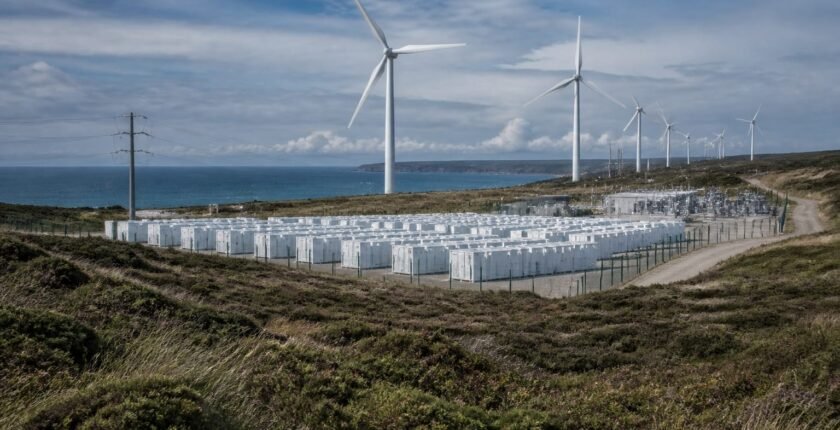
GM and Ford are converting underused electric‑vehicle battery capacity into battery energy storage systems (BESS) to serve growing demand from data centres and stressed power grids. That approach turns heavy EV write‑downs — Ford’s $19.5 billion charge and GM’s $10.9 billion in cumulative charges — into assets for a new business line that leans on existing U.S. manufacturing. Ford has created Ford Energy with a goal of producing about 20 GWh of storage per year by late 2027; GM has rolled out storage and vehicle‑to‑grid offerings and is exploring sodium‑ion cells and second‑life packs. The gambit targets a market that installed 20.2 GWh in Q2 2026.
We are delivering the kind of predictable quality and long-term operational confidence that grid operators and large-scale developers require.
Lisa Drake, president, Ford Energy
Key takeaways
- Write-downs repurposed: Ford took a $19.5 billion EV write-down and GM $10.9 billion in cumulative charges and are shifting some battery capacity into energy storage.
- Ford’s deployment target: Through its Ford Energy division, Ford aims to achieve an annual battery‑storage deployment capacity of at least 20 GWh by late 2027.
- U.S. market surge: U.S. energy storage installations reached a record 20.2 GWh in Q2 2026 and 30.8 GWh in the first half of 2026, per SEIA and Benchmark Mineral Intelligence.
- GM technology moves: GM is partnering with Peak Energy on sodium‑ion grid systems and supplying second‑life packs to projects such as Redwood Materials’ microgrid in Sparks, Nevada.
Table of contents
- Key takeaways
- Why legacy automakers are redeploying EV batteries for grid storage
- Ford’s fast-track: Ford Energy, contracts and a 20 GWh goal
- GM’s approach: sodium‑ion chemistry, second‑life packs and circularity
- Market backdrop: installations, growth rates and demand drivers
- The case for and against the automakers’ storage push
- What to be careful about
- Frequently asked questions
Why legacy automakers are redeploying EV batteries for grid storage
Ford and GM built large battery production footprints during their EV expansion but faced weaker-than-expected EV demand. Those investments led Ford to record a $19.5 billion write-down and GM to swallow $10.9 billion in charges as they scaled back some EV plans. Rather than mothballing capacity, both companies say they will repurpose cells and packs for stationary battery energy storage systems (BESS).
Repurposing converts manufacturing scale and existing supply agreements into a nearer-term revenue stream. Using the same cells in stationary applications avoids the full cost of new factories and targets customers with predictable procurement needs — utilities, large commercial users and data centres — which the companies argue value reliability and long-term service agreements as much as unit cost.
Ford’s fast-track: Ford Energy, contracts and a 20 GWh goal
Ford has formalised the pivot by creating Ford Energy, a wholly owned subsidiary that will supply U.S.-assembled BESS to utilities, data centres and large industrial customers. The company says it will leverage underused capacity in Glendale, Kentucky, and invest roughly $2 billion over two years to scale the business.
Ford also signed a framework agreement with EDF Power Solutions North America that allows EDF to procure up to 4 GWh of DC Block BESS each year under the five‑year deal — potentially 20 GWh across the contract. Achieving Ford’s public goal of 20 GWh a year by late 2027 would place it alongside established storage suppliers on capacity, not just on individual projects.
GM’s approach: sodium‑ion chemistry, second‑life packs and circularity
GM has expanded into grid storage and vehicle‑to‑grid offerings while testing chemistry and lifecycle pathways. In June the company said it is working with Peak Energy to develop purpose‑built sodium‑ion systems for grid-scale storage, a move that targets lower-cost, durable cells specifically tailored to stationary use.
Separately, GM provided repurposed second‑life battery packs to help power Redwood Materials’ microgrid in Sparks, Nevada, and says it is working with Redwood to create circularity across the battery lifecycle. Those second‑life deployments let GM demonstrate reuse cases while new chemistry and manufacturing scale are brought to market.
Market backdrop: installations, growth rates and demand drivers
The automakers’ shifts coincide with a boom in U.S. battery storage build‑out. SEIA and Benchmark Mineral Intelligence reported a record 20.2 GWh installed in Q2 2026, lifting first‑half installations to 30.8 GWh. SEIA and Benchmark also said cumulative electricity delivered to the grid through August 2026 exceeded the total sent in all of 2025.
The U.S. Energy Information Administration has tracked rapid expansion, noting an annual average growth rate of 70% for utility‑scale battery storage capacity over the last three years. That growth reflects three structural drivers highlighted by the automakers: rising electricity demand from AI data centres, renewable integration needs, and grid reliability investments.
| Automaker | Storage move | Notable figures or partners |
|---|---|---|
| Ford | Created Ford Energy to supply U.S.-assembled BESS; repurposes Glendale, Kentucky capacity | $19.5 billion EV write-down; targets at least 20 GWh annually by late 2027; EDF Power Solutions (up to 4 GWh/year) |
| GM | Launched energy storage and vehicle‑to‑grid offerings; developing sodium‑ion systems and second‑life deployments | $10.9 billion cumulative charges; Peak Energy (sodium‑ion partner); Redwood Materials (microgrid) |
The case for and against the automakers’ storage push
The case for
- Existing battery manufacturing capacity and supply chains let Ford and GM scale BESS faster and at lower incremental cost than new entrants building factories from scratch.
- Corporate contracts and long-term service offers — exemplified by Ford’s EDF framework — provide predictable offtake that fits utility procurement cycles and large commercial demand from data centres.
- Second‑life reuse and partnerships with recyclers such as Redwood Materials support circularity claims and can lower net lifecycle costs for some applications.
The case against
- The automakers face established battery‑storage suppliers and project developers; converting EV production into competitively priced stationary systems is a separate engineering and commercial challenge.
- Technology choices such as sodium‑ion will need to prove performance and total cost against incumbent lithium chemistries at grid scale before wide adoption.
- Recorded EV write‑downs underscore demand shifts; if demand for BESS projects softens, the redeployed capacity may not recover the prior investments quickly.
What to be careful about
- Repurposed EV capacity may not meet stationary customers’ cycle‑life or safety expectations without additional engineering and warranty commitments.
- GM’s use of sodium‑ion chemistry is experimental at scale and may face performance, supply or cost hurdles compared with established lithium variants.
- Revenue projections depend on sustained demand from data centres and utilities; a slowdown in procurement or policy support would reduce uptake of new BESS offers.
- Claims of circularity hinge on partnerships and downstream recycling capacity, such as the work with Redwood Materials, which must scale alongside reuse deployments.
The bottom line
Ford and GM are redirecting costly EV battery investments toward battery energy storage as a pragmatic response to softer EV demand and surging grid needs. Ford has laid out explicit delivery and investment targets and signed procurement frameworks; GM is experimenting with sodium‑ion chemistry and second‑life deployments while building vehicle‑to‑grid capabilities. The success of these strategies will depend on project economics, technology choices and sustained procurement from data centres and utilities — factors reflected in the recent jump to 20.2 GWh in a single quarter and the EIA’s steep growth rate for utility storage.
What to watch
- Late 2027: Ford’s stated target to be deploying at least 20 GWh of battery storage annually.
- Watch for Ford Energy’s deployment announcements and project partners as it invests roughly $2 billion to scale — no date has been set for the first large deliveries.
- Watch for GM and Peak Energy to disclose timelines and pilots for sodium‑ion grid systems; no firm date has been announced.
Frequently asked questions
How much storage does Ford plan to deploy and by when?
Ford has publicly targeted a minimum annual deployment of 20 GWh of battery storage by late 2027 and says it will invest roughly $2 billion over the next two years to scale Ford Energy.
What is sodium‑ion and why is GM using it?
Sodium‑ion is a battery chemistry that substitutes sodium for lithium; GM said it is partnering with Peak Energy to develop sodium‑ion systems purpose‑built for grid‑scale storage rather than passenger EV use.
How large is the U.S. energy storage market right now?
SEIA and Benchmark Mineral Intelligence reported a record 20.2 GWh installed in Q2 2026 and 30.8 GWh for the first half of 2026, while the EIA cites an annual average growth rate of about 70% for utility‑scale battery storage over the last three years.
Related reading