
Blog
300MW green hydrogen electrolyser starts in Huelva
Estimated reading time: 5 minutes · Last updated:
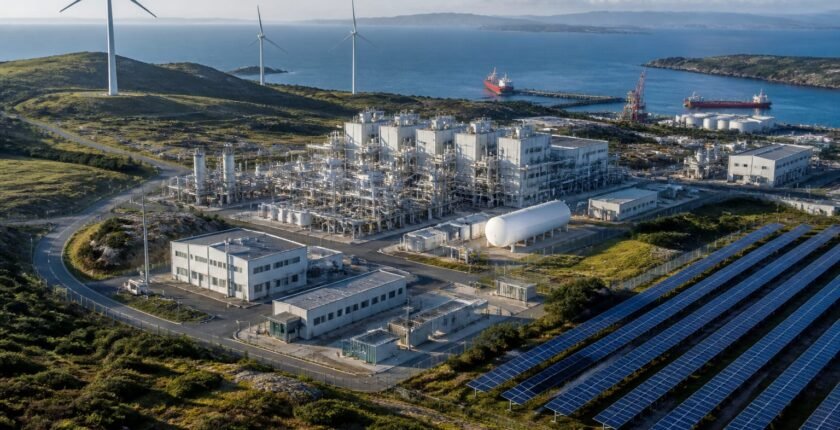
Moeve has begun construction of a 300MW green hydrogen electrolyser at its Huelva refinery in southern Spain, a facility the company says will produce around 45,000 tonnes of renewable hydrogen per year and form the first phase of an Andalusian Green Hydrogen Valley. The Spanish government is contributing €300 million (£260 million) towards a site cost of over €1 billion, and Moeve plans to use the hydrogen to replace some fossil-derived hydrogen at the refinery and to hydrogenate waste vegetable oils into low-emissions liquid fuels. Andy Extance at Chemistry World reported the construction start and the project’s 2GW expansion ambition, placing the plant in the context of larger European projects.
The scale and significance of the project is clear for all to see, and the construction announcement shows what a strong developer can achieve – and how these ambition gaps can be closed – with clear policy frameworks and government support.
Peter Collins, a spokesperson for industry group Hydrogen Europe
Key takeaways
- Plant size: Moeve is building a 300MW electrolyser in Huelva as the first phase of an Andalusian Green Hydrogen Valley.
- Production target: The site is expected to produce around 45,000 tonnes of renewable hydrogen per year.
- Public funding: The Spanish government is contributing €300 million towards a project cost described as over €1 billion.
- Longer-term ambition: Moeve intends the hydrogen valley to grow to a total electrolysis capacity of 2GW.
Table of contents
Why Moeve is building a 300MW plant in Huelva
Moeve has positioned the Huelva site to supply renewable hydrogen to existing refinery operations and to new low-emissions fuels production. The company says the electrolyser will run on a mix of dedicated solar power and grid electricity, and that its first phase — the 300MW electrolysis module — will be sited alongside the refinery to feed on-site demand.
The project carries substantial public backing: Spain is providing €300 million of support towards a total price tag described as over €1 billion. That combination of developer capacity, industrial demand and government contribution is the basis for Moeve’s pitch that a ‘hydrogen valley’ clustered around Huelva can link local supply with local users and attract follow-on investment.
How the plant will be powered and run
Moeve plans to pair dedicated solar generation with grid electricity to run the electrolyser. Adrian Odenweller of the Potsdam Institute for Climate Impact Research notes that producing about 45,000 tonnes of hydrogen a year from a 300MW electrolyser implies roughly 7,000 operating hours annually, which in turn requires either a very large solar array with storage to smooth output or substantial grid electricity.
From 2030, EU Renewable Fuel of Non-Biological Origin (RFNBO) rules will permit hydrogen made using hourly matching of consumption with renewable power to qualify as green, which changes the immediate technical and market choices for operators that combine on-site renewables with grid-supplied energy. Moeve’s configuration will therefore balance on-site generation, storage needs and grid imports under that regulatory framework.
Where Huelva sits in Europe’s hydrogen push
Moeve describes the Huelva installation as phase one of an Andalusian Green Hydrogen Valley with ambitions to reach 2GW of electrolysis capacity. That goal places Huelva alongside a range of European proposals: RWE has announced plans for a 300GW electrolyser in Lingen, and Stegra has outlined a 700GW green-steel-linked project in Boden, Sweden, illustrating the wide variation in claimed capacities, as first reported by Chemistry World.
Adrian Odenweller calls the Huelva build 'encouraging' because it demonstrates that hydrogen can be produced in regions rich in renewables — the Iberian Peninsula is a prime example — close to where it will be used. He also warned of persistent gaps between projects that are announced and those that are actually completed, a recurring pattern across Europe’s green-hydrogen sector.
Who will buy the hydrogen and how policy shapes the business case
Moeve plans to use the hydrogen to replace some fossil-derived hydrogen at its refinery and to convert waste vegetable oils into low-carbon liquid fuels intended for aircraft, marine vessels and heavy road haulage, as well as to supply chemical manufacturers. The company says clustering demand on-site or nearby is central to the valley concept because it reduces the need for long-distance transport and complex storage arrangements.
Peter Collins, spokesperson for industry group Hydrogen Europe, said the construction start demonstrates what a capable developer can deliver and highlighted the role that stable policy and government support play in bringing schemes to fruition. Odenweller notes that the Huelva plant’s 45,000 tonnes per year equals only 0.45% of the EU’s 2030 hydrogen target, a reminder that demand growth across member states and clearer regulation will influence whether announced projects scale as planned.
| Project | Location | Electrolysis capacity | Status |
|---|---|---|---|
| Moeve Huelva | Huelva, Spain | 300MW | Construction started |
| RWE Lingen | Lingen, Germany | 300GW | Intends to have operational next year |
| Stegra Boden | Boden, Sweden | 700GW | Final module installation cited; commissioning pending |
Prospects and headwinds for the Huelva project
The case for
- Strong public backing: a €300 million Spanish government contribution reduces financing risk for the site and signals policy support for green hydrogen in Spain.
- Industrial offtake on-site: planned refinery replacement of fossil hydrogen and local production of low-emission liquid fuels create immediate demand that shortens the value chain.
The case against
- Scale-up risk: Adrian Odenweller highlights widespread 'ambition gaps' where announced projects are later reduced or cancelled, a pattern that could affect larger phases of the hydrogen valley.
- Energy supply constraints: producing 45,000 tonnes a year from a 300MW electrolyser requires about 7,000 operating hours annually, meaning the project must resolve whether to build very large solar-plus-storage or rely heavily on grid electricity until 2030 RFNBO rules apply.
What to be careful about
- Project depends on continued government support and the timely release of funds against a total site cost described as over €1 billion.
- The plant’s reliance on a mix of dedicated solar and grid electricity raises exposure to electricity-market prices and to the technical challenge of securing sufficient renewable-matched hours.
- Europe-wide trend of announced projects being abandoned or downscaled, described as 'ambition gaps' by Adrian Odenweller, creates execution risk for later phases of the hydrogen valley.
The bottom line
Moeve’s start of construction on a 300MW electrolyser in Huelva is a tangible step for Spain’s industrial hydrogen plans: the plant is sized to supply refinery demand and produce 45,000 tonnes a year while signalling a broader 2GW ambition for the Andalusian Green Hydrogen Valley. The project benefits from a €300 million government contribution, but it still faces the technical and market questions common to early large-scale green hydrogen projects — chiefly how to secure sufficient renewable-matched electricity and how to translate phase-one momentum into larger operational capacity. Close scrutiny of financing timetables, power arrangements and commissioning dates will determine whether Huelva becomes a replicable template or another scaled-back announcement.
What to watch
- Watch for Moeve to announce a commissioning date for the Huelva electrolyser; no date has been set.
- Watch for Spain to publish the spending profile and timetable for the €300 million contribution; no timetable has been given.
Frequently asked questions
How much hydrogen will the Huelva plant produce?
Moeve expects the 300MW electrolyser to produce around 45,000 tonnes of renewable hydrogen per year.
How is the project funded?
The Spanish government is contributing €300 million toward a site cost described as over €1 billion, with Moeve providing the remainder through developer financing.
Will the hydrogen qualify as green under EU rules?
Moeve will use dedicated solar power and grid electricity; from 2030 EU RFNBO rules will allow hourly matching of consumption with renewable power to classify grid-supplied hydrogen as green.
Related reading