
Blog
How Home Batteries Change Household Energy Use
Estimated reading time: 6 minutes · Last updated:
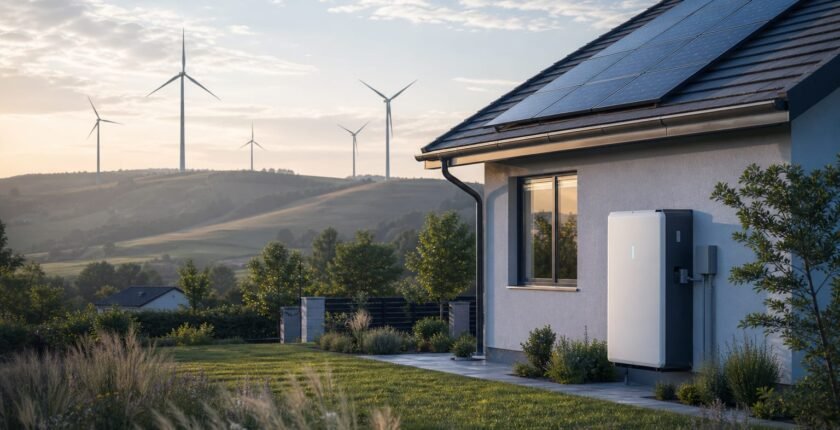
Home batteries let a house store electricity from solar panels or the grid and use it later to cut peak charges or run critical circuits during outages. Typical residential capacities run from about 5 kWh to 13.5 kWh — examples from the market include an Enphase IQ Battery 5P at 5 kWh and a Tesla Powerwall 3 at 13.5 kWh. Rosie Romero published this guide on 3 September 2026 at 5:01 AM as first reported by KTAR News 92.3 FM. Kyle Ritland of Sun Valley Solar says batteries are now energy-management systems that charge when power is cheap or solar is abundant and discharge when rates rise or the grid fails.
The important thing for homeowners to understand is that today’s home batteries are much more than simply a big battery hanging on the wall.
Kyle Ritland, Sun Valley Solar
Key takeaways
- Market examples: Tesla Powerwall 3 stores 13.5 kWh and Enphase IQ Battery 5P stores 5 kWh, illustrating a range of residential sizes.
- Installer view: Kyle Ritland of Sun Valley Solar says modern home batteries are energy-management systems, not just a big battery on the wall.
- Dimensions and weight: Powerwall 3 is roughly 3.5 feet tall, 2 feet wide and weighs nearly 300 pounds; Enphase 5P is just over 3 feet tall, under 2 feet wide and around 180 pounds.
- Operating temperatures: Tesla specifies operation from -4°F to 122°F and warns performance may be reduced above 104°F, a key consideration in Arizona.
Table of contents
How home batteries work and how they’re sized
A home battery stores electricity so a household can use it later. It can charge from rooftop solar or directly from the utility grid and then convert DC to AC through an inverter when discharging. The source's author notes that energy capacity — the figure used to compare and size products — is reported in kilowatt-hours (kWh).
Capacity is stated in kilowatt-hours (kWh) — a measure of how much energy a battery can hold, similar to a fuel tank's volume — while power, measured in kilowatts (kW), indicates the rate at which that energy can be delivered, like the diameter of a hose. Sizing a system requires looking at a home's usage patterns, the homeowner's goals (backup, peak shaving, or self-consumption) and the utility rate plan.
Kyle Ritland of Sun Valley Solar says installers examine when a homeowner uses electricity, the selected rate plan and whether solar is present. That combination determines whether a homeowner needs a single larger unit, such as a 13.5 kWh Powerwall 3, or a modular approach using multiple 5 kWh Enphase IQ Battery 5P modules to reach the required capacity.
Installation, codes and safety protections
Modern residential batteries include safety electronics that monitor voltage, temperature and operating conditions continuously. Trusted products are tested to safety standards and many systems include integrated inverters and monitoring apps so homeowners and service providers can see alerts remotely.
Proper installation matters: the installer must follow manufacturer specifications and applicable electrical, building and fire codes for location, clearances, mounting and protection from physical damage. Kyle Ritland notes local authorities, cities and utilities may also require specific additional measures such as heat-detection systems for garage or indoor installs.
Because batteries store significant energy in a small space, homeowners are encouraged to treat them like an electrical service panel: professionally specified, permitted and installed. Products such as Tesla’s Powerwall 3 list no scheduled preventive maintenance, but they do recommend keeping the area clear and watching the system app for unusual operating conditions.
Placement and performance in hot climates
Location choices depend on proximity to the electrical panel, required clearances and protection from weather. Ritland prefers garage-adjacent placements when possible to reduce environmental exposure. Product specifications indicate whether a particular model is intended for indoor mounting or outdoor use, but local conditions affect performance.
Tesla specifies an operating range from -4°F to 122°F and warns performance may be reduced above 104°F. In Arizona, direct sun on a west-facing wall or sustained high ambient temperatures can lower output or change charging behavior, so installers often seek shaded, ventilated spots or indoor garage mounting.
Weight and access also matter. A Powerwall 3 is roughly 3.5 feet tall, 2 feet wide and weighs nearly 300 pounds; an Enphase IQ Battery 5P is just over 3 feet tall, under 2 feet wide and around 180 pounds. Those figures influence mounting method, clearances and whether structural reinforcement or specific service access is needed.
Choosing a system and basic maintenance
There is no single best battery for every house. The right system matches the homeowner’s goals — backup power, peak-rate savings, or maximizing self-consumed solar — to the battery’s capacity, power rating and cost. Ritland stresses that sizing is not tied to square footage but to usage timing and the homeowner’s rate plan.
Homeowners should compare capacity and power, check manufacturer monitoring features and confirm local code requirements before purchase. Once installed, most modern batteries require minimal hands-on maintenance: keeping the area clear, monitoring the system app and arranging service if alerts appear are the typical tasks.
For solar owners wanting to shift excess daytime production into evening use, a modular approach (stacking 5 kWh modules) or a single larger unit (13.5 kWh) are both valid paths; the choice depends on how much storage is needed, available mounting space and budget.
| Model | Capacity (kWh) | Height | Width | Weight | Notes |
|---|---|---|---|---|---|
| Tesla Powerwall 3 | 13.5 kWh | roughly 3.5 feet tall | 2 feet wide | nearly 300 pounds | operates -4°F to 122°F; performance may reduce above 104°F |
| Enphase IQ Battery 5P | 5 kWh | just over 3 feet tall | under 2 feet wide | around 180 pounds | modular approach; multiple units can be combined |
How adoption could move and what could slow it
The case for
- If utilities keep time-of-use or peak pricing high, batteries will provide measurable bill savings by storing low-cost solar or off-peak grid energy and discharging during expensive hours.
- Improved modular products and integrated monitoring could lower adoption friction by letting homeowners scale capacity from 5 kWh increments to larger totals like 13.5 kWh as needs change.
The case against
- Local permitting, building and fire-code variations — including extra heat-detection requirements for garages — can slow installs or add cost, particularly where rules are still developing.
- High ambient temperatures in regions such as Arizona can reduce battery performance above 104°F, potentially reducing expected savings or backup duration during extreme heat events.
What to be careful about
- Improper installation that does not meet manufacturer specifications or local electrical and fire codes.
- Reduced performance or altered charging behavior when ambient temperatures exceed 104°F, as the Powerwall 3 notes.
- Delays or extra cost from local authorities requiring additional safety measures such as heat-detection systems for indoor or garage installs.
- Structural and access issues from heavy units — Powerwall 3 at nearly 300 pounds — when mounting near the electrical panel.
The bottom line
Home batteries now function as energy-management systems: they store solar or off-peak grid electricity and discharge it to reduce peak charges or run critical loads during outages. Examples in the market — a 5 kWh Enphase IQ Battery 5P and a 13.5 kWh Tesla Powerwall 3 — show the spread of approaches from modular to higher-capacity single units. Proper sizing, permitted installation and attention to temperature-rated operating ranges are the practical steps that determine whether a battery will save money, provide reliable backup or simply sit underused.
What to watch
- Watch for your city or utility to publish local battery-installation requirements; no date has been set.
- Watch for changes to Arizona utility rate plans that affect peak pricing windows; no date has been set.
Frequently asked questions
How much energy can a typical home battery hold?
The source lists residential systems from 5 kWh (Enphase IQ Battery 5P) up to 13.5 kWh (Tesla Powerwall 3); the right capacity depends on whether you want brief backup, several hours of backup, or to shift solar generation into evening use.
Can I install a battery outdoors in Arizona?
Product specifications classify models for indoor or outdoor use; Tesla specifies an operating range from -4°F to 122°F and cautions that performance may be reduced above 104°F. Ritland says that in hot climates he favors shaded locations or garage-adjacent sites.
How do installers decide between one large battery and multiple smaller modules?
Installers evaluate a home’s usage timing, chosen rate plan and whether the homeowner has solar; a single 13.5 kWh unit provides larger single-unit capacity while a modular approach uses multiple 5 kWh units to scale to the needed storage.
Related reading