
Blog
Compressed air energy storage cleared for Broken Hill mini‑grid
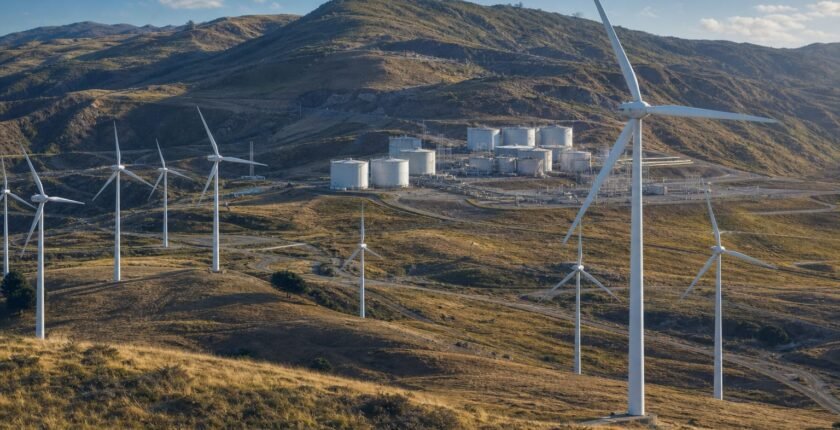
Estimated reading time: 5 minutes · Last updated:
AEMO has granted grid connection approval for Hydrostor’s Silver City Energy Storage project, a 200 MW facility offering up to eight hours (1,600 MWh) of compressed-air storage at the Potosi silver mine near Broken Hill, as first reported by Renew Economy. The sign-off confirms the design meets the Generator Performance Standards required to join the NSW grid and removes a major regulatory barrier for a planned mini-grid intended to link the 200 MW Silverton wind farm and the 53 MW Broken Hill solar farm during transmission outages. Hydrostor country lead Martin Becker described the milestone as significant for Broken Hill’s energy security.
Grid connection approval is another significant step for Silver City and reflects the considerable work that has gone into progressing a critical piece of energy infrastructure for Broken Hill,
Martin Becker, Hydrostor country lead
Key takeaways
- Project size and duration: Silver City Energy Storage is a 200 MW project with up to eight hours’ duration, equivalent to 1,600 MWh of storage.
- AEMO approval: The Australian Energy Market Operator has granted grid connection approval after detailed modelling and network studies.
- Reserved backup capacity: Hydrostor has reserved 50 MW / 250 megawatt-hours (MWh) of the project to supply backup power during planned or unplanned network outages.
- Local jobs: The Silver City development is forecast to generate more than 700 jobs while being built and to support up to 35 ongoing operational positions.
- Scale vs local demand: When the facility is fully charged, its reserves are equivalent to the daily electricity needs of more than 80,000 homes, compared with Broken Hill's roughly 11,400 households.
Table of contents
Why Broken Hill needs long‑duration storage
Broken Hill sits at the end of a single 260 km transmission line and has experienced multiple outages in recent years, including a two‑week blackout in 2024 and an eight‑hour outage in 2023. Those events exposed the limits of the existing 50 MW/50 MWh battery and two ageing 25 MW diesel generators, which were selected historically to provide back‑up at the town but could not sustain supply during extended transmission failures.
Transgrid selected the Silver City site in 2020 as the best replacement option for the diesel backup. The Hydrostor project is being designed to operate as the backbone of a renewable mini‑grid that can switch to local supply when the main line fails, allowing the connected 200 MW Silverton wind farm and the 53 MW Broken Hill solar farm to continue supplying the town during outages.
How Hydrostor’s A‑CAES works and what it delivers
Hydrostor describes its Advanced Compressed Air Energy Storage (A-CAES) as a long-duration technology that uses renewable electricity to compress air into hard-rock caverns and employs a proprietary thermal-management system to capture heat and reuse it when the air expands through turbines to generate electricity. For Silver City, the storage volume will be located in a cavern inside Perilya’s Potosi silver mine near Broken Hill.
In practical terms the project’s 200 MW/1,600 MWh capacity is intended to supply extended power needs during prolonged outages; Hydrostor has designated 50 MW / 250 MWh of that capacity specifically for back‑up during planned or unplanned network interruptions. The company positions A-CAES as functionally similar to pumped hydro for long‑duration applications but sited in hard‑rock caverns rather than water reservoirs.
Regulatory, legal and funding milestones reached
Silver City has cleared a sequence of regulatory and funding gates: it has won council support, secured federal funding through Arena, progressed through the federal EPBC queue, obtained a state Long‑Term Energy Service Agreement (LTESA) and secured state development approval. The recent AEMO grid connection approval confirms the project meets Generator Performance Standards, a core technical requirement for linking to the main grid.
The project also faced a legal challenge by local tourism operator Outback Astronomy in the NSW Land and Environment Court; that challenge was resolved through conciliation. Hydrostor continues to list remaining steps including obtaining secondary approvals required under its Development Consent, finalising commercial arrangements and appointing the balance of key contractors before construction can begin.
Next steps, timeline aims and local impacts
Hydrostor said it is targeting financial close in the first half of next year and is progressing contractor appointments and remaining commercial agreements. During construction the company expects the work program to create in excess of 700 jobs; once operational the project is projected to sustain about 35 roles and will operate as a large-scale storage asset connected to the NSW grid.
Hydrostor and local ministers have also highlighted the project's energy-security role: at full charge the installation will hold enough energy to power the daily consumption equivalent of over 80,000 households, a multiple of Broken Hill’s roughly 11,400 homes. That level of stored energy is intended to enable local wind and solar to continue serving the town through prolonged transmission outages and to reduce reliance on diesel backup.
| Asset | Rated capacity | Role |
|---|---|---|
| Silver City Energy Storage | 200 MW, up to eight hours (1,600 MWh) | Long‑duration storage and mini‑grid backbone; 50 MW / 250 MWh reserved for backup |
| Silverton wind farm | 200 MW | Renewable generation to feed mini‑grid |
| Broken Hill solar farm | 53 MW | Renewable generation to feed mini‑grid |
| Existing battery | 50 MW / 50 MWh | Local battery that could not sustain power during the 2024 two‑week outage |
| Diesel generators | Two × 25 MW | Ageing backup historically used for supply continuity |
Cases for and against timely delivery
The case for
- AEMO’s grid connection approval and the project’s passage through federal and state clearance processes reduce regulatory risk and demonstrate technical compliance with Generator Performance Standards.
- Federal Arena funding, a state LTESA and state development approval provide funding and commercial frameworks that support the project reaching financial close.
The case against
- Hydrostor still needs secondary approvals, to appoint remaining contractors and to finalise commercial arrangements; those outstanding steps could delay construction and financial close.
- Past legal challenge and the need to adapt to legacy market rules illustrate local regulatory complexity that can lengthen project timetables and increase costs.
What to be careful about
- Delay or failure to secure financial close in the planned window (Hydrostor aims for the first half of 2027).
- Additional secondary approvals under the Development Consent could impose design changes or conditions that extend the schedule.
- Contractor appointment or procurement setbacks during pre‑construction could push the start date into later 2027 or beyond.
The bottom line
AEMO’s grid connection approval clears a major technical and regulatory hurdle for Hydrostor’s Silver City Energy Storage, moving the project from proposal to a near‑term delivery programme. With federal Arena funding, state approvals and an LTESA in place, the remaining obstacles are commercial and administrative: contractor appointments, secondary development approvals and financial close, which Hydrostor aims to achieve in the first half of 2027. If those steps proceed to plan, Silver City will provide a long‑duration alternative to diesel and short‑duration batteries and underpin a renewables‑backed mini‑grid for Broken Hill and the Far West.
What to watch
- Watch for Hydrostor to reach financial close in the first half of 2027, as the company has stated it is aiming to do.
- Watch for the appointment of the balance of key contractors; no date has been set.
- Watch for completion of the remaining secondary approvals required under Hydrostor’s Development Consent; no date has been set.
Frequently asked questions
What size and duration is the Silver City project?
Silver City Energy Storage is a 200 MW project designed to provide up to eight hours of discharge, giving it 1,600 MWh of storage capacity.
Where will the compressed air be stored?
Hydrostor plans to use a hard‑rock cavern inside Perilya’s Potosi silver mine near Broken Hill to store compressed air for the A-CAES system.
How will the project help during outages?
The plant will act as a mini-grid backbone, maintaining a reserved 50 MW / 250 MWh allocation for backup while allowing the 200 MW Silverton wind farm and the 53 MW Broken Hill solar farm to serve local demand during transmission failures.
Related reading