
Blog
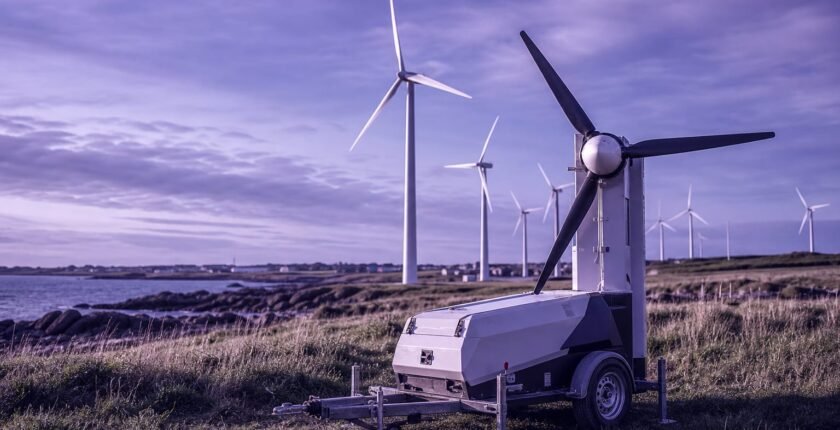
Dutch two-blade portable wind turbine for storm resilience
Estimated reading time: 4 minutes · Last updated:
The United Nations has warned leaders to prepare for the possibility of missing the 1.5°C warming limit; that target was agreed two decades ago by a coalition of more than 200 nations. Separately, a Dutch startup unveiled a portable wind turbine with two blades that can tilt from vertical to horizontal to survive severe storms. The company says the unit fits inside a standard shipping container and can be completely erected at its destination in fewer than 24 hours, making it suitable for construction sites, disaster-relief operations and remote off-grid communities. The startup presents the turbine as a mobile, storm-resistant alternative to conventional three-blade wind farms.
Key takeaways
- The United Nations warned the world may miss the 1.5°C warming limit, a target agreed two decades ago by more than 200 countries.
- A Dutch startup has built a two-blade turbine that transitions between upright and fully horizontal positions to continue generating during major windstorms.
- The company says the unit can be transported in a standard shipping container and assembled at the site in under 24 hours for construction, disaster response or remote off-grid use.
Table of contents
Why the UN warning refocuses demand for resilient renewables
Wind energy remains a core pillar of the low-carbon transition because it delivers large volumes of zero-emission electricity. The UN’s warning that the 1.5°C limit may be missed strengthens interest in solutions that can deploy fast and keep producing through extreme weather, rather than relying solely on large, fixed farms that can be offline after a storm.
Traditional, utility-scale machines typically use three blades and are optimized for steady production across long lives; that model can be costly to site and vulnerable to catastrophic damage in high winds. The portable wind turbine’s focus on mobility and storm resilience targets gaps left by those conventional installations.
How the two-blade design aims to keep generating in storms
The Dutch design replaces three fixed blades with two blades that can reorient between an upright posture and a fully horizontal one. By laying flat in extreme winds the maker says the unit avoids the loads that force many three-blade turbines to shut down or risk structural failure.
That mechanical trade-off raises questions about aerodynamic efficiency and peak output compared with three-blade machines; the company that promoted the design asserts its resilience but has not released rated power, cut-in speed or certification data, so independent verification is required.
Portability, use cases and the unanswered technical questions
Logistics are central to the pitch: the unit reportedly fits within a standard shipping container and can be assembled on-site in less than 24 hours. That containerized approach simplifies transport and could speed deployment for construction sites, emergency response after storms and off-grid communities that need temporary power.
The report does not name the developer or provide technical specifications, test data or deployment contracts. Before the concept can be assessed for routine use, buyers and relief agencies will need published power ratings, wind-speed tolerances and evidence of field trials.
What could move this either way
The case for
- If field trials confirm the claims, the design could provide rapid, storm-resilient power for disaster relief and temporary worksites.
- Containerized logistics reduce transport friction and could lower time-to-power compared with building grid connections for remote tasks.
The case against
- Two-blade, reorienting geometry may sacrifice peak efficiency versus conventional three-blade turbines, reducing economic competitiveness for continuous power delivery.
- The developer is unnamed in the report and no certification, rated capacity or independent test results are published, leaving technical and safety questions open.
What to be careful about
- No named manufacturer or published specifications in the report, creating procurement and warranty risk for buyers.
- Unverified structural behaviour in actual major windstorms could lead to unexpected failures or safety hazards.
- Regulatory and grid-connection approvals for a novel, containerized turbine design are unspecified and may delay deployments.
The bottom line
The UN’s renewed warning on the 1.5°C limit underscores urgency in expanding resilient renewable capacity. The Dutch startup’s portable two-blade turbine targets a real operational gap: machines that can be moved quickly and that keep producing during severe winds. The concept’s logistics — containerized transport and sub–24-hour assembly — match the use cases named in the report, but the lack of a named developer, published power ratings and independent testing means the claims remain provisional. Procurement and relief agencies should seek a named manufacturer, certified specifications and field-trial data before committing to purchases.
What to watch
- Watch for a named manufacturer or public demo of the portable turbine; no date has been set.
- Watch for published technical specifications and independent test results for the two-blade unit; no date has been set.
Frequently asked questions
Who developed the turbine and is the company named?
The company behind the two-blade portable turbine is not identified, and no corporate identity or contact information was provided.
How does a two-blade unit differ from conventional turbines?
Conventional utility turbines typically use three blades tuned for steady, efficient output; the two-blade design described here can reorient to a fully horizontal position to reduce storm loads and continue generating, trading potential peak efficiency for storm resilience.
How fast can the unit be deployed and where might it be used?
According to the company, the design fits a standard shipping container and can be assembled on location in fewer than 24 hours, making it suitable for temporary power at construction sites, in emergency response and for remote off-grid communities.
Related reading