
Blog
Temperatures Rise in La Verne Battery Storage After Fire
Estimated reading time: 5 minutes · Last updated:
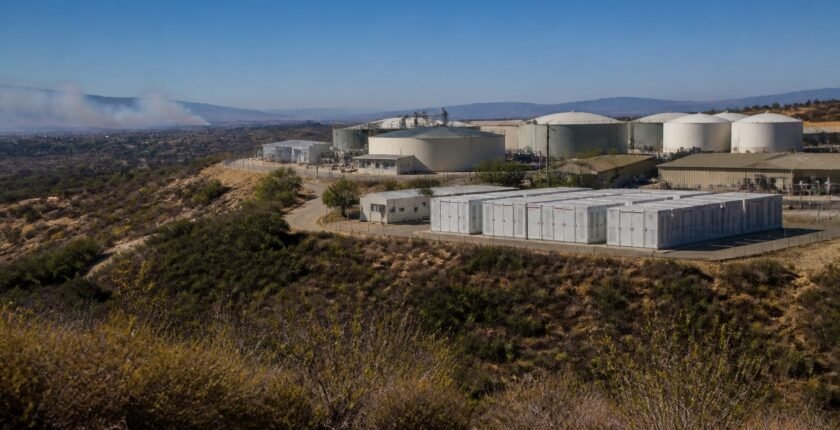
After a neighboring lithium battery bank caught fire, crews monitored rising temperatures inside another storage unit at the Metropolitan Water District facility in La Verne; one exposed unit climbed about 20 degrees to roughly 90°F by early Wednesday, La Verne Fire Department Battalion Chief Mark Savage said. He said the facility’s water supply was not affected. Emergency teams used drones to check both units and kept an evacuation order in place for the immediate vicinity while air quality monitors showed no sign of dangerous toxins. The cause remains under investigation. ABC7 Los Angeles first reported the incident.
It's now approaching the 90s and it's not that warm here yet.
La Verne Fire Department Battalion Chief Mark Savage
Key takeaways
- Temperature rise: La Verne Fire Department Battalion Chief Mark Savage said the exposed battery unit rose about 20 degrees to around 90°F by about 7 a.m.
- Unit size: Savage said each battery storage unit measures roughly eight feet by eight feet by twenty feet.
- Community impact: Evacuation orders and shelter-in-place warnings affected nearby residents and prompted Grace Elementary School and Bonita High School to close or shelter in place.
- Monitoring and safety: Crews used drones to monitor temperatures in both units, and Metropolitan Water District said its water supply was not affected.
Table of contents
What happened and how crews responded
A fire began Tuesday morning at a lithium battery bank near a solar field on the northeast side of the Metropolitan Water District facility in La Verne. Firefighters extinguished the active blaze by Tuesday night, but a second, adjacent battery unit had been exposed to heat from the original fire and began to smoke and make popping sounds later that day. By roughly 7 a.m. the following morning the temperature inside the exposed unit had climbed by about 20 degrees to near 90°F, Battalion Chief Mark Savage confirmed.
Responders set an evacuation zone around the immediate facility footprint and issued shelter-in-place warnings for the surrounding neighborhood at Bonita Avenue and Wheeler Avenue. Crews deployed a drone to monitor temperatures inside and atop the units so personnel could track thermal activity without approaching unstable equipment. Savage said firefighting teams continued to mop up at the scene and were prepared to use the same cooling tactics again if the exposed unit’s behaviour returned.
What the battery units are and why they worry neighbours
Savage described the two battery storage enclosures as roughly eight feet by eight feet by twenty feet each, and he warned that more lithium batteries remain on site. Lithium‑ion battery banks store large amounts of energy in compact cabinets and, if cells overheat, can enter thermal runaway: a rapid, self‑sustaining heating process that can cause popping, smoke and fire to spread to adjacent modules.
The behaviour Savage reported—popping sounds, puffs of smoke and a blown door jamb at about 5:30 p.m. Tuesday—are typical indicators emergency crews treat as a continuing hazard. Air quality monitoring at the scene had not detected dangerous toxins, he said, but the presence of additional battery banks kept crews cautious and maintained the evacuation order for the immediate area while technicians assessed the remaining equipment.
Community disruption and institution closures
The fire affected nearby institutions: Grace Elementary School remained closed on Wednesday after being placed under shelter-in-place on Tuesday, and Bonita High School was also sheltered. The University of La Verne closed temporarily and announced it would reopen Wednesday, and local residents received evacuation orders that were later downgraded in some areas to warnings.
Neighbors reported surprise that the water treatment site houses large battery banks. The Metropolitan Water District told crews and the community that its drinking-water supply had not been affected by the fire. Still, the combination of loud popping, smoke and the presence of unspent battery modules prompted public-safety measures that disrupted classrooms and prompted the continued presence of hazardous-materials teams on site.
Investigation, monitoring and the immediate outlook
The cause of the original battery fire remains under investigation, and the district and fire department will rely on technicians to inspect the burned and exposed units before any recovery work proceeds. Savage said crews would reuse cooling measures if the monitored unit shows renewed activity; a drone is being used to collect temperature data without exposing personnel to risk. That remote monitoring lets teams spot new hot spots and decide whether to reopen evacuated zones.
Officials also emphasised that air monitoring had not shown dangerous toxin levels. The next steps are a technical examination of the damaged bank and a review of the site’s inventory of battery modules to determine whether other enclosures need pre-emptive cooling or removal. Because investigators have not yet released a cause, the timeline for returning the facility to normal operations is uncertain.
How this could affect local operations
The case for
- Remote monitoring with drones can limit firefighter exposure and let crews spot hot spots quickly, reducing the risk of a repeat thermal event.
- Air quality monitors reported no dangerous toxins, which lowers immediate public‑health pressure and could shorten sheltering and closure times if sustained.
The case against
- If thermal behaviour continues in the exposed unit, crews will need to repeat cooling operations and keep evacuation restrictions in place, prolonging community disruption.
- The presence of more lithium batteries at the site raises the chance of additional cells igniting or of heat transfer between adjacent banks during an extended response.
What to be careful about
- Thermal runaway in one cabinet spreading to nearby battery banks because multiple lithium units remain on site.
- Extended evacuations or school closures if temperatures rise again or if investigators require larger exclusion zones.
- Uncertainty about the fire’s origin, which could delay corrective actions to prevent a recurrence.
The bottom line
Firefighters contained the original lithium battery blaze at the Metropolitan Water District site, but heat exposure pushed temperatures in an adjacent storage enclosure upward and kept an evacuation order in place while crews monitored both banks. Remote monitoring tools such as drones and air sensors let responders track hot spots without exposing personnel to unstable equipment, and La Verne Fire Department Battalion Chief Mark Savage said the water supply was not affected. Investigators have not yet released a cause; their findings and any decisions about relocating or removing other battery banks on site will determine how quickly the neighbourhood and the facility return to normal.
What to watch
- Watch for the fire investigation report from the La Verne Fire Department and Metropolitan Water District; no date has been set.
- Watch for any Metropolitan Water District statement about removal or relocation of additional battery banks at the facility; no date has been set.
- Watch for updated air-quality readings and any lifting of the evacuation order; no date has been set.
Frequently asked questions
How hot did the exposed battery unit get?
La Verne Fire Department Battalion Chief Mark Savage said the temperature inside the exposed unit rose by about 20 degrees to roughly 90°F by about 7 a.m.
Were residents at risk from toxins in the smoke?
Air quality monitoring at the scene showed no sign of dangerous toxins, according to Savage, and the Metropolitan Water District said the facility's water supply was not affected.
How large are the battery storage units involved?
Savage described each enclosure as measuring about eight feet by eight feet by twenty feet.
Related reading