
Blog
Mazama Scores $135M for Newberry Volcano Geothermal
Estimated reading time: 5 minutes · Last updated:
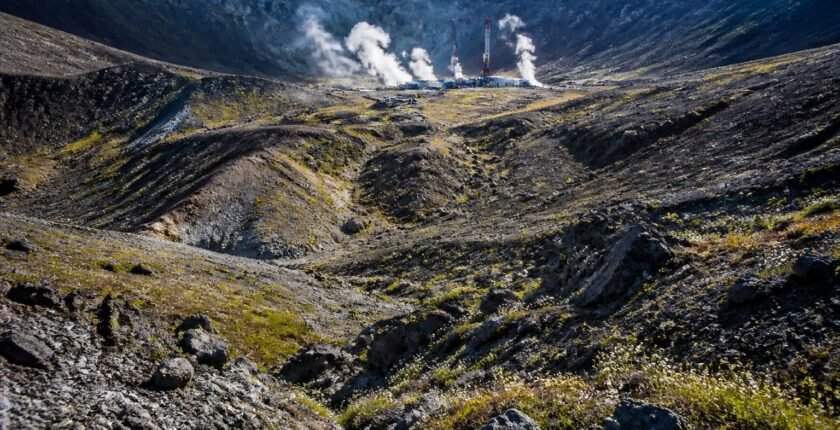
Mazama Energy has secured more than $135 million to deepen its superhot-rock geothermal program at Oregon’s Newberry Volcano, as first reported by Oregon Public Broadcasting. The Texas developer says the money will bankroll Project Ceres, a horizontal-well build Mazama expects to produce about 15 megawatts in 2027, and a deeper campaign called Project Athena that will drill past 15,000 feet. Mazama’s communications director Pete Lumley told OPB the company converts injected water into steam from engineered rock reservoirs to drive turbines, and that faster, deeper drilling is central to lowering per-megawatt costs and scaling the resource.
“It’s a sustainable energy source, and it allows us to extract the heat from the hot rock below and turn that into electrons.”
Pete Lumley, Mazama Energy communications director
Key takeaways
- Mazama Energy raised more than $135 million to expand superhot-rock geothermal development at Newberry Volcano.
- Project Ceres is billed to generate about 15 megawatts in 2027, which Mazama says equals the power for roughly 4,500 households.
- Mazama has previously drilled more than 10,000 feet and recorded temperatures up to 629°F; a second well reached the same depth about two weeks, roughly 80% faster than the first.
- Mazama projects milestones of 50 megawatts by 2029 and up to 200 megawatts by 2030, and has said Newberry could host as much as 10 gigawatts someday.
Table of contents
- Key takeaways
- What the $135 million funds and the near-term plan
- How Mazama’s superhot-rock system works and what it has proved so far
- Community and economic effects the company highlights
- Where Newberry sits in a wider regional push
- How this could scale — the arguments for and the limits to watch
- What to be careful about
- Frequently asked questions
What the $135 million funds and the near-term plan
Mazama says the fresh capital will be used to push its pilot work into commercial-scale testing. The company has named its immediate build Project Ceres, a horizontal well configuration that Mazama estimates can produce about 15 megawatts in 2027. That 15 MW figure is the financing milestone investors are backing to prove the engineered, superhot-rock approach can operate continuously.
Mazama’s next phase, Project Athena, will go deeper: the company plans to drill beyond 15,000 feet to reach hotter rock and higher energy density. Pete Lumley, Mazama’s communications director, frames deeper boreholes as a way to reduce the number of wells, shrink land footprint and cut water use during operations — all arguments aimed at improving the technology’s economics for investors and communities.
How Mazama’s superhot-rock system works and what it has proved so far
Mazama uses an enhanced geothermal method: operators drill to hot, permeable rock, inject water to absorb heat, bring steam to the surface to spin turbines, then cool and reinject the fluid to keep the cycle going. Lumley described the system to OPB as engineered to deliver continuous baseload power rather than the variable output typical of solar or wind.
The company has already reached underground zones hotter than 629 degrees Fahrenheit while drilling beyond 10,000 feet. Mazama also shortened the time to drill a second well to the same depth to about two weeks, a pace the company says was roughly 80% faster than their earlier attempt. That acceleration matters because drilling costs remain high — Mazama reports daily rig costs above $100,000 — so speed directly cuts capital burn during field development.
Community and economic effects the company highlights
Local officials and Mazama point to jobs, training and broader economic benefit if projects scale. Deschutes County Chair Commissioner Phil Chang told OPB he sees potential for high-skill, high-wage employment and training pipelines with community benefits agreements that could involve local high schools, community colleges and OSU Cascades.
Mazama and supporters argue engineered geothermal can become a regional baseload exporter if the technology scales to the company’s targets. That pitch combines local revenue from construction and operations with the idea of a long-term, continuous power source to serve data centers and other large electricity users moving to the Pacific Northwest.
Where Newberry sits in a wider regional push
Mazama’s funding is one of several recent moves by companies and federal land managers across the Northwest. Quaise Energy, another Texas developer, is advancing millimeter-wave drilling and has a 50-megawatt Project Obsidian planned by 2030. Virginia-based Hexagon Energy has announced plans to explore Weyerhaeuser lands in Oregon and Washington, and the U.S. Bureau of Land Management auctioned geothermal leases covering 9,500 acres within Mount Hood National Forest for more than $1 million.
Those parallel efforts show investors and public agencies are treating deep geothermal as a growing category. Still, the field combines distinct technology paths — faster mechanical drilling, deeper engineered reservoirs and large-scale field management — so multiple companies are testing different technical and commercial approaches at the same time.
| Project | Company | Target capacity | Target date | Notes |
|---|---|---|---|---|
| Project Ceres | Mazama Energy | 15 MW | 2027 | Horizontal-well pilot Mazama says aims to prove commercial output |
| Project Athena | Mazama Energy | — | — | Deeper drilling beyond 15,000 ft to reach hotter rock; broader capacity goals given elsewhere |
| Project Obsidian | Quaise Energy | 50 MW | 2030 | Quaise is developing millimeter-wave drilling for superhot targets |
| Undisclosed BLM leases | Unnamed developers | — | — | BLM sold development rights to 9,500 acres on Mount Hood National Forest for > $1 million |
| Regional plan (Hexagon) | Hexagon Energy | Up to 3 GW (agreement) | — | Hexagon says it has reached an agreement to eventually develop as much as 3 GW |
How this could scale — the arguments for and the limits to watch
The case for
- Superhot-rock systems provide continuous baseload power, which grids can use to meet steady demand from large users such as data centers.
- Mazama’s faster drilling pace and prior wells reaching 629°F are concrete operational gains that lower per-well time and cost.
- Private capital inflows, exemplified by the $135 million raise, create runway to test commercial outputs such as the 15 MW Project Ceres and the 50 MW milestone by 2029.
The case against
- High drilling costs — reported above $100,000 per day — mean delays or slower drilling materially raise capital requirements.
- Scaling from single wells to multi-hundred-megawatt fields requires proving reservoir longevity, injectivity and sustained thermal output at depth.
- Land access and competing leases in the region increase complexity for developers seeking contiguous, large footprints.
What to be careful about
- Daily rig operating costs above $100,000 materially increase capital exposure if drilling does not accelerate as planned.
- Temperatures and flow rates recorded at ~629°F and 10,000+ ft are promising but do not guarantee that deeper Athena wells will sustain production at commercial scale.
- Competition for land and permitting — including BLM leases and private timber lands — could constrain site selection and increase timelines.
The bottom line
The new financing gives Mazama a runway to prove whether engineered superhot-rock geothermal can move from pilot wells to sustained commercial output. The company has demonstrated high temperatures and improved drilling pace, and it now faces the economic test of translating those gains into reliable megawatts at a cost that attracts further investment. Regional activity from Quaise, Hexagon and federal leasing shows momentum, but high daily rig costs, land competition and the engineering challenge of sustaining deep reservoirs are concrete hurdles that will determine whether Newberry becomes a major baseload source.
What to watch
- Watch for Project Ceres to reach its 15 MW target in 2027, the near-term proof point Mazama and investors are tracking.
- Watch for Mazama’s stated milestone of 50 megawatts by 2029 and any drilling updates from Project Athena thereafter.
- Watch for Quaise Energy’s Project Obsidian delivery targeted by 2030 and for Hexagon’s planned developments that the company says could reach up to 3 GW.
Frequently asked questions
What exactly will the $135 million pay for?
Mazama says the funding supports deeper and faster drilling campaigns, notably Project Ceres to deliver about 15 MW in 2027 and the deeper Project Athena that will drill beyond 15,000 feet to access hotter rock.
How hot and how deep has Mazama drilled so far?
The company has drilled more than 10,000 feet and reported temperatures up to 629°F; a follow-up well reached the same depth in roughly two weeks, which Mazama says was about 80% faster than its earlier effort.
How big could Newberry become if these plans succeed?
Mazama projects a near-term milestone of 50 megawatts by 2029 and up to 200 megawatts by 2030, and has forecast the potential for as much as 10 gigawatts of continuous commercial energy at Newberry in the long term.
Related reading
This article is information, not financial advice. Anyone acting on it should do their own checks.