
Blog
LG 5.1-MWh BESS Becomes NVIDIA DSX Ready
Estimated reading time: 5 minutes · Last updated:
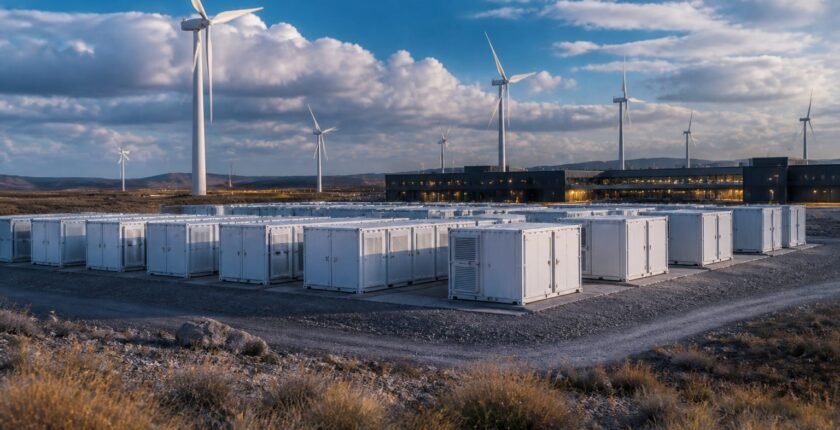
LG Energy Solution has qualified an AC battery energy storage system under NVIDIA’s DSX Ready program, positioning the company’s modular 2.5 MW / 5.1 MWh blocks as an option for large AI data centers. The DSX Ready mark signals compatibility with NVIDIA’s DSX reference designs for AI factories and shortens the path from procurement to operation. The blocks combine a 2.5-megawatt inverter capability with 5.1 megawatt-hours of stored energy per module, allowing operators to scale capacity by adding units. The qualification, announced on September 21, covers safety and installation targets referenced to UL and National Fire Protection Association standards.
Being selected as a partner for NVIDIA’s first-ever DSX Ready program validates the strength and competitiveness of our BESS products,
Chang Beom Kang, Head of ESS Battery Division at LG Energy Solution
Key takeaways
- Qualification: LG Energy Solution’s AC battery system qualified for NVIDIA’s DSX Ready program in an announcement dated September 21.
- Module rating: The system uses modular blocks rated at 2.5 megawatts and 5.1 megawatt-hours each.
- Production footprint: LG runs five regional production facilities and intends to obtain over 50 gigawatt-hours of lithium iron phosphate cell capacity by the end of 2026.
- Standards: LG says the system’s architecture has been developed to comply with applicable UL standards and the requirements of the National Fire Protection Association.
Table of contents
Why a DSX Ready mark matters for AI factories
NVIDIA’s DSX Ready qualification exists to help customers pick components that align with the vendor’s DSX reference designs for AI factories. Data centers built for large-scale AI workloads combine servers, networking, cooling and power systems that must work together from day one; the qualification reduces integration risk by signalling that a vendor’s product meets the company’s interoperability checklist.
For power infrastructure, the appeal is practical: operators moving to AI-heavy compute face a compressed timeline between site selection and full operation. A certified AC battery system shortens that period by narrowing the technical checks operators must do before commissioning. The DSX Ready label therefore emphasises compatibility and a faster path to what NVIDIA describes as an AI factory rather than certifying long-term performance in every grid context.
How LG’s 2.5 MW / 5.1 MWh modules address AI load swings
LG’s offering centres on modular 2.5 MW inverters paired with 5.1 MWh of energy storage per block, letting operators add blocks to scale both power and energy. That modularity is intended to match growth in compute density: a site can increase peak power capacity and stored discharge in measured steps rather than installing a single, oversized plant.
The system is described as supporting grid-forming operation, which means it can actively regulate local voltage and frequency instead of merely following a grid signal. For AI facilities whose load can rise or fall quickly, that capability helps preserve internal power quality and reduces the risk of voltage events that could interrupt sensitive compute stacks. LG also highlights features it calls AI load smoothing and fast-response modes aimed at countering sudden consumption spikes.
North American supply chain and tax incentive positioning
LG Energy Solution's energy storage expansion is backed by a localized North American supply chain covering cell manufacturing, pack assembly and system integration. The company currently runs five regional production facilities and says it will obtain in excess of 50 gigawatt-hours of lithium iron phosphate cell capacity by the end of 2026 — a production milestone the announcement identifies as concrete.
LG also offers both AC-integrated containers and DC battery containers within its North American portfolio. The company states that some of these products are eligible for Investment Tax Credit incentives under the Inflation Reduction Act, which can affect project economics for data centres and utilities. Eligibility and certification for specific projects remain implementation details that customers must confirm with regulators and LG as deployments proceed.
| Item | Rating / Feature | Source |
|---|---|---|
| Modular block | 2.5 MW / 5.1 MWh | LG Energy Solution announcement |
| Production footprint | Five regional facilities | LG Energy Solution announcement |
| Capacity target | More than 50 GWh by end of 2026 | LG Energy Solution announcement |
How this could play out for AI power and grid operators
The case for
- Faster deployments: DSX Ready compatibility may shorten integration testing and accelerate commissioning for AI sites that adopt LG’s AC system.
- Improved resilience: grid-forming capability and fast-response functions could reduce the frequency and severity of voltage events at sites with rapidly changing compute loads.
- Local supply: LG’s plan for more than 50 GWh of LFP cell capacity by the end of 2026 would increase local supply for North American projects, easing logistics and lead times.
The case against
- Interconnection friction: qualifying for DSX does not eliminate local grid studies or utility interconnection constraints that can delay projects.
- Standards and certification gaps: meeting UL and NFPA requirements does not guarantee harmonised permitting across jurisdictions, which could slow timelines.
- Market competition: other battery makers and alternative power solutions may offer different trade-offs in duration, cost or lifecycle characteristics that limit adoption.
What to be careful about
- Utility interconnection and grid approvals can delay site commissioning even when equipment is pre-qualified.
- Supply-chain bottlenecks for cells or power conversion systems could push out deliveries despite LG’s production targets.
- Claims of grid-forming operation require field validation at scale; real-world performance depends on site design and controls integration.
- Tax-credit eligibility under the Inflation Reduction Act must be demonstrated for each product and project; eligibility statements in a product portfolio do not replace project-level certification.
The bottom line
LG Energy Solution’s DSX Ready qualification puts a modular 2.5 MW / 5.1 MWh AC battery product in front of AI data-centre integrators that prioritise vendor-tested compatibility. The unit-level ratings make scaling straightforward: operators can add blocks to match growing compute loads, and the advertised grid-forming behaviour addresses common concerns about voltage and frequency stability at sites with volatile demand. The commercial impact will hinge on the pace at which LG translates a stated plan for more than 50 GWh of cell capacity into delivered hardware and on how quickly projects clear local interconnection and permitting hurdles. Those implementation details will decide whether DSX Ready hardware speeds commissioning in practice.
What to watch
- Watch for LG Energy Solution’s reported progress toward securing more than 50 gigawatt-hours of LFP cell capacity by the end of 2026.
- Watch for announcements of DSX Ready deployments at customer AI facilities; no date has been set for public case studies.
Frequently asked questions
What does 'DSX Ready' mean for a battery system?
DSX Ready indicates NVIDIA found the product compatible with elements of its DSX reference designs for AI factories; the LG AC system earned that qualification in an announcement dated September 21 and is presented as meeting interoperability checkpoints rather than as an operating warranty.
How much energy and power does each LG block provide?
Each modular block is rated at 2.5 megawatts of power and holds 5.1 megawatt-hours of energy, which implies roughly 2.04 hours of discharge at the quoted power rating (5.1 MWh ÷ 2.5 MW).
Is LG producing cells in North America?
LG runs five regional production facilities and says it intends to acquire over 50 gigawatt-hours of lithium iron phosphate cell capacity by the end of 2026 to support North American demand.
Related reading