
Blog
Long-Duration Energy Storage Draws Google and Meta
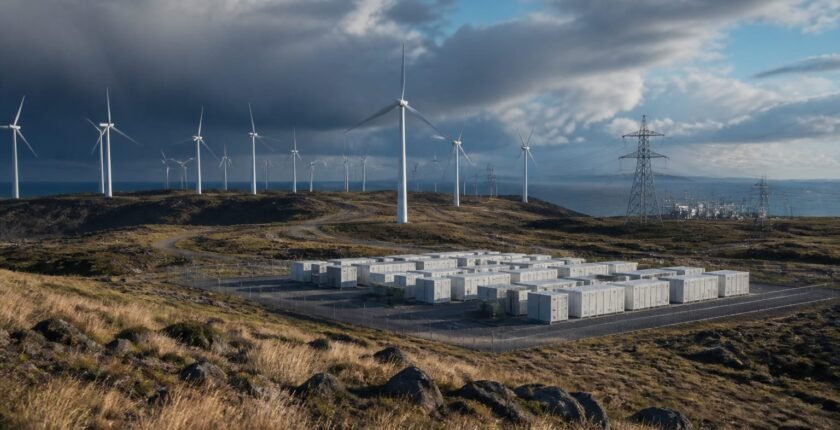
Estimated reading time: 5 minutes · Last updated:
Cloud providers including Google and Meta are shifting procurement from four-hour lithium-ion systems to long-duration energy storage to meet surging AI-driven demand and to back up hyperscale data centers. As first reported by Cailian Press, since early 2025 the United States has announced, approved or financed at least 150 gigawatt-hours of long-duration storage projects. Providers are targeting systems that can store power for days (the industry often cites a 100-hour standard) rather than the roughly four hours delivered by conventional lithium-ion batteries, because multi-day discharge fits renewable variability and corporate carbon targets.
Four-hour energy storage ultimately has its limits.
Amanda Yang, Meta's head of clean energy and renewable resources
Key takeaways
- US project pipeline: Since early 2025 the United States has announced, approved or financed at least 150 GWh of long-duration energy storage projects.
- Meta and Noon Energy: Meta committed to secure up to 1 GW of capacity totaling 100 GWh from Noon Energy, with the first phase slated for completion in 2028.
- Energy Dome deal: Energy Dome agreed with Salt River Project to deploy a 19 MW, 10-hour CO2-based battery system funded in part by Google.
- Duration gap: Conventional lithium-ion batteries typically provide about four hours of discharge, whereas long-duration technologies can exceed 100 hours.
Table of contents
- Key takeaways
- Why hyperscale cloud providers are buying longer-duration storage
- Deals and scale: the projects behind the pivot
- Technologies, costs and the verification gap
- Market structure and the financing hurdle
- How long-duration storage could scale — two sides
- What to be careful about
- Frequently asked questions
Why hyperscale cloud providers are buying longer-duration storage
Hyperscale data centers consume steady, high-power electricity and now host large AI workloads that raise baseload demand and sensitivity to outages. Companies that operate those centers have three constraints: they want to reduce on-site fossil fuel use to meet corporate decarbonization goals; gas turbines and diesel spares face long supply-chain lead times; and stacking four-hour lithium-ion systems to cover multiple cloudy or calm days quickly becomes uneconomic. That combination is driving procurement toward storage that can hold and deliver power for days rather than hours.
Long-duration energy storage (LDES) is designed to store electricity when wind and solar are plentiful and discharge across prolonged low-generation spells. The industry often treats a 100-hour duration as a standard design point for multi-day systems, and data-center buyers see that profile as a better match to renewable variability than the roughly four-hour discharge typical of lithium-ion systems.
Deals and scale: the projects behind the pivot
Corporate off-takers are already moving from pilots to large procurement. Meta’s announcement with Noon Energy commits up to 1 gigawatt and a total of 100 gigawatt-hours of capacity, with the first phase slated for completion in 2028. That single commitment alone signals an appetite for multi-day storage at hyperscale.
Separately, on June 15 Energy Dome announced an agreement with Salt River Project for a carbon-dioxide-based system specified at 19 megawatts with a 10-hour duration; Google is expected to provide a portion of the project's financing. Smaller vendors also report that AI data centers account for much larger shares of their pipelines than two years ago, shifting demand profiles for developers and financiers alike.
Technologies, costs and the verification gap
Lucia Tian, Director of Advanced Energy Technologies at Google, said many of the newer LDES designs do not depend on critical minerals such as graphite, and she suggested that avoiding reliance on those supply chains is a factor for buyers.
Despite the deals, the industry is still proving both performance and bankability at scale. Company spokespeople describe LDES as recently gaining momentum after a period of high costs and limited large-scale validation; Lucia Tian warned that scaling new technologies requires accepting some level of risk. Lenders and project financiers remain cautious about unproven systems, which leaves margin for vendors who can demonstrate repeated, reliable deployments.
Market structure and the financing hurdle
The existing battery market is dominated by Chinese lithium-ion suppliers, but the long-duration sector is open and contested. No clear frontrunner has emerged for global long-duration storage, creating an opening for Western firms and startups with alternative chemistries or system architectures.
However, financing is a practical gatekeeper. XL Batteries views its sale to the U.S. data-center developer Prometheus Hyperscale as validation that helped persuade lenders; XL Batteries CEO Tom Sisto said financiers are typically wary of products without an established track record. Projects that combine a credible technology track record with offtake from hyperscalers will have the easiest path to bankable capital, while smaller vendors face a tougher financing environment.
| Technology / Provider | Power capacity (nameplate) | Energy stored / duration | Status |
|---|---|---|---|
| Conventional lithium-ion batteries | varies by system | about four hours | widely used for short-duration applications |
| Energy Dome (Salt River Project, funded partly by Google) | 19 MW | 10-hour duration | agreed; announced June 15 |
| Noon Energy / Meta | up to 1 GW (offtake target) | total 100 GWh (projected) | Meta commitment announced; first phase slated for 2028 |
How long-duration storage could scale — two sides
The case for
- Hyperscale off-takers provide large, creditworthy demand that can accelerate commercial demonstrations and unlock project finance.
- Technologies that avoid critical minerals could reduce geopolitical supply risk and attract buyers focused on resilient, diversified supply chains.
The case against
- Many LDES technologies lack repeated, grid-scale validation; underperformance would slow financing and slow deployments.
- If capital costs and levelized-cost-of-storage remain high relative to stacked short-duration assets plus firming fuels, buyers may favor incremental lithium-ion deployments instead.
What to be careful about
- Financing risk: lenders are cautious about unproven LDES technologies and may withhold capital until multiple reliable deployments exist.
- Performance risk: claimed multi-day discharge and round-trip efficiency remain to be validated at scale for several emerging chemistries.
- Supply-chain risk shift: while some LDES vendors avoid critical minerals, others may introduce new material or manufacturing bottlenecks that constrain roll-out.
- Offtake concentration: heavy reliance on a few hyperscalers could expose vendors to demand swings if corporate procurement priorities change.
The bottom line
Hyperscale cloud demand has put long-duration energy storage on a faster adoption path by matching multi-day renewable variability and corporate decarbonization goals. The marketplace is still proving which technologies can deliver reliable performance, obtain project finance and scale cost-effectively. Named deals — Energy Dome with Salt River Project and Google, and Meta’s commitment to Noon Energy — provide tangible demand signals, but financing, repeated deployments and independent performance data will determine whether LDES moves from an emerging category into mainstream grid practice.
What to watch
- Watch for the completion of Meta and Noon Energy’s first phase in 2028.
- Watch for announcements of commercial-scale financing or lender commitments tied to the Energy Dome–Salt River Project deployment; no date has been set.
- Watch for additional hyperscaler procurement statements that increase announced U.S. LDES capacity beyond the 150 GWh reported since early 2025; no date has been set.
Frequently asked questions
Why are Google and Meta moving beyond four-hour batteries?
They need capacity that can discharge for multi-day low-generation periods to back AI workloads and meet corporate decarbonization targets; conventional lithium-ion typically supplies about four hours, while the industry often cites 100-hour design points for multi-day systems.
How large is the current US pipeline for long-duration storage?
U.S. announcements, approvals and financing records show that since early 2025 the country has announced, approved or financed at least 150 gigawatt-hours of long-duration storage projects.
What concrete deals signal the shift to long-duration storage?
Energy Dome agreed with Salt River Project to deploy a 19 MW, 10-hour CO2-based system funded in part by Google, and Meta committed to securing up to 1 GW totaling 100 GWh from Noon Energy, with a first phase slated for 2028.
Related reading