
Blog
Mexico Distributed Generation Up 9.4% on Rooftop Solar
Estimated reading time: 6 minutes · Last updated:
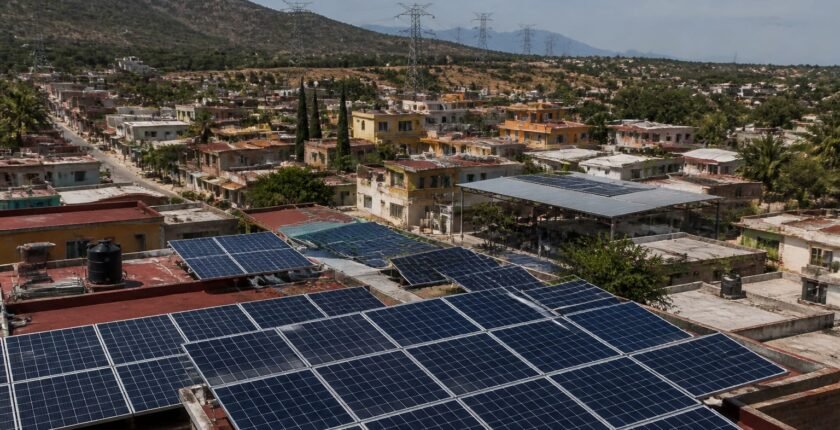
Mexico distributed generation grew 9.4% in the first six months of 2026 and reached 5,675 megawatts of cumulative installed capacity, according to the National Energy Commission (CNE). Solar panels on homes and commercial buildings account for almost all of it. Photovoltaic systems make up 5,640 MW, more than 99.5% of the capacity registered under the CNE scheme. Between January and June, users added 485.76 MW through 54,766 new contracts. Distributed generation means power produced by small installations at or close to the place that uses it, instead of at a large central plant connected by long transmission lines. Jalisco, Nuevo León and Chihuahua hold about a third of the national total. Jalisco leads, and it has built a state energy plan around that position.
Every photovoltaic system installed in Jalisco frees up grid capacity, strengthens the supply chain, generates savings for families and businesses and reduces emissions.
Manuel Herrera Vega, head of the Jalisco Ministry of Energy and Sustainable Development, to El Economista
Key takeaways
- Half-year growth: The National Energy Commission (CNE) reports that Mexico's distributed generation rose 9.4% in the first six months of 2026, to 5,675 MW of cumulative installed capacity.
- Solar dominance: Photovoltaic systems account for 5,640 MW of that total, more than 99.5% of capacity under the CNE scheme. The 54,766 contracts signed in the half year added 485.76 MW.
- Investment: Cumulative investment in Mexico's distributed generation reached US $14.58 billion at the end of June 2026.
- Leading states: Jalisco (808.58 MW), Nuevo León (596.22 MW) and Chihuahua (424.85 MW) together hold 32% of the national distributed capacity.
- Jalisco's 2030 goal: Jalisco expects to pass 1,000 MW of distributed generation by 2030. Its plan also aims for 60% clean energy by that year, up from 42% today.
Table of contents
- Key takeaways
- How 485.76 MW of New Capacity Lifted Mexico to 5,675 MW
- Why Generating Power Next to the Meter Eases the National Grid
- What US $14.58 Billion Has Bought, and What the CNE Claims for It
- Three States Hold a Third of the Capacity, With Jalisco Ahead
- What could speed or slow the expansion
- What to be careful about
- Frequently asked questions
How 485.76 MW of New Capacity Lifted Mexico to 5,675 MW
The half-year additions account for the growth rate. Take the 485.76 MW installed in the first six months away from the 5,675 MW total and roughly 5,189 MW remains as the starting base. The new capacity equals about 9.4% of that base, which agrees with the CNE's headline figure.
The contract count shows how small each installation is. Spread across 54,766 contracts, the 485.76 MW works out to under one-hundredth of a megawatt per contract on average. That is the size of a system on a house, a shop or an office roof, not a solar farm.
Solar's share is close to total. Photovoltaics supply 5,640 MW of the 5,675 MW, which leaves about 35 MW for every other distributed technology combined. In practice, Mexico's distributed generation market is a solar market, and its growth follows the uptake of panels on private roofs.
Why Generating Power Next to the Meter Eases the National Grid
The case for distributed systems rests on location. A modular solar array on the building that consumes its output does not need a large centralized power station or long-distance transmission lines to deliver electricity. Every kilowatt-hour produced on site is one the national grid does not have to carry.
Supporters connect this to Mexico's move toward cleaner energy. Manuel Herrera Vega, head of the Jalisco Ministry of Energy and Sustainable Development, argues that each photovoltaic system installed in his state frees up grid capacity, cuts emissions and saves money for households and businesses.
The CNE's half-year figures measure installed capacity. They do not show how much electricity these systems actually produced, or how much load they removed from the network at peak hours. Those output and grid-relief numbers would show whether the benefits match what the installation count suggests, and they remain open.
What US $14.58 Billion Has Bought, and What the CNE Claims for It
Cumulative investment in distributed generation stood at US $14.58 billion at the end of June 2026. Divided across the 5,675 MW in place, that is about $2.57 million per megawatt. The figure is cumulative, so it covers systems bought over many years at different equipment prices, not today's cost of a new installation.
The commission presents the spending as a vote of confidence. "These investments reflect user confidence in these technologies and drive economic development, the creation of specialized jobs and the strengthening of supply chains linked to clean energy and high-value-added technologies," the CNE stated.
These are claims by the regulator, and the released figures do not include a job count or a supply-chain measure to support them. The investment total and the contract numbers are measured data. The economic benefits are the CNE's own interpretation of those data.
Three States Hold a Third of the Capacity, With Jalisco Ahead
Distributed capacity is concentrated geographically. Jalisco leads with 808.58 MW, followed by Nuevo León with 596.22 MW and Chihuahua with 424.85 MW. Together they hold about 1,830 MW, or 32% of the national total.
Growth is not limited to those three. The CNE data show expansion in Guanajuato, Coahuila, México state, Sonora and Yucatán, a group that runs from the northern border to the Yucatán peninsula. The remaining 68% of capacity is spread across the rest of the country.
Jalisco has given its lead a target. The state expects its distributed generation to pass 1,000 MW by 2030, as first reported by El Economista, which would require roughly 191 MW beyond today's 808.58 MW. The target sits inside Jalisco's Sustainable Energy Development Plan. That plan aims for the state to produce energy equal to or greater than its own consumption by 2030, with clean sources supplying 60% of it, up from 42% today.
| Area | Installed capacity | Note |
|---|---|---|
| Mexico (national) | 5,675 MW | Up 9.4% in first six months |
| Photovoltaic share | 5,640 MW | Over 99.5% of CNE scheme |
| Jalisco | 808.58 MW | Expected to pass 1,000 MW by 2030 |
| Nuevo León | 596.22 MW | Second-largest state |
| Chihuahua | 424.85 MW | Third-largest state |
What could speed or slow the expansion
The case for
- A steady pace of 54,766 new contracts in six months points to broad household and business uptake rather than a few large projects.
- Jalisco's Sustainable Energy Development Plan sets explicit 2030 targets that make distributed solar part of state policy.
- Growth in Guanajuato, Coahuila, México state, Sonora and Yucatán widens the base beyond the three leading states.
The case against
- With 32% of capacity in three states, national growth depends heavily on Jalisco, Nuevo León and Chihuahua.
- Near-total reliance on photovoltaics, about 35 MW from other technologies, ties the sector to a single technology.
- Jalisco needs about 191 MW more to reach 1,000 MW and must lift its clean share from 42% to 60% by 2030.
What to be careful about
- The CNE figures report installed capacity, not generation or grid relief, so the effect on the national grid is not measured.
- The CNE's claims about jobs and supply chains carry no published figures in the half-year data.
- Jalisco's self-sufficiency and 60% clean-energy goals for 2030 are targets, not commitments with reported funding.
The bottom line
Mexico's distributed generation story in 2026 is a story about small rooftop solar systems. The CNE's figures show 485.76 MW added in six months, 54,766 new contracts and photovoltaics making up all but about 35 MW of the 5,675 MW total. Cumulative investment of US $14.58 billion shows the money has been real. The claimed returns in jobs and supply chains are still the regulator's assertion. The geography is concentrated, with a third of capacity in three states, and Jalisco has set its 2030 energy plan on extending its lead. What the data cannot yet show is how much load these panels take off the national grid. The second-half numbers will test whether the pace holds.
What to watch
- Watch for the CNE's distributed generation figures covering the second half of 2026, which will show whether the first-half pace held; no release date has been set.
- Watch whether Jalisco closes the roughly 191 MW gap to its 1,000 MW goal before its 2030 deadline, along with its target of 60% clean energy that year.
Frequently asked questions
What is distributed generation in Mexico?
It is electricity produced by small, modular systems at or near the building that uses it, mostly solar panels on homes and offices. Under the CNE scheme it totalled 5,675 MW by mid-2026, and photovoltaics supplied 5,640 MW of that.
Which Mexican state has the most distributed solar capacity?
Jalisco leads with 808.58 MW, ahead of Nuevo León at 596.22 MW and Chihuahua at 424.85 MW. Jalisco expects to pass 1,000 MW by 2030.
How fast is Mexico's distributed generation growing?
Capacity rose 9.4% in the first six months of 2026, with 485.76 MW added through 54,766 new contracts. That growth was measured against a base of roughly 5,189 MW at the start of the year.
Related reading