
Blog
Floods Could Cost Nepal’s Hydropower Hundreds of Billions
Estimated reading time: 6 minutes · Last updated:
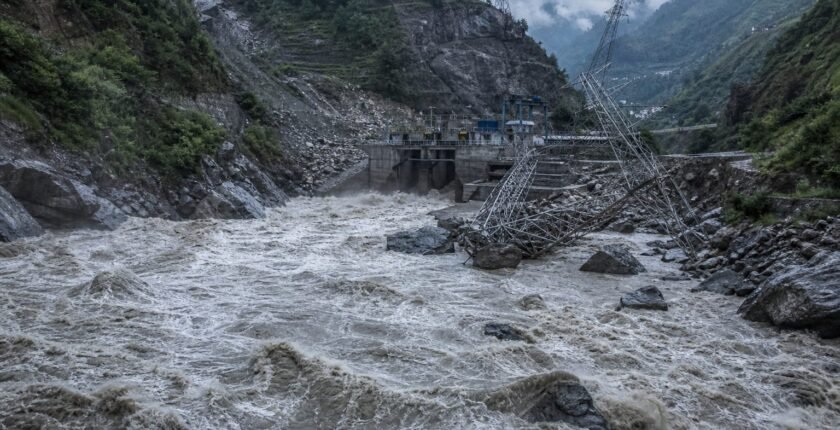
Nepal’s Bhotekoshi flash floods have inflicted widespread damage on hydropower plants and transmission lines, and preliminary assessments from the Nepal Electricity Authority (NEA) say losses could run into hundreds of billions of rupees. At least 13 operational and under‑construction projects were affected, including the 111MW Rasuwagadhi and the 22MW Chilime plants. IPPAN (Independent Power Producers’ Association, Nepal) has put average sector losses at about Rs25 billion to Rs30 billion. Seema Tamang reported NEA’s statement and the industry reaction, as first reported by The Kathmandu Post. Immediate priorities remain rescue, restoring supply and starting damage surveys that will shape insurance claims and reconstruction.
"For now, our priority is rescue operations, the search for missing people and restoring electricity supply,"
Rajan Dhakal, NEA spokesperson
Key takeaways
- The Nepal Electricity Authority’s preliminary assessment says losses could run into hundreds of billions of rupees.
- The Independent Power Producers’ Association (IPPAN) estimates average sector losses at around Rs25 billion to Rs30 billion and says damage to some projects is about 25–30% of total project cost.
- At least 13 hydropower projects were damaged, including the 111MW Rasuwagadhi Hydropower Project and the 22MW Chilime project.
- Market reaction included a 2.84% drop in the hydropower index and a 3.90% fall in the non‑life insurance index on Wednesday, with larger point declines recorded across the two days.
Table of contents
How big is the immediate damage and who gave the estimates?
The Nepal Electricity Authority provided the broadest early estimate, saying its preliminary assessment indicates losses on the order of hundreds of billions of rupees. NEA spokesperson Rajan Dhakal described the Rasuwagadhi Hydropower Project as "completely washed away" and said Chilime had been buried; he emphasised that search-and-rescue and restoring supplies were the immediate priorities.
Those public statements sit alongside a much lower private‑sector estimate. The Independent Power Producers’ Association, Nepal (IPPAN) put average sector losses at about Rs25 billion to Rs30 billion. IPPAN senior vice‑president Uttam Bhlon Lama told reporters that older schemes with ground‑level powerhouses suffered the worst damage, while newer projects with underground powerhouses and desanders fared comparatively better.
The story’s known project list spans operational and construction sites: operational projects named include Langtang Khola (20MW, in testing), Mailung Khola (5MW and 14.8MW entries), a 25MW NEA solar project, Devighat (14MW), Trishuli (24MW), Upper Trishuli A (60MW), Chilime (22MW) and Rasuwagadhi (111MW). Under‑construction sites cited include Upper Trishuli 3B (37MW), Rasuwagadhi Bhotekoshi (120MW), Upper Mailung A (6.42MW), Upper Trishuli 1 (216MW) and Middle Trishuli Ganga (15.6MW).
Insurance, assessments and who will pay for reconstruction
Insurance status will largely determine how quickly projects are rebuilt. The Nepal Insurance Authority has said private hydropower projects are generally covered by insurance and that licensed surveyors will carry out damage assessments for claims, while the scope of cover for Nepal Electricity Authority assets remains unclear. Raju Raman Paudel, former executive director of the Nepal Insurance Authority, said that once surveyors have evaluated the damage insured projects should be able to file claims, but he warned that comprehensive cover may not apply to every NEA project.
Sushil Dev Subedi, executive director of the Nepal Insurance Authority, told officials that full physical damage assessments had not yet begun because rescue and relief operations were the immediate priority; he said insurers will start their own evaluations once restoration work is under way. Mohan Kumar Dangi, president of IPPAN, said private developers plan to use insurance payouts to finance reconstruction where policies exist and added that facilities with only minor damage could be repaired relatively soon, whereas heavily damaged projects will take much longer to rebuild.
Beyond project cover, some affected developments have financing from Nepali banks and multinational firms, and those lenders’ exposure will be part of reconstruction planning. The sequence is straightforward: field surveys, insurer loss estimates, claims processing and then rebuild or write‑off decisions; the timing and scale depend on how many assets are confirmed insured and what policy limits apply.
Market impact, broader economic effects and the reconstruction impulse
The floods shook Nepal's stock market: the hydropower index fell 2.84% on Wednesday and the non‑life insurance index dropped 3.90% as investors reacted to the scale of damage and potential insurer payouts. In point terms, the non‑life insurance index declined by 404.05 points on Wednesday and by a further 201.81 points on Thursday; the hydropower index lost 104.33 points on Wednesday and 19.78 points on Thursday. Several listed hydropower companies in the worst‑affected districts recorded double‑digit percentage declines.
Brokers and traders described the pattern as predictable: companies with assets in Rasuwa and Nuwakot — the districts worst hit — fell most, while construction and materials stocks rose on expectations of reconstruction demand. For example, shares in Rasuwagadhi Hydropower dropped about 15% on one trading day, while Sarbottam Paints and several cement firms rose as investors positioned for rebuilding activity.
Beyond equities, the event may test the capacity of Nepali non‑life insurers to meet large claims and could alter how government agencies approach insurance of public infrastructure. If insurers face large payouts, their profitability and capacity to underwrite future projects could be affected, which in turn would shape reconstruction timelines and financing costs.
| Project | Capacity (MW) | Status |
|---|---|---|
| Rasuwagadhi Hydropower Project | 111 | Operational — washed away |
| Chilime Hydropower | 22 | Operational — buried |
| Langtang Khola | 20 | Operational — testing |
| Mailung Khola | 5 / 14.8 | Operational |
| Upper Trishuli A | 60 | Operational |
| Rasuwagadhi Bhotekoshi (private) | 120 | Under construction — affected |
| Upper Trishuli 1 | 216 | Under construction — affected |
| Upper Trishuli 3B (NEA & Nepal Telecom) | 37 | Under construction — affected |
How reconstruction could play out
The case for
- Insurance payouts and private developer cover could fund rapid rebuilding of many projects, limiting long‑term loss to generation capacity.
- Reconstruction demand may boost construction, cement and materials sectors, as seen in early share gains for Sarbottam Paints and several cement firms.
The case against
- If NEA assets prove uninsured or insurers face large claims, reconstruction could be delayed by funding shortfalls and higher borrowing costs.
- Extended damage to transmission infrastructure or to multiple large plants (including the 111MW Rasuwagadhi and 216MW Upper Trishuli 1) could raise system‑level supply risks and prolong outage impacts despite current surplus generation.
What to be careful about
- Large insurance payouts could materially strain non‑life insurers’ capital and underwriting capacity, threatening future coverage availability or increasing premiums.
- Uninsured or underinsured government‑owned assets at NEA would shift reconstruction costs to the public budget, potentially crowding out other spending.
- Severe damage to transmission corridors could prolong outages and complicate restoration even where generation units survive.
- Investor confidence in listed hydropower firms could remain fragile, with further price declines if detailed loss assessments revise damage estimates upward.
The bottom line
The Bhotekoshi floods have produced both a human tragedy and a complex financial problem for Nepal’s electricity sector. Early official statements from NEA point to losses in the range described as hundreds of billions of rupees, while industry bodies place average sector losses nearer Rs25–30 billion. The balance between insured private projects and potentially uninsured government assets will determine who pays and how fast reconstruction proceeds. Meanwhile, market moves show investors are already pricing in insurer exposure and localised asset losses. The next steps are field surveys, insurer assessments and clear government decisions on funding and insurance coverage; those outcomes will set the pace of recovery.
What to watch
- Watch for the Nepal Electricity Authority’s completed damage assessment and formal reconstruction plan; no date has been set.
- Watch for insurance companies’ aggregate claim tallies and published reserve use; no date has been set.
- Watch for government decisions on funding or guarantees for rebuilding NEA assets; no date has been set.
Frequently asked questions
How large are the early loss estimates for Nepal’s hydropower sector?
The Nepal Electricity Authority’s preliminary assessment says losses could run into hundreds of billions of rupees, while the Independent Power Producers’ Association (IPPAN) has put average sector losses at about Rs25 billion to Rs30 billion.
Which projects were reported damaged by the floods?
At least 13 projects were affected, including operational sites such as the 111MW Rasuwagadhi and the 22MW Chilime plants and under‑construction projects such as the 120MW Rasuwagadhi Bhotekoshi and the 216MW Upper Trishuli 1.
Will the floods cause an immediate electricity shortage in Nepal?
Industry voices say an immediate shortage is unlikely because domestic generation currently exceeds national demand, though localized outages and longer‑term capacity impacts depend on how quickly damaged units are repaired or rebuilt.
Related reading
This article is information, not financial advice. Anyone acting on it should do their own checks.