
Blog
Vineyard Wind 1 and Revolution Wind Now Power New England
Estimated reading time: 7 minutes · Last updated:
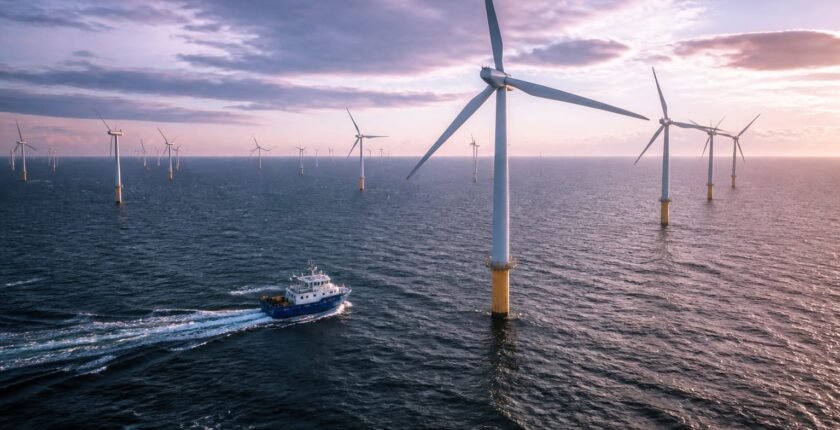
Vineyard Wind 1 is the roughly 800 megawatt (MW) offshore wind farm about 15 miles south of Martha's Vineyard. It reached full commercial operation on 29 October 2026. In the same month, Ørsted's 704 MW Revolution Wind began commercial operation under contracts with utilities in Rhode Island and Connecticut. Together, the two farms give New England roughly 1,500 MW of offshore wind heading into winter. For Massachusetts, the milestone has a hollow side. Vineyard Wind 1 is the first and so far only offshore farm built for the state under its 2016 clean energy law, as first reported by State House News Service. No other offshore wind farms sit in the state's pipeline.
With the project at full commercial operation alongside Revolution Wind, offshore wind will bring down the price of electricity even further in New England.
Maura Healey, Governor of Massachusetts
Key takeaways
- Full output: Vineyard Wind 1, about 800 MW south of Martha's Vineyard, reached full commercial operation on 29 October 2026, more than two years after a blade failure halted it.
- Second farm: Ørsted's 704 MW Revolution Wind, with 65 turbines, began commercial operation in October 2026, selling power to Connecticut and Rhode Island utilities.
- Grid share: ISO New England data showed wind supplying about 856 MW at 12:45 p.m. on 10 November 2026, about 7.3% of all available power.
- Empty pipeline: No additional offshore farms are lined up for Massachusetts, and after at least six delays its procurement process lags the original plan by upward of two and a half years.
Table of contents
- Key takeaways
- How Vineyard Wind 1 Recovered From a Shattered Blade
- Revolution Wind Joins the Grid as Ørsted Builds Elsewhere
- Wind Supplied 7.3% of New England Power on Tuesday
- A 2019 Federal Review Knocked Vineyard Wind 1 Off Schedule
- Why Massachusetts Has Nothing Lined Up Next
- What could help or hold back New England offshore wind
- What to be careful about
- Frequently asked questions
How Vineyard Wind 1 Recovered From a Shattered Blade
Vineyard Wind 1 has a capacity of about 800 MW and sits roughly 15 miles south of Martha's Vineyard. It first sent electricity ashore in early 2024. That summer, one of its huge blades broke apart. The failure stopped the farm and prompted investigations.
Generation came back in part by January 2025. Full output took much longer. The farm reached complete commercial operation on Thursday, 29 October 2026. Vineyard Wind spokesman Craig Gilvarg confirmed that date by email after it had already been reported elsewhere.
Gilvarg put it this way: "On Thursday, October 29, Vineyard Wind 1 reached full commercial operations, further strengthening New England's energy supply." His statement presents the milestone as a gain in supply. The longer story is the recovery. Partial restart came about half a year after the blade broke, and full output came close to two more years after that.
Revolution Wind Joins the Grid as Ørsted Builds Elsewhere
Ørsted, the Denmark-based offshore wind developer, published financial results on 5 November 2026. The results highlighted the start of commercial operation at Revolution Wind off Rhode Island. The company said it had finished installing the last turbines at the 704 MW farm, which serves Rhode Island and Connecticut. It said the project reached commercial operation in October under its offtake contracts with utilities in both states. An offtake contract is a long-term agreement in which a buyer commits to purchase a project's output.
The same results reported a German offshore farm entering commercial operation. They also reported construction milestones in Taiwan, Poland and the U.K. Ørsted said its construction portfolio was progressing "according to schedule and on budget." It described its 2,852 MW Hornsea 3 project in the United Kingdom as "the world's largest offshore wind farm project." That ranking is Ørsted's own claim.
Ørsted is also building closer to New England. It has placed every turbine foundation at Sunrise Wind, a 924 MW farm between Martha's Vineyard and Montauk Point that will supply New York customers. Commercial operation there is planned for 2027. The company has also begun building the 200 MW Blackwater Solar project, and it acknowledged pressure from rising interest rates and tariff costs.
Wind Supplied 7.3% of New England Power on Tuesday
Data from ISO New England, the region's grid operator, shows where the new capacity fits. At about 12:45 p.m. on Tuesday, 10 November 2026, wind from all sources was delivering about 856 MW to the grid. That was 45% of the renewable power on the system at that moment, and roughly 7.3% of all power available.
Massachusetts Gov. Maura Healey said full operation at Vineyard Wind 1 would boost grid reliability this winter. She also argued that, with Revolution Wind running too, offshore wind will push New England electricity prices down further. She gave no figures for that price effect, so it remains a forecast rather than a measured result.
Rhode Island Gov. Dan McKee called Revolution Wind a major win for his state's workers and energy future. He said finishing the project, and defending it against interference by the Trump Administration, ranked among the highlights of his time in office.
The Conservation Law Foundation pointed to South Fork Wind off Block Island, whose dozen turbines power about 70,000 Long Island homes and businesses. The group argued that the 65 turbines at Revolution Wind could be central to covering winter demand.
A 2019 Federal Review Knocked Vineyard Wind 1 Off Schedule
The farm's completion was never assured. Its developers had planned to close financing and begin onshore work in 2019. They aimed to place the first turbine in the seabed in 2021 and produce power in 2022.
That plan broke down in summer 2019. The Trump administration began a broad study of how offshore wind farms planned along the East Coast might have effects, and the study held up a key permit for Vineyard Wind 1. On 1 December 2019, the developer pulled the project from federal review. The administration then declared that review "terminated."
The project restarted under President Joe Biden. In February 2021, less than a month after he took office, the federal government resumed the review from where it had stopped. By May 2021, the Biden administration had approved the farm's construction and operations plan, which cleared the way for building to begin. First power ultimately arrived about two years later than the original target. McKee's remark about protecting Revolution Wind shows that federal politics still hangs over these projects.
Why Massachusetts Has Nothing Lined Up Next
Massachusetts utilities chose Vineyard Wind 1, with input from the Baker administration, to fulfil part of the 2016 clean energy law. Projects selected after it did not survive. Their developers concluded that worsening conditions endangered their financing, and those contracts were terminated.
Procurements are the competitive rounds in which the state solicits new offshore wind projects. The next rounds have been pushed back on at least six occasions, so the process now trails its original timetable by over two and a half years.
State officials once estimated that Massachusetts would need to add about 1 gigawatt of new offshore wind each year in the 2030s. That pace was meant to meet the state's binding midcentury decarbonization targets. With no farms in the pipeline, the gap between that estimate and reality is the main policy problem left after this autumn's milestones.
| Project | Capacity | Serves | Status |
|---|---|---|---|
| Vineyard Wind 1 | About 800 MW | Massachusetts | Full commercial operation 29 October 2026 |
| Revolution Wind | 704 MW, 65 turbines | Rhode Island, Connecticut | Commercial operation October 2026 |
| Sunrise Wind | 924 MW | New York | Foundations installed, operation planned 2027 |
| South Fork Wind | 12 turbines | Long Island | Operating, about 70,000 homes and businesses |
What could help or hold back New England offshore wind
The case for
- Vineyard Wind 1 and Revolution Wind together add roughly 1,500 MW ahead of winter demand.
- Ørsted says its construction portfolio is on schedule and on budget, with Sunrise Wind foundations already installed.
- Gov. Maura Healey argues that offshore wind will lower New England electricity prices further.
The case against
- Massachusetts has no further offshore farms in its pipeline, and procurement has been delayed at least six times.
- Ørsted reports pressure from rising interest rates and tariff costs.
- Federal action stalled Vineyard Wind 1 in 2019, and Gov. Dan McKee describes defending Revolution Wind from Trump Administration interference.
What to be careful about
- Equipment failure: the 2024 blade break shows that a single component can halt a whole farm for months.
- Federal permitting: the 2019 review froze Vineyard Wind 1, and McKee describes recent interference with Revolution Wind.
- Financing pressure: Massachusetts contracts after Vineyard Wind 1 were terminated over financing threats, and Ørsted cites interest rates and tariffs.
- Decarbonization shortfall: with nothing queued, Massachusetts is far from the roughly 1 gigawatt a year officials once said the 2030s require.
The bottom line
New England now has two large offshore wind farms running at full commercial operation. ISO New England's data shows wind already supplying a measurable slice of the region's power. Those are real gains for a technology that spent years tied up in federal review and recovering from a broken blade. The harder question belongs to Massachusetts. The state needs about 1 gigawatt a year of new offshore wind in the 2030s, by its own officials' estimate, yet it has nothing in the pipeline. The next tests are how both farms handle winter 2026-27, whether Sunrise Wind arrives in 2027 as planned, and whether Massachusetts can restart procurement after six delays.
What to watch
- Watch how Vineyard Wind 1 and Revolution Wind perform through winter 2026-27, the season Gov. Maura Healey says the farms will make the grid more reliable.
- Ørsted's 924 MW Sunrise Wind, which will serve New York, is planned to begin commercial operation in 2027.
- Watch for Massachusetts to restart its offshore wind procurement after at least six delays; no new date was given.
Frequently asked questions
Which states buy power from Revolution Wind?
Ørsted says Revolution Wind reached commercial operation in October 2026 under offtake contracts with utilities in Connecticut and Rhode Island. The 704 MW farm sits off Rhode Island.
Why did later Massachusetts offshore wind contracts get cancelled?
Developers of projects chosen after Vineyard Wind 1 decided that worsening conditions threatened their project financing, and those contracts were terminated. Since then, the state's procurement process has been delayed at least six times.
When will Sunrise Wind start producing power?
Ørsted plans commercial operation at the 924 MW Sunrise Wind in 2027. All of its turbine foundations are installed, and it will serve customers in New York.
How much offshore wind does Massachusetts say it needs?
To hit the binding decarbonization targets it has set for midcentury, Massachusetts would need roughly 1 gigawatt of fresh offshore wind capacity added annually through the 2030s, state officials once estimated. Vineyard Wind 1, at about 800 MW, is so far the only farm the state has seen completed.
Related reading