
Blog
Helicopter Damages Line, Cuts Power to 35,000 in Wake County
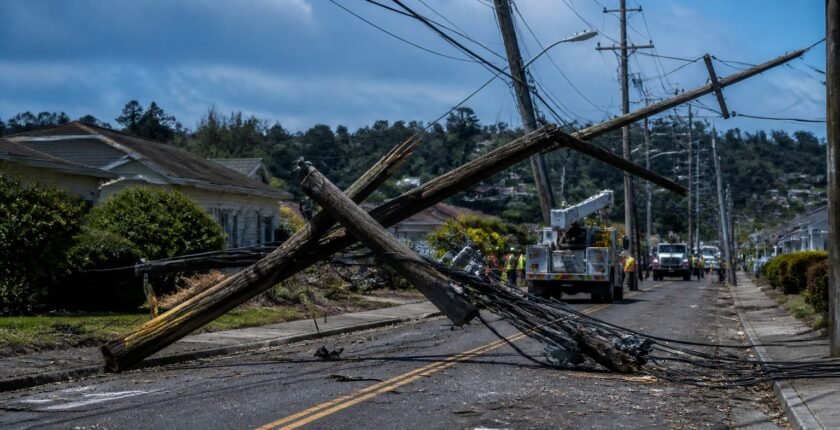
Estimated reading time: 5 minutes · Last updated:
A contracted helicopter crew performing vegetation management struck a transmission line about 2:15 p.m., knocking out power to about 35,000 Duke Energy customers in Wake County, mostly in Cary and Morrisville. Duke Energy reported crews switched customers to alternate lines and estimated restoration times during the afternoon; power was restored late Thursday evening. This account is as first reported by WTVD-TV. The outage hit homes and municipal facilities and added to a week in which nearly 46,000 customers had experienced outages across the region.
We're working hard to complete the repair to the damaged equipment and get everyone restored as safely and quickly as possible,
Jeff Brooks, Duke Energy spokesperson
Key takeaways
- Scale of the outage: About 35,000 Duke Energy customers lost power after a contracted helicopter damaged a transmission line near railroad tracks in Cary.
- Timeline: The incident occurred around 2:15 p.m.; some households regained service just before 8 p.m. and Duke had earlier estimated a 9 p.m. restoration time.
- Weeklong impact: Duke Energy said nearly 46,000 customers across the region experienced outages so far during the week, driven by heat, drought and fallen trees.
Table of contents
- Key takeaways
- How a vegetation-management helicopter knocked out service to 35,000 customers
- Local impact: businesses, municipal services and residents left without cooling
- What Duke Energy says it is doing and the open questions investigators must answer
- How the event could change operations
- What to be careful about
- Frequently asked questions
How a vegetation-management helicopter knocked out service to 35,000 customers
Duke Energy said the outage began when a helicopter contracted for vegetation work along the railroad struck a transmission line near tracks in Cary. The company said the helicopter was not working for Duke Energy and that a tree also fell onto a nearby power line. Duke Energy's outage map showed the incident, about 2:15 p.m. Thursday, left roughly 35,000 customers—concentrated in Cary and Morrisville—without electricity.
Duke Energy deployed crews to reroute customers to other lines where possible and to repair the damaged equipment. Company spokesperson Jeff Brooks gave an estimated time of restoration of 9 p.m.; some customers reported power restored just before 8 p.m. The utility described switching customers to alternate lines as a tactic to speed restoration while repair crews worked on the damaged transmission components.
The outage highlights the exposure that transmission infrastructure faces when third-party aircraft operate near power corridors or railroad rights-of-way. Utilities typically separate their contracting and operational responsibilities from railroad maintenance activities; in this case, Duke said the helicopter was working for the railroad, not for the utility.
Local impact: businesses, municipal services and residents left without cooling
The blackout affected local services immediately. The Town of Cary announced closures or reduced hours at the Cary Senior Center, Herbert C. Young Community Center, Bond Park Community Center and Page-Walker Arts & History Center; the Bond Park Boathouse and Cary Arts Center closed. The Cary Theater canceled its 7 p.m. screening and notified ticket holders.
Small businesses felt the strain. At High House Mini Mart, card readers, receipt printers and gas pumps stopped; employees resorted to manual calculations and pen-and-paper receipts, and drivers could not buy fuel. Resident Liam Goff said the household lost air conditioning for hours and that internet-dependent homework and routines were disrupted until service returned.
The incident ran against a backdrop of record heat and drought in central North Carolina, conditions Duke Energy said have increased electricity demand and also made trees more brittle. Brooks noted that fallen trees, even those 70–80 feet away from lines, can topple and damage infrastructure when heat and dry conditions weaken them.
What Duke Energy says it is doing and the open questions investigators must answer
Brooks, a Duke Energy spokesperson, said the utility has been installing grid upgrades this summer, including self-healing systems that restored power to some customers in under an hour, and that crews were focused on safe, rapid repairs.
Open questions remain about the contractor relationship and the mechanics of the strike: the identity of the railroad’s vegetation-management contractor, whether FAA or railroad flight protocols were followed in the corridor, and the precise sequence that led both the helicopter and a falling tree to damage transmission infrastructure. Those points will determine liability and could affect future operating rules around rail rights-of-way and transmission corridors.
Until investigators release findings, the immediate utility response—switching customers, repairing equipment and making short-term resilience upgrades—remains the main mitigation available to residents. Duke’s statement that the helicopter was not contracted by the utility frames the event as a third-party incident affecting utility infrastructure.
How the event could change operations
The case for
- Increased scrutiny of third-party flight operations near transmission and railroad corridors could produce new safety protocols that reduce similar incidents.
- Duke Energy’s ongoing grid upgrades, including self-healing technology, may shorten outage durations for some customers in future events.
The case against
- If investigators find procedural lapses by the vegetation-management contractor or the railroad, liability disputes could delay remediation and raise costs.
- Persistent heat and drought that weaken trees will continue to raise the baseline risk of fallen-tree damage during peak demand periods.
What to be careful about
- Repeated heat-and-drought conditions increasing tree failures that can damage transmission infrastructure even when trees are not adjacent to lines.
- Operational gaps between utilities and third-party contractors (railroad vegetation crews) that leave responsibilities unclear and slow liability resolution.
- Local businesses and municipal services that lack on-site backup power remain exposed to operational and economic disruption during multi-hour outages.
The bottom line
Thursday’s outage shows how non-utility operations near transmission corridors can cascade into large customer interruptions: a contracted helicopter and a fallen tree together left about 35,000 customers without power during a heat spell. Duke Energy moved to switch customers to alternate lines and complete repairs, and it has launched an investigation. The key next steps are an investigative report naming the contractor and detailing the sequence of events, and any operational changes the railroad or utilities make to prevent similar strikes near high-voltage infrastructure.
What to watch
- Watch for Duke Energy’s final investigation report into the transmission-line strike; no date has been set.
- Watch for any public notice from the railroad identifying the vegetation-management contractor and outlining steps it will take; no date has been set.
Frequently asked questions
How many customers were affected by the Cary outage?
Duke Energy said about 35,000 customers lost power in the Cary and Morrisville areas after the helicopter damaged a transmission line.
When did the outage start and when was power restored?
The incident occurred about 2:15 p.m. Duke Energy's outage map initially showed an estimated restoration by 9 p.m.; some customers reported service returning just before 8 p.m. By late Thursday evening Duke Energy reported that power service had been fully restored.
How does this outage compare to the rest of the week in the region?
Duke Energy said nearly 46,000 customers experienced outages so far during the week, which implies roughly 11,000 additional customers were affected by other events earlier in the week.
Related reading